Get Full Government Meeting Transcripts, Videos, & Alerts Forever!
Get email alerts on the Higher Education Capital topic
No spam. Unsubscribe anytime.
University of Minnesota requests $200 million HEAPR, $20 million FARM and $8 million for Washington Avenue Bridge safety barriers
Summary
Vice President Alice Roberts Davis presented the University of Minnesota’s 2025 capital priorities: $200 million for HEAPR (asset preservation), $20 million to design the FARM agricultural research site, and a funding request to install suicide‑deterrent railings and lighting on the Washington Avenue Bridge, estimated at about $8 million.
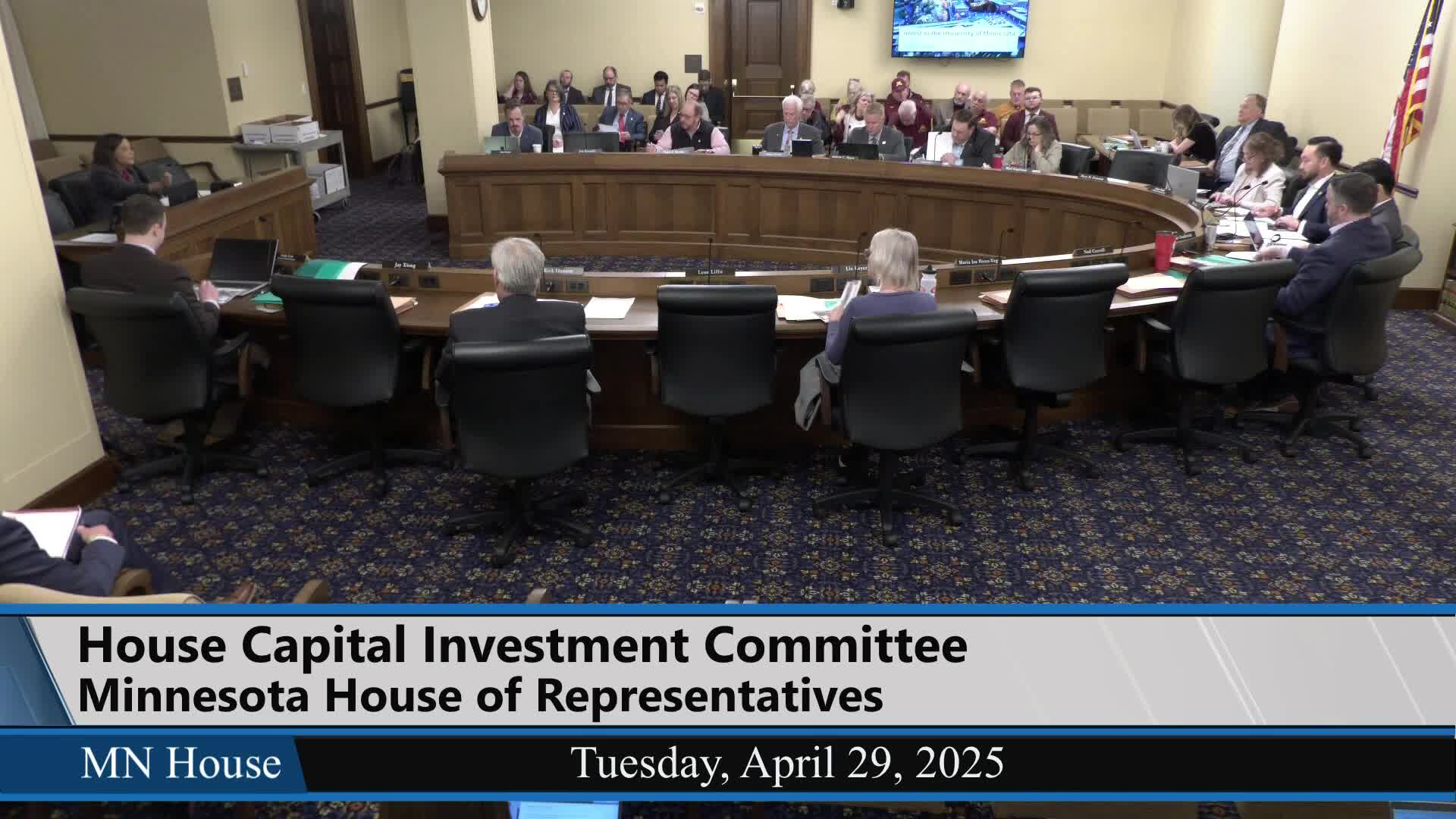
Alice Roberts Davis, vice president of University Services at the University of Minnesota, told the Capital Investment Committee on April 29 that the system’s top 2025 capital priority is $200 million for HEAPR (Higher Education Asset Preservation and Replacement) to address critical renewal across the system, and a $20 million request to design the FARM (Future of Advanced Agricultural Research in Minnesota) project.
Roberts Davis said the university manages approximately 30,000,000 square feet of space, of which roughly 8,800,000 square feet are in poor or critical condition. With $200 million in HEAPR funding the university expects to fund more than 100 projects in 75 buildings. She described HEAPR as the most cost‑effective way to extend the life and functionality of existing assets and said unpredictable bonding funding has made long‑term planning difficult.
Roberts Davis also described FARM, a proposed 1,300‑acre applied research farm in Mower County with a planned partnership with the Hormel Foundation; the university’s request includes $20 million for design to support research, outreach and workforce development in modern agricultural techniques. She said the university’s project track record shows about 85–90% of appropriated capital dollars are spent within two years.
Separately, Roberts Davis updated the committee on the Washington Avenue Bridge, which carries large pedestrian and bicycle volumes across the Mississippi River and is owned by Hennepin County while the university maintains some pedestrian elements. She described recurring suicide attempts at the site and said temporary fencing installed last fall cost about $78,000 and an additional temporary contract cost $25,000. The university estimated permanent, non‑scalable railings and associated lighting would cost about $8,000,000; the university would pursue Hennepin County approval for work on county‑owned elements. Roberts Davis said the university sought clarification on whether HEAPR could fund the bridge work; because Hennepin County owns the bridge, HEAPR eligibility is not certain and would require special dispensation.
Committee members asked about alternative university funding ("Puff" funds), priority lists for HEAPR projects and the project timeline for the bridge; Roberts Davis said Puff funds do not generally cover HEAPR and offered to leave a campus‑specific HEAPR priority list with committee staff. She estimated a roughly 12‑month timeline to design and construct the bridge railings if funding were available, with phased construction allowing the bridge to remain functional.
No committee vote occurred on the university requests during the April 29 hearing.