Get Full Government Meeting Transcripts, Videos, & Alerts Forever!
Get email alerts on the Juvenile Detention Nonsecure topic
No spam. Unsubscribe anytime.
Clay County and regional partners seek $24.75 million for nonsecure juvenile facility to expand placements
Summary
Clay County and West Central Regional Juvenile Center sought $24.75 million in House File 1266 to design and construct a 40‑bed nonsecure juvenile facility in Moorhead to address statewide placement shortages and provide trauma‑informed care close to family and community supports.
Clay County Commissioner Jenny Mongeau and West Central Regional Juvenile Center Superintendent James Vellum told the Capital Investment Committee on March 25 that counties across Minnesota lack nonsecure placements for youth with complex mental‑health and behavioral needs and that a regional facility in Moorhead could fill statewide demand.
“House File 1266 presents a vital opportunity to address this gap,” Commissioner Mongeau told the committee, describing a proposed 40‑bed, nonsecure facility that would provide trauma‑informed Qualified Residential Treatment Program services, education, medical support and recreation. “This initiative has garnered broad support,” she said, noting resolutions from 28 counties and all 11 tribal nations.
James Vellum, superintendent of the West Central Regional Juvenile Center, said the center currently operates a 55‑bed secure facility and a 25‑bed nonsecure component that operates at capacity; he described long wait lists and placements that in some cases require sending youth out of state. “We’re getting phone calls from counties that are closer to Chicago than they are to Moorhead for placement,” Vellum said, describing an average census of about 65 youth across the center’s programs.
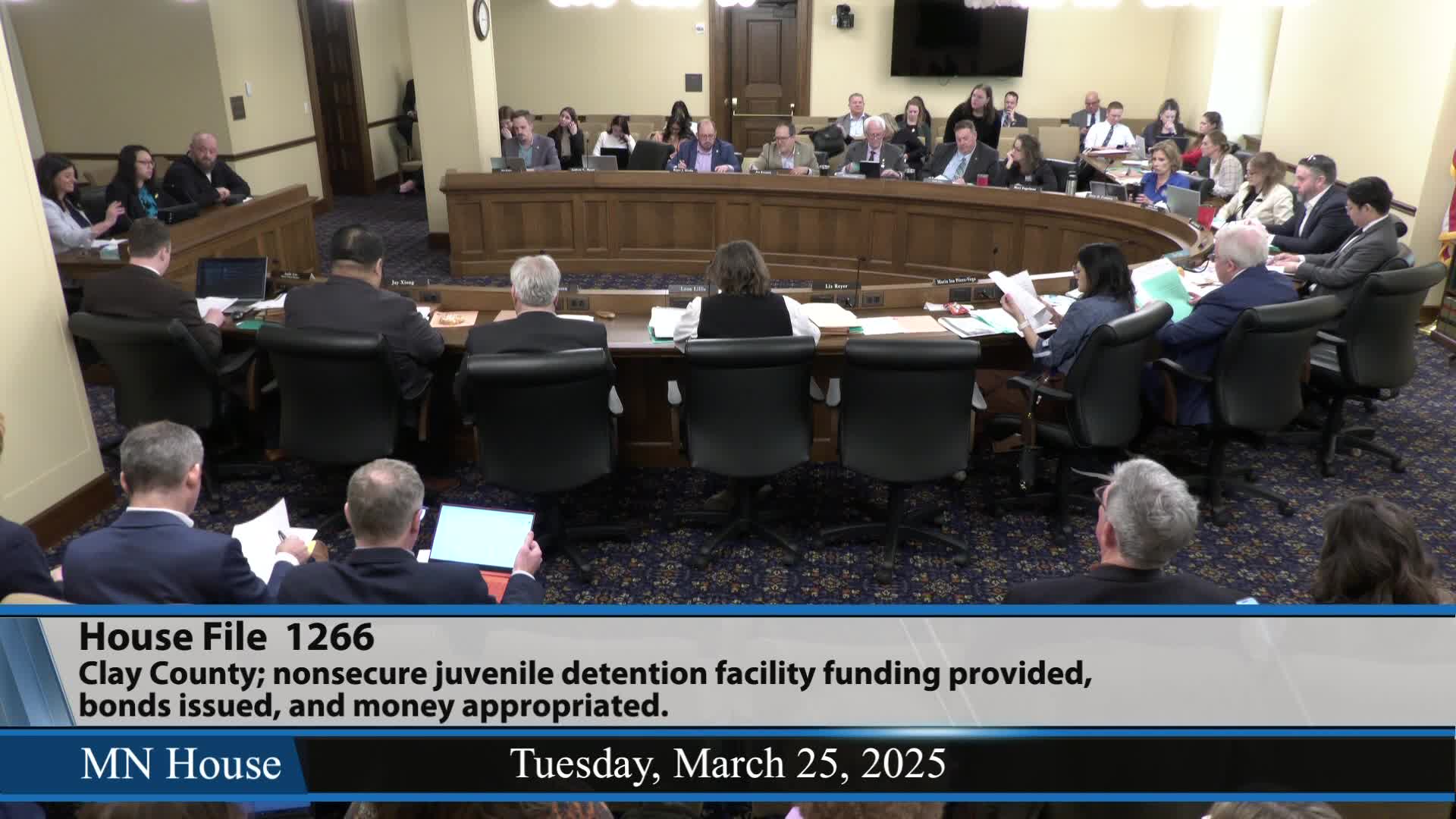
Representative Paul Keeler, sponsor of HF 1266, explained the bill would fund design, construction and equipment for the expanded nonsecure capacity; the fiscal ask in testimony was $24,750,000. Committee members asked clarifying questions about whether the bill covers the nonsecure component (the sponsor confirmed it does) and whether the project could be phased; testifiers said they were exploring phasing options to avoid creating additional placement gaps during construction.
Supporters emphasized that the proposal is intended as part of a statewide continuum of care and that placing youth closer to family and regional supports improves rehabilitation prospects. The committee heard that the center serves a wide range of ages — testifiers noted that some youth placed can be as young as 10 — and that the proposed facility would include beds for both males and females with services targeted to stabilization and community reintegration.
The bill was presented and heard on an informational basis; no committee vote was taken during the March 25 hearing.