Get Full Government Meeting Transcripts, Videos, & Alerts Forever!
Get email alerts on the Public Housing Preservation topic
No spam. Unsubscribe anytime.
Minnesota Housing requests $7 million for publicly owned housing preservation; officials say demand far exceeds supply
Summary
Minnesota Housing Commissioner Jennifer Ho outlined the publicly owned housing preservation program and said the governor proposes $7 million in the bonding bill. Commissioner Ho said federal capital funds do not meet current needs and that prior funding rounds attracted far more requests than available resources.
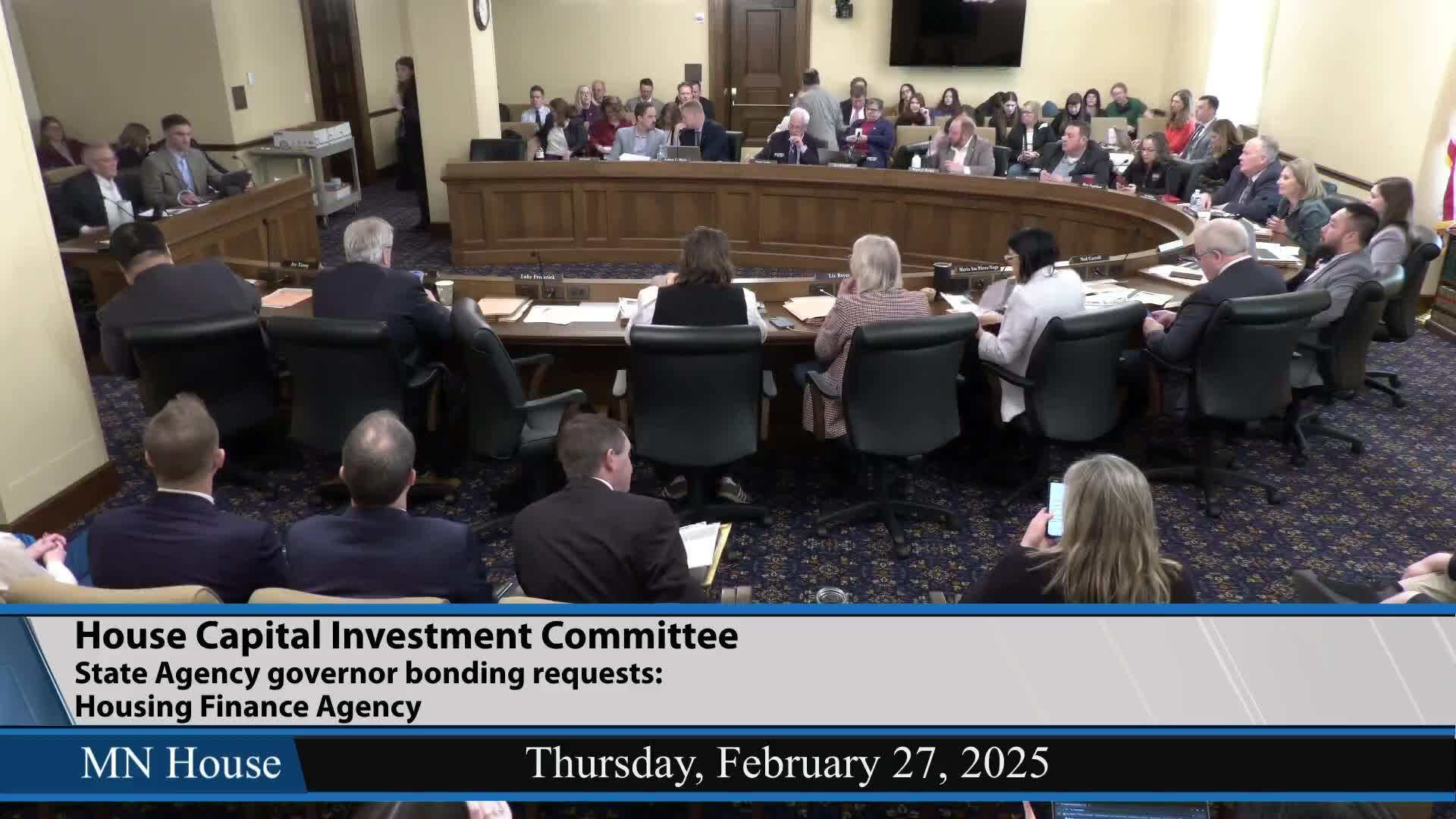
Jennifer Ho, commissioner of Minnesota Housing, presented the agency’s public housing preservation program and the governor’s $7 million bonding recommendation for the publicly owned housing preservation program.
Ho described the age and condition of publicly owned housing in Minnesota — roughly 21,000 units housing about 36,000 people, many of them seniors, people with disabilities and households with extremely low incomes — and said the federal capital fund has not kept pace with capital needs. She told the committee the state has historically used general obligation bonds to preserve these properties and that prior appropriations (notably 2023’s larger package) showed demand far outstripped available funds.
The commissioner said Minnesota Housing used simplified applications to reach small, rural public housing authorities and that most funded projects address health and safety issues such as boilers, roofs, fire protection, elevators, plumbing and asbestos abatement. In 2023, the program directed significant resources (cash and bonds) and Minnesota Housing currently operates a round‑two RFP for projects; the agency reported receiving about $103 million in requests against roughly $40 million available in that round.
Ho used examples in Red Wing, St. Paul and Virginia to show typical preservation needs — leaking flat roofs, failing boilers, rusted exterior doors and asbestos‑impacted paint — and said such investments directly address resident health and safety.