Get Full Government Meeting Transcripts, Videos, & Alerts Forever!
Get email alerts on the Food Insecurity topic
No spam. Unsubscribe anytime.
County executive asks council to use RFP and shift $4.5 million to human services after food‑program dispute
Summary
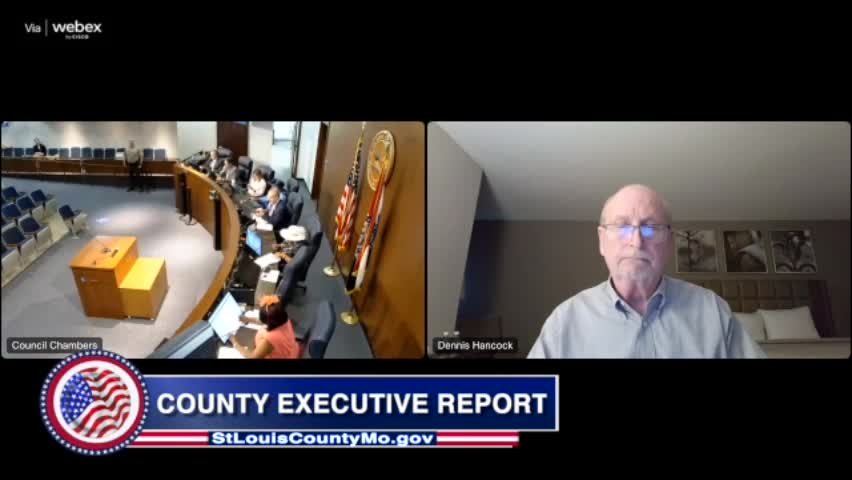
County Executive Sam Page on Tuesday asked the St. Louis County Council to permit a countywide RFP and to transfer $4,500,000 to the Department of Human Services to begin a sustained food‑insecurity program.
County Executive Sam Page on Tuesday asked the St. Louis County Council to permit the county to use a competitive request‑for‑proposals process and to transfer $4,500,000 from the county general operating fund to the Department of Human Services to launch a countywide food‑insecurity program.
Page told the council he met with three farmers who withdrew from an earlier urban‑farming plan and urged a procurement process that is countywide and competitive rather than restricted to a single district. "I sent a letter to the council today asking members to allow the county to use the RFP process to officially get a food insecurity plan underway," Page said. "I would like the full 4,500,000.0 that was originally allotted for food insecurity to go to this project so that we can ensure it is sustainable and effective." (County Executive Sam Page)
The request followed a recent council effort to advance funding and a program focused on North County. Councilwoman Webb said the county executive vetoed the council's food‑insecurity legislation. "Doctor Page did veto the food insecurities," Webb said during the meeting; she and other speakers described the veto as a setback for North County programming.
Why it matters: Page framed the RFP and budget move as an administrative path to build a longer‑term program housed in Human Services, rather than continuing a district‑specific approach. Council members and local organizers, including faith and community leaders, have urged targeted investment to expand access to fresh food and build local food systems in underserved ZIP codes.
What was said and what happens next - Page told the council the new project would be administered by the Department of Human Services and would use a countywide competitive solicitation to select operators and partners. He said the change is meant to address farmers’ concerns about the earlier process and to broaden participation across districts. - Councilwoman Webb, who sponsored the earlier council legislation, challenged Page’s decision and urged continued pursuit of council measures to support urban agriculture and North County food access. Webb said participants who lacked required credentials were the focus of the executive’s follow‑up meetings. - Public commenters explicitly supporting the council’s earlier action included Reverend Phil Duvall, who said the Missionary Baptist State Convention of Missouri "strongly had supported, bill 54, which was passed 2 weeks ago in this very council chamber." (Reverend Phil Duvall)
No council vote on Page’s RFP request was recorded at the meeting. Page said he had asked the council to move the $4.5 million into the Department of Human Services budget; the council did not take final action on that transfer at this session.
Context and constraints - Page said the $4.5 million had been "originally allotted for food insecurity" and asked the council to reassign those funds to a countywide program. He said the change would allow businesses in the industry to participate via a competitive bid process. (County Executive Sam Page) - Council members raised process questions at the meeting about procurement and oversight; no formal direction to staff or final vote on the funding shift was recorded in the public minutes for this session.
Voices from the meeting - Reverend Phil Duvall (public comment) urged support for the earlier council bill and asked the council to hold listening sessions in affected neighborhoods to hear residents’ experience with food access. "We prayerfully and humbly submit our unwavering steadfast support for this bill," Duvall said. - Councilwoman Webb described the veto and said the council would continue pursuing alternatives; she also criticized media coverage and what she described as coordinated opposition to the council legislation.
Next steps: The county executive’s letter asking for an RFP and the proposed $4.5 million transfer will require council consideration and a formal vote before funds can be moved or contracts awarded. The transcript does not record a council decision on the request during the April 29 meeting.
Ending: The item remains active—the executive signaled an administrative path forward, and council sponsors signaled intent to continue pursuing council‑driven remedies. The council will need to schedule any required ordinance or budget amendment to authorize the transfer and the RFP.