Gloversville board adopts $78.06 million 2025-26 budget; five propositions set for May 20 vote
Loading...
Summary
The Gloversville City School District Board of Education adopted a $78,063,076 general fund budget for 2025-26 on April 8, 2025, increasing spending about $3.07 million while holding the tax levy to a 1.77% rise ($284,300).
The Gloversville City School District Board of Education adopted a $78,063,076 general fund budget for the 2025-26 school year on April 8, 2025, representing a $3,065,282 (4.09%) increase over 2024-25 while holding the district tax levy to a 1.77% increase, or $284,300, the district said.
The budget presentation, delivered by Kathy Neer, said instruction, fringe benefits and debt service represent about 72% of the overall budget, and that fringe benefits alone account for 22.09% of the general fund. “The total proposed general fund budget is $78,063,076,” Neer said. The district plans to use $447,939 from the debt service reserve to offset the general fund share of debt service and listed an appropriated fund balance of $1,000,003.72.
Why this matters: the budget sets next year’s spending and the tax levy that funds it. The board placed five propositions on the May 20 ballot tied to capital reserve funds — purchases that the district says will not affect the tax levy — and voters will also decide the Gloversville Public Library budget and elect up to three school board members.
Major cost drivers and offsets: Neer told the hearing that instruction-related fringe benefits, special education placements (public, private and BOCES programs), and debt service are the largest drivers of expenditures. The district expects to receive BOCES aid (listed as 85.7% for Gloversville) on eligible services. Transportation aid is expected at 90% for eligible runs. Neer said debt service expenses decreased by $59,825 this year and that $447,939 will be transferred from the debt service reserve to help offset the general fund share of debt.
State aid and reserves: The presenter said the enacted New York state budget reduced Gloversville’s foundation aid by roughly $730,000 compared with the district’s earlier projection using the governor’s proposal. Neer said that other state-provided building aid and excess cost aid figures, together with fiscal-adviser planning, made up the difference in the district’s state aid assumptions used for budgeting.
Insurance, utilities and aidable services: Neer said property and liability insurance costs rose substantially, citing national natural disasters as a factor, and noted that Utica National provides the district’s coverage. Health insurance rates reported include a 6% increase for those in the FOMA Health Trust and an average 19% increase for community-related plans (named in the presentation as CDPHP and IVP). Energy costs continue to rise but the district’s participation in an energy consortium, a city partnership on a solar project, and its own solar field have helped limit increases.
Programs and instructional items: The budget includes funding for curriculum and instruction, special education, vocational/CTE programs, summer school, library media and student support services. Neer said the Core Knowledge Language Arts (CKLA) reading program, introduced in September 2023, will migrate to a third edition at district expense; the edition is described as having expanded differentiation and writing instruction.
Mental-health and community schools: The district will participate in a community schools counseling program offered through HFM BOCES in partnership with the Family Counseling Center, which makes services eligible for BOCES aid. The Fulton County Department of Social Services also provides staff support to students, the presentation said.
Transportation: For the second year the district will be responsible for district-provided transportation for eligible students, field trips and athletic events. Neer said contracting private transportation has risen slightly because of a small number of special-education runs and multiple McKinney-Vento students placed by the Department of Social Services across a wide area; the district is eligible for 90% transportation aid.
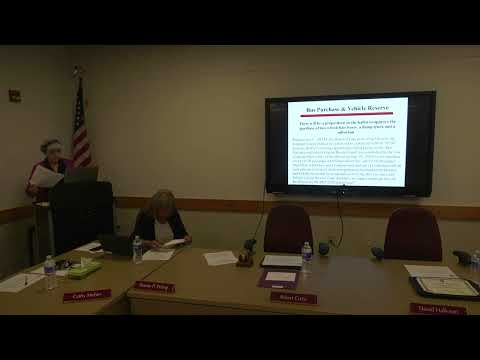
Technology, furniture and vehicles: Voters will decide propositions to purchase two wheelchair-accessible buses, a dump truck and a Suburban from the School Bus and Vehicle Reserve Fund; to buy student desks, chairs, tables, cabinets and musical instruments from the Furniture, Fixtures and Equipment capital reserve; and to purchase computer monitors, charging stations and infrastructure upgrades from the Technology Capital Reserve Fund. Neer said the district is moving from on-premises servers to Microsoft Azure cloud services and wants to restore classroom Chromebook sets and charging stations so every student can have a charged device each school day.
Contingent budget rules and potential cuts: Neer warned that if voters reject the proposed budget, the board may adopt a contingent budget. She summarized contingent-budget constraints: the tax levy cannot exceed the prior year, noncontingent expenses must be removed, and the administrative component cannot exceed the prior year’s percentage. For Gloversville she said adopting a contingent budget would require removing about $2,284,300 in expenses (described in the presentation as the amount tied to the levy increase) and that such reductions likely would affect buildings and grounds, general teaching equipment, some career and technology slots, and supplemental reading materials.
Library budget and board elections: The presentation said voters will also see the Gloversville Public Library budget and trustee election on the May 20 ballot; the presenter noted the library budget was defeated last year by a narrow margin and that passing it would allow reinstatement or enhancement of services. Library director Valerie Venturini was named as a contact for library-budget questions.
Voting logistics and contact info: Polls will be open 11 a.m.–8 p.m. on May 20 at Gloversville High School and Bleecker Town Hall, the presentation said. Absentee ballots have been mailed to registered permanently disabled voters; the district provided its office phone number for voting questions. Neer closed by inviting questions and providing district contact information.
Next step: Voters will decide the district budget and the five propositions on May 20; if the budget is defeated, the board may adopt a contingent budget under the rules summarized at the hearing.