Get Full Government Meeting Transcripts, Videos, & Alerts Forever!
Get email alerts on the K 12 Math Curriculum topic
No spam. Unsubscribe anytime.
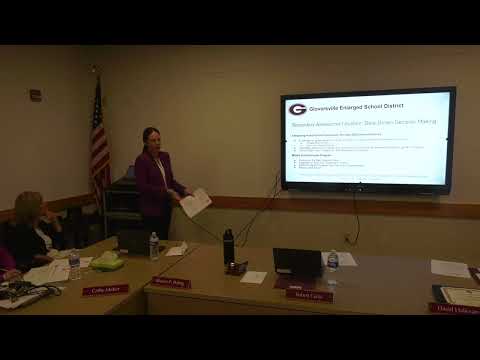
Gloversville presenters outline K–12 math program, emphasize common curricula and targeted interventions
Summary
District presenters described a coordinated K–12 math program that uses Ready Classroom Math at the elementary level and eMath in grades 6–12, includes daily 60‑minute elementary math blocks, tiered interventions, diagnostic screening and plans to expand honors screening in fifth grade.
Pasquale and Miss Baez presented an overview of the Gloversville City School District’s K–12 math sequence and intervention model during the board meeting, describing elementary-grade use of Ready Classroom Math and grades 6–12 adoption of an eMath solution.
The presenters said the elementary core math block is 60 minutes daily and that Ready Classroom Math emphasizes “productive struggle and student engagement through discourse.” They said pacing is aligned across grade levels to support common assessments and data review.
The presentation outlined tiered supports. For K–2, presenters described a 30‑minute daily “WIN” period with flexible grouping for foundational skills; for students more than one grade level behind, they said small groups of five students or fewer provide intensive intervention. At grades 3–5 the district is using the Acadience math diagnostic to pinpoint gaps such as subtraction-with-borrowing that may later affect work like long division.
For grades 6 through Algebra II, presenters identified an eMath program they described as standards‑aligned, scaffolded and “language heavy,” with built‑in assessments to support tracking toward state tests, including the NYSED Regents exams. The presenters said some introductory and SUPA course offerings use different materials when appropriate.
At the secondary level the district uses Academic Intervention Services (AIS) models. Presenters said AIS supports students who have earned course credit but still need skill development to pass Regents exams; a separate “math lab” supports students currently working to complete credit‑bearing courses. They emphasized offering introductory classes that feed into Regents courses so students can progress at an appropriate level.
Presenters described classroom walkthroughs, a growing focus on consistent formative assessment in grades 6–12, and use of a data coach (JJ Rebecca) and a math coach (Lacey) to identify priority standards and guide instruction. They said professional development has concentrated on elementary implementation this year and that the district plans to bring coaching and targeted PD to secondary staff, with support from Sam Feeney and district leadership.
Asked about honors and screening, presenters said the middle‑school honors program added a sixth‑grade honors class this year and that the district is “looking to test more than just a designated group of students” and may pilot testing the entire fifth grade to identify students who want to be challenged.
Board members responded positively; one board member called the initiative “the most coordinated, cooperative encompassing math initiative in the seven years I’ve been here.” No formal board action on curriculum adoption or budget authorizations for materials was taken during the presentation.
The presenters closed by inviting questions and noting that continued focus on fidelity of implementation, formative assessment and teacher coaching will guide next steps.