Get Full Government Meeting Transcripts, Videos, & Alerts Forever!
Get email alerts on the District Budget topic
No spam. Unsubscribe anytime.
Preliminary budget overview: state aid, electric‑bus mandate and transportation costs top district concerns
Summary
Superintendent and staff presented the district—s second preliminary budget meeting: administration described a roughly $106 million proposed budget base, a working gap of about $2.3 million after current reductions and tools, and highlighted transportation, student services and state mandates—especially the state—s electric‑bus timeline—as high‑exposure items.
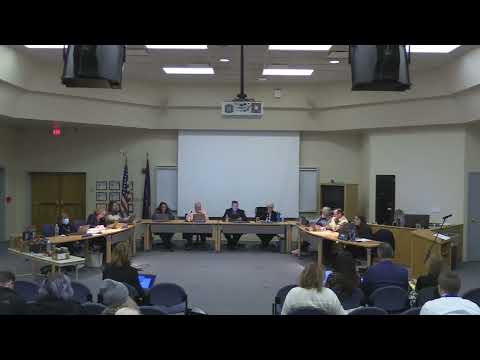
The Horseheads Central School District administration presented a preliminary budget overview and a prioritized list of additions for the 2025–26 budget, telling the Board of Education the district faces a multi‑year fiscal challenge driven by inflation, rising BOCES costs and mandated programs such as the state—s electric‑bus requirement.
Superintendent and senior staff summarized the governor—s budget proposal and its local impact: statewide school aid was described as increased in the governor—s proposal by about $1.6 billion and foundation aid by about $1.5 billion, but administration presenters said the district was targeted in the state formula to receive only roughly the minimum increase (about 2% under the governor—s approach). Staff said that differential treatment among districts—based on pupil‑poverty and other formula factors—meant Horseheads could be limited to a small aid increase even as inflation and local costs keep rising.
The business office presented headline budget figures and adjustments. Staff said the district—s proposed 2025–26 budget base was roughly $106 million and showed a baseline revenue increase of about $3.8 million (3.68%), but after accounting for one‑time uses and debt service the net revenue increase available for operations was presented as roughly $1.4 million (about 1.38% overall). The administration reported a working gap of about $2.3 million for the coming year after the administrative team—s current set of recommended reductions and revenue tools; that gap reflects reductions already made compared with prior years and a lengthy list of cost control measures the team said it has implemented.
Building and capital aid were described in detail. The district reported building aid in the current budget round of roughly $9.2 million (aid driven by prior referenda: referendum 1 and referendum 2). Transportation and bus purchasing were called out as particularly high‑exposure budget items because of federal, state and manufacturer shifts in bus technology and supply. Rich McCullough, director of transportation, told the board the district runs a fleet of 74 buses and is shifting purchases from diesel to unleaded gasoline to smooth rising maintenance and parts costs; he said roughly three‑quarters of the fleet has already been converted to gasoline chassis. McCullough said the district uses a 10‑year replacement cycle for buses and budgets roughly $1.6 million a year for bus replacements.
McCullough and assistant director Jason Johnson described parts‑price inflation and operational considerations: small bus parts (stop‑arm lights, amber lights) have increased substantially (examples given: 20–50% on certain items over recent years). Staff said switching to gasoline buses reduces some maintenance lines (example: fewer oil quarts per engine) and removes the need for diesel exhaust fluid and kerosene winter additives as diesel buses are retired. The transportation team said they are exploring fuel‑island upgrades (expanding a ~6,000‑gallon tank to ~9,600 gallons and adding dispensers) to obtain better bulk pricing and reduce pump congestion; staff said a district fuel reserve fund (approx. $155,000) exists for such work and that the reserve could cover the upgrades if the board so directs.
Transportation staff also described federal driver‑training requirements now overseen by the Federal Motor Carrier Safety Administration (FMCSA). The FMCSA training and certification process adds weeks of mandatory classroom and behind‑the‑wheel training for new drivers and increases trainer time and cost. McCullough said that driver training and a pending new drivers— contract create uncertainty on salary/monitoring lines that are still under negotiation.
Student services/special‑education staff presented budget drivers for related services. Kelly (student services) told the board the department is largely student‑need driven and that related services such as speech, occupational and physical therapy, social workers, and school psychologists have grown because the student population shows more intensive needs than in prior years. Staff said the student‑services budget increase is driven primarily by contractual obligations for staff rather than by adding large new staff counts; however they also warned that some reductions made in prior years are difficult to sustain.
Following department presentations the administration presented a prioritized list of proposed restorations and additions to the adopted budget (items the board asked to be ranked). Top items included restoring elementary teaching assistants and adding personnel to meet state requirements (additional PE teachers at each elementary), adding a social worker back at the high school, restoring some curriculum and music instrument replacement lines, and proposing two floating bus monitors. Other items on the administrative priority list included adding assistant principals, a school‑resource‑officer contract reduction, funding for a Summer Learning Academy, and restoration of some previously cut coaching or advisor positions. The board discussed that list at length and asked the administration to return with scenarios that show the budget gap closed through different combinations of tools (additional reserves, fund balance, tax‑levy options, or further reductions).
Board members and staff spent considerable time on the state—s electric‑bus timeline. Presenters said the law requires districts to begin ordering electric buses in the next budget cycles (2027 was cited as a benchmark for purchase restrictions, with fleetwide targets by 2035 in current statute). Staff warned of supply constraints as manufacturers sell a growing share of electric buses and of large capital and utility costs to electrify bus charging infrastructure. McCullough gave a comparative example saying an electric bus cost estimate used for planning could be more than double the cost of a comparable gasoline bus and that full implementation (buses plus site electric infrastructure) could be many millions of dollars—costs district leaders said would likely require state funding or voter support to implement without severe local tax impacts.
On reserves and next steps, the board discussed whether to place a proposition on the March ballot to dissolve or reconfigure a capital reserve to provide more liquidity for near‑term needs. Several trustees said the reserve was approved by voters for capital projects and that dissolving or redirecting it to balance operating shortfalls would be a poor precedent; others asked administration to investigate whether the reserve could be repurposed in part for emergency capital uses. Administration said state law and bond counsel guidance would determine whether the reserve could be partially used or must be rescinded in its entirety and that any proposition would require board action by the March meeting to meet ballot timing.
The board gave staff direction to: refine budget scenarios that close the gap using combinations of (a) further reductions, (b) use of fund balance or reserves, or (c) a tax‑levy increase (including the option of a tax‑levy override requiring a higher approval threshold). Staff said they would return with concrete scenarios, cash‑flow and debt‑service projections for the construction program, and a clearer proposal on the fuel‑island upgrade and bus purchase plan in time for the March meeting.