Get Full Government Meeting Transcripts, Videos, & Alerts Forever!
Get email alerts on the School Budget topic
No spam. Unsubscribe anytime.
Horseheads Central School District board narrows budget gap, weighs levy challenge vs. cuts
Summary
At a March 27 meeting the Horseheads Central School District reviewed the proposed 2025–26 budget, narrowed the funding gap and directed staff to refine levy-challenge scenarios before an April 10 decision. Board members split over whether to seek voter approval for a higher levy or make program and staffing reductions.
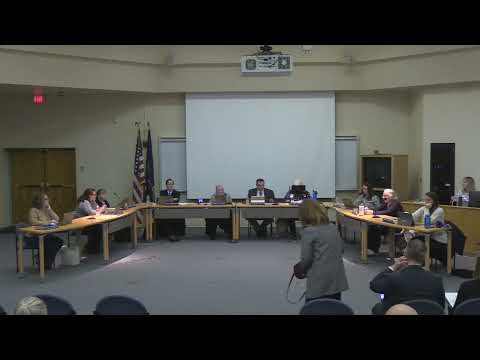
The Horseheads Central School District Board of Education on March 27 reviewed the proposed 2025–26 budget, narrowed the financing gap and asked administrators to return with refined levy-override scenarios and reduction options ahead of an April 10 working session.
District staff presented a draft 2025–26 budget that, with current assumptions and the items the board asked to consider, totals $106,296,471 and represents a 3.52% year-over-year increase. The presenter told trustees, "we are at fork in a row. That fork needs to be a decision at the end of this which road we travel down," and asked for guidance so staff could prepare final materials for the board’s next meeting.
Why it matters: the board must choose between seeking voter approval to increase the tax levy (a "challenge") to preserve staff and program additions, or making reductions that would lower the levy but cut services. The choice affects district staffing, student supports and the tax bill for local homeowners.
What was presented and how options compare: staff said the district’s current projected funding gap has been reduced to roughly 1.88 percentage points under the loaded budget scenarios the administration presented. If all optional additions were removed, the one-time dollar gap was presented as about $1.4 million. Staff summarized four paths: two non-challenge options and two challenge options.
- Non-challenge scenarios (no voter override): presented levies ranged from about a 7.47% increase (Option 1, no debt-service draw) down to roughly a 5.3% increase if the district uses debt-service reserves to lower the levy (Option 2). Both non-challenge options would require substantial reductions (staff said roughly $1.8 million of reductions in the higher-levy no-debt-service scenario) and therefore likely mean cuts to staffing and programs because the district's largest costs are personnel.
- Challenge scenarios (seek voter approval): Option 3 presented a challenge that would preserve the administration’s proposed staffing and program additions and, as presented, would raise the levy about 9.33%. Option 4 presented a narrower challenge that still used $1 million from the debt-service fund to soften the taxpayer impact and would raise the levy about 8.37% while retaining fewer discretionary additions. Staff noted both challenge options as presented would likely put the district under a 10% levy increase and said administrators would continue work to bring those numbers down where feasible.
Budget detail highlights: staff identified several revenue and expense adjustments that moved the numbers since the prior meeting: a modest transportation-aid reduction (about $25,000), an increase in excess-cost aid of approximately $243,000, a small interest/debt-service adjustment of roughly $12,000 and updated amortization for a capital project that moved building-aid treatment from a 15-year to a 20-year basis. Operating revenues shown earlier in the presentation were $104,409,249 before later adjustments.
Program and personnel proposals flagged as "considerations" (items the board could choose to keep or remove) included: three primary-level teaching assistants, three additional elementary assistant principals, restoration of some curriculum/curriculum-staffing allocations, a summer learning academy, two bus monitors and other targeted additions such as expanded curriculum supports. The administration said some items are restorations of previously-reduced lines while others are new additions tied to consolidation changes.
Board reaction and direction: several trustees said they preferred to put a challenge to voters rather than accept significant program reductions. Board member Dan said the trade-off of a higher levy to avoid deep cuts "seems like it's worth it" and said he would be strongly in favor of Options 3 or 4; others, including Board members Mary Anne and Christine, expressed similar support for a challenge while asking staff to try to limit the levy increase and explore cost-neutral approaches. Trustee Warren said a near-9.33% levy was unacceptable to him and urged restraint in using reserve funds.
Next steps and timing: staff asked trustees to choose a "side of the fork" so administrators could prepare a tightened set of figures for the April 10 meeting. The district indicated it will continue vetting avenues to lower the presented levy percentages — for example, additional state aid, final bond/interest figures, or other technical adjustments — and will present final recommendations for the board to act on in April. The district noted its 10‑year track record of conservative projections which historically have trended lower than projected outcomes.
Votes at a glance: the meeting also recorded three procedural actions. Trustees moved and seconded finance items 2.02 and 2.03 early in the meeting (motion recorded as moved and seconded; no roll-call recorded in the transcript). The board moved and seconded agenda items 3.02 and 3.03 (school calendar) and, after discussion, called the question; the chair asked, "All in favor?" and members responded "Aye." Finally, the board adjourned to and later reconvened from an executive session to discuss a potential legal claim or settlement; the transcript notes the district went into executive session and subsequently reconvened to public session but does not record a formal roll-call for the adjournment.
Context and limitations: staff cautioned that several figures are still pending final state aid amounts and other technical adjustments; where the transcript lacked a final numeric detail, the article reports the district’s wording (for example, that state aid "may be raised to 3%" or the projected ranges staff presented) rather than asserting a fixed figure. Staff repeatedly described some additions as "considerations" rather than final commitments; board direction will determine which are included in the final budget for public hearing and voter consideration.
The board will reconvene for final budget discussion on April 10 and is scheduled to hold a public hearing and the budget vote according to statutory timelines.