Get Full Government Meeting Transcripts, Videos, & Alerts Forever!
Get email alerts on the School Budget topic
No spam. Unsubscribe anytime.
Homer Central approves 2025-26 spending plan; board signals preliminary levy no higher than 3.9%
Summary
The Homer Central School District Board approved the 2025-26 budget resolution and, after extended discussion, signaled a preliminary tax levy guidance of no more than 3.9%, with part of a roughly $1.1 million gap to be covered from reserves amid a 13% health-insurance cost spike.
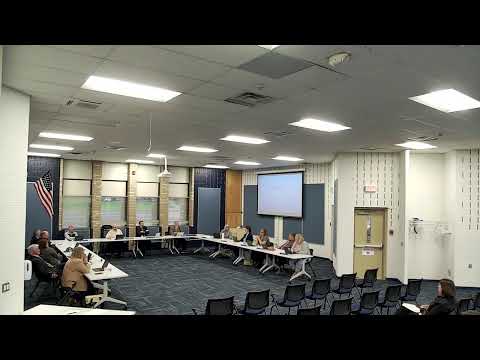
The Homer Central School District Board of Education on Thursday approved the 2025-26 district budget resolution and, after a lengthy budget presentation and debate, indicated it will publish a tax-levy estimate “no more than 3.9%” while relying in part on district reserves to cover a remaining gap.
The vote to approve the district’s spending plan passed during the meeting following a presentation on revenues and expenditures from Michael Turk, superintendent. Turk said the proposed spending total is about $50,679,000 and that the district faces a gap of approximately $1,100,000 driven in large part by health insurance costs that rose roughly 13%, “a number just shy of $900,000,” he said.
Turk told the board the budget assumes partial state aid related to the district’s building project this year and that full aid will be sought in 2025-26 when the project is expected to be completed. He recommended conservative budgeting given uncertainty over when project-related aid will be realized. The district also plans to use existing reserves as part of its gap-closing strategy.
Board members discussed multiple levy options and the effect on taxpayers. The board was told the district’s statutory tax-levy limit is 4.19% and that exceeding that limit would require a supermajority vote to adopt. Board analysis presented sample taxpayer impacts: at a 2.9% levy, the average $100,000 home would pay about $55 more annually; at 3.9% the same home would pay about $75 more. For a $500,000 home, the presentation showed increases of roughly $275 at 2.9% and $375 at 3.9%.
After members expressed differing views — with some favoring a lower levy (2.9%), others favoring higher (3.9%), and some proposing a middle figure — the prevailing direction was to release budget materials showing a levy of no more than 3.9% and to allow the board to reduce that number later if needed. A board member summarized the group’s direction as “no more than 3.9%.” The board president clarified the levy percentage published in the budget flyer is advisory; the formal tax-levy resolution will be voted on at a later meeting (the warrant/levy vote is traditionally in August).
The board also reviewed propositions that will appear with the budget information for voters: Proposition 1 is the total spending plan; Proposition 2 covers a bus leasing plan (the administration said it reduced the proposal from seven buses to six and estimated bus costs in the $130,000–$140,000 range for planning purposes); Proposition 3 is funding for Phillips Free Library (presented as a pass-through increase from $214,000 to $220,000); and a new capital reserve fund to be established for up to $5,000,000 (the district said New York State requires establishing a new capital reserve fund every 10 years). Turk said the budget flyer with the levy estimate must be printed and mailed to taxpayers by the 13th of the month so guidance was needed at the meeting.
Why it matters: The board’s decision to show a levy “no more than 3.9%” while using reserves to meet part of the budget gap sets the public-facing tax estimate voters will see before the budget vote. The approach balances short-term taxpayer impact with using district savings to manage unanticipated cost pressures, especially a sharp health-insurance increase, and it frames the proposition items that will appear alongside the budget on the ballot.
Board members asked for and received context about reserve policy, past levy history (board members noted several prior years with a 0% levy and recent years with small levies), and state oversight of reserves. Superintendent Turk and staff reminded the board that reserves exist to be used for scenarios like the present one and that the district has in prior years appropriated reserve amounts as a budgeting buffer.
The board set the guidance that the published levy percentage should be “no more than 3.9%,” with a final levy vote to occur later according to the district’s established calendar. The district will include the levy estimate and proposition descriptions in its mailed budget flyer ahead of the public vote and will hold a budget hearing and the district vote at scheduled dates in mid-May.