Get Full Government Meeting Transcripts, Videos, & Alerts Forever!
Get email alerts on the Edtech Ai Guidelines topic
No spam. Unsubscribe anytime.
Board reviews draft AI handbook; vote scheduled for next meeting
Summary
District technology staff presented a draft K—12 AI handbook describing a phased, supervised rollout of generative-AI tools. Trustees asked questions about privacy, "closed" vs. "open" systems, plagiarism and family outreach. Administrators said the handbook is guidance, not policy, and will be presented for board approval at the next meeting.
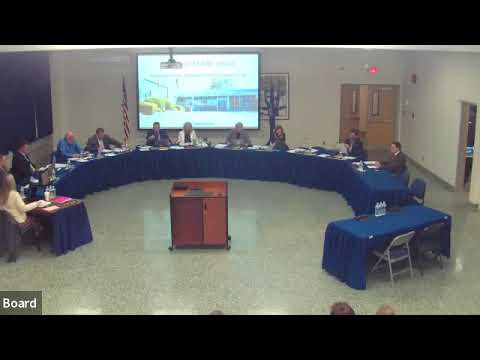
District technology staff presented a draft K—12 artificial intelligence handbook March 6 that lays out ethical principles, a rubric for vetting AI tools and a phased rollout that moves from supervised elementary use to greater autonomy at the secondary level.
David Lease, who led the presentation, said the district's approach emphasizes safety, privacy and teacher agency. "We believe that AI should serve as a tool that amplifies rather than replaces the expertise of our teachers," Lease said. He described a stakeholder process that included staff workshops, pilots of tools such as Briskin/MagicSchool, student voices and vendor reviews.
The handbook frames district use around closed systems and third-party agreements that district staff say comply with Ed Law 2-d data-privacy requirements. Lease said the district will only license tools under contracts that provide assurances about student data and fall under the district's security framework. "All of our tools that we're using within the districts and with students are under all of our security framework ... They're all with secure logins, all behind contracted and Ed Law 2-d approved, tools and vetting procedures," he said.
Trustees and staff spent substantial time in Q&A. Questions centered on three recurring concerns: how "closed" systems differ from open internet tools, how the district will detect and deter plagiarism or misattribution, and how families will be taught to understand the technology. Lease and other administrators said the handbook will include guidance on citation and academic integrity, a rubric for vetting vendors, and recommended family outreach via Parent University, website resources and communications from principals.
Trustee Donna asked for clarification on open versus closed systems; staff explained that closed systems are subscription-based tools authenticated through district accounts and covered by vendor agreements. Trustee Larry asked how students will identify "AI-assisted" work; staff said citations should include the LLM used and the prompt as part of standard academic integrity practices. Trustee Allison recommended bias-evaluation training be included with grade-level rollout and suggested live parent workshops to reduce fear of the tools.
Administrators emphasized that the current draft is a handbook (guidance) rather than new district policy. The staff said a full copy of the handbook is in the board packet and that the board will be asked to approve it at the March 27 meeting. Several trustees urged a robust parent-education plan and annual reviews of the handbook; administrators agreed to develop materials and training in advance of full implementation.
No formal vote on the handbook took place March 6; staff indicated the handbook will be brought back for formal board approval at the next scheduled meeting.