Get Full Government Meeting Transcripts, Videos, & Alerts Forever!
Get email alerts on the 1 Westfield Place Redevelopment topic
No spam. Unsubscribe anytime.
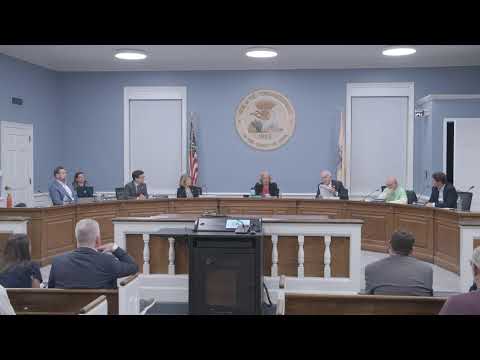
Westfield council approves amended 1 Westfield Place agreements, adds financing protections
Summary
The Westfield Town Council voted to approve amended redevelopment and public-improvement agreements for the 1 Westfield Place project, while introducing related financial ordinances that shorten the bond schedule, require a $4.7 million developer deposit before construction and add a minimum pilot payment tied to the town’s debt service.
The Westfield Town Council voted to approve amended redevelopment and public-improvement agreements for the 1 Westfield Place project, while introducing related financial ordinances and new contract conditions intended to protect the town’s fiscal position.
The council approved a package of documents that reflect a reduced project scope, a reordering of public improvements, and a new financial structure that the town’s advisers say lowers risk for taxpayers. Redevelopment counsel Steve Linnick and redevelopment bond counsel Matt Jessop presented the changes and the protections they say were negotiated for the town.
Why it matters: The amendments shift the sequencing of public improvements, reduce three planned bond issuances to two, accelerate a $4.7 million nonrefundable developer deposit to come to the town before construction begins, and add several conditions — including a requirement that the developer contribute at least $18 million in hard-cost equity and that a major West Zone residential building reach footing and foundation milestones before the town issues the first bonds. If those triggers are not met, the town may terminate the redeveloper’s rights for the North and South zones after a three‑year deadline, set in the agreement as June 30, 2028.
What council heard
Steve Linnick, the town’s redevelopment counsel, said the amended agreement reflects the redevelopment plan changes the council adopted last fall and “adds enhanced protections to the municipality.” He described three project zones — West, North and South — and said the West Zone remains the primary source of early pilot revenue. He also said the number of private components in the project falls from eight to seven under the amended plan.
Matt Jessop, the town’s redevelopment bond counsel, outlined how the town will secure bonds issued to fund public improvements. “All of the properties continue to pay land taxes,” Jessop said, and the pilot schedule remains a percentage of the project’s annual gross revenue: 13% for years one through five, 14% for years six through 15, and up to 15% for years 16 through 30. He said the town has two layers of security: a special assessment that can be used to pay debt service if pilot payments are not yet due, and a new minimum annual service charge equal to 100% of the town’s bond debt service once components reach completion.
Jessop added that the amended deal reduces the number of public-improvement bond issues from three to two and that the council negotiated a higher leasing threshold for the South Zone office building — 75% leased — before issuing certain bonds.
Key financial terms and protections
- Developer deposit: The redeveloper must deliver a $4,700,000 nonrefundable deposit at the commencement of construction; that money will be applied to public improvements.
- Equity and construction triggers: Before the town issues the first bond series, the developer must have completed footings and foundations for the largest West Zone residential building and contributed at least $18,000,000 in hard-cost equity.
- Bond structure: The amendments reduce planned bond issuances from three to two. Maximum debt authorization in the introduced bond ordinance was cited at $45,000,000; rounding in staff materials shows total bonds of about $34,200,000 for initial financing.
- Minimum pilot payment: Once a project component is complete, pilot payments are secured by a recorded lien. The amended financial agreements add a minimum annual payment that will be at least equal to the town’s debt service on those bonds if actual pilot revenues fall short.
- Force majeure and schedule: The redeveloper agreed to waive tolling for existing litigation-based force majeure events up to the point of construction financing, which the town says will accelerate the project schedule. The council also added a three‑year performance deadline (to 06/30/2028) that gives the town the option to terminate the redeveloper’s rights for the North and South zones if the specified triggers are not met.
Adjustments to revenue assumptions
Town advisers reviewed the developer’s pro forma and requested more conservative assumptions. According to presentations and the town adviser’s notes, Nassau Capital reduced the projected average monthly rent for West Zone multifamily units from roughly $5,100 to about $4,500 and lowered the estimated office rent for the Lord & Taylor reuse from about $46 per square foot to $38 per square foot. Matt Jessop said the town’s 32‑year gross-revenue projection using the adviser’s numbers is about $164.5 million, with an estimated $109 million in net pilot revenue available to the town after paying debt service, accounting for rounding and debt‑service assumptions.
Public comment and council concerns
Several residents and stakeholders addressed the council during the public-comment period and questioned the fiscal assumptions, traffic and parking mitigation, oversight, and environmental impacts.
- Bob Saunders (97 Barchester) asked whether the town had compared the developer’s pilot-based revenue to the taxes the town would receive under a conventional tax regime, saying, “When I hear incremental, I view it as greater than we are getting now.”
- Skyler Quackenbush asked whether the long‑term revenue numbers were expressed in present‑value dollars.
- Denise Sherwood asked the council to clarify the $20,000,000 acquisition-cost line for the West Zone and to explain a clause that would allow the developer to swap affordable units for workforce units if the total unit count changed.
- Carl Levinacci urged stronger written controls on construction oversight, contingency allowances and escalating construction costs, and he recommended a designated owner’s representative for long construction phases.
- Carrie Murphy and other residents asked for a town hall so the public could engage in a question-and-answer session outside the regular meeting format.
Council discussion and vote
Council members expressed differing views. Supporters said the amendments strengthen protections and deliver public improvements and long‑term revenue without near‑term tax risk to residents. Critics said the project remains too large, raised concern about the redeveloper’s broader corporate finances and the effect of the above‑ground parking garages, and asked whether the town had sought competing proposals.
After debate the council approved the amended redevelopment agreement and related documents and introduced several ordinances on first reading — including amended financial agreements, amended and restated special-assessment agreements, and a bond‑cancellation ordinance that removes $12,000,000 of previously authorized debt. The council also voted to approve the redeveloper’s long‑term tax‑exemption application and to move forward to a scheduled public hearing on the introduced ordinances on May 27; that public hearing will include opportunities for resident questions and additional presentations by town advisers.
What’s next
Town officials said the full presentation and financial reports — including the Nassau Capital review and supporting slides — will be posted on the town website. The council set a public hearing on the introduced ordinances for the May 27 meeting, when final votes on adoption are scheduled. The council also asked the town’s advisers and redevelopment team to prepare more detailed responses to the public’s specific questions about parking during construction, baseline tax comparisons, and the scope and costs of public improvements.
Discussion vs. decision
- Discussion only: Residents’ questions about traffic, construction staging, present‑value accounting and alternative developer proposals remained open and were referred to the May 27 hearing materials or follow‑up responses.
- Direction/assignment: Town professionals were asked to post the advisers’ reports and to address specific public questions at the May 27 hearing; the redevelopment team was asked to document temporary parking plans and construction sequencing prior to sale of the South Lot.
- Formal action: The council approved the amended redevelopment agreement and introduced the related financial/special-assessment/bond ordinances on first reading; those ordinances will be publicly heard and may be adopted on May 27.
Ending
Council and town advisers framed the package as an effort to preserve municipal control over a key downtown property, reduce project scope, and add financial guardrails; residents and some council members said they want more public engagement and more written detail on construction oversight and baseline tax comparisons before final adoption.