Lifetime Citizen Portal Access — AI Briefings, Alerts & Unlimited Follows
Senate Hearing Probes U.S. Acquisition of Greenland: Security, Mining and Consent
Loading...
Summary
At a Commerce, Science and Transportation Committee hearing, senators and two witnesses discussed possible U.S. acquisition of Greenland, highlighting Danish security burdens, Greenlandic economic prospects from mining, and the requirement of Danish agreement and a Greenlandic referendum.
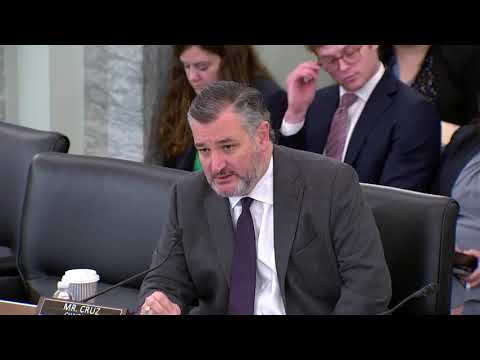
At a recent U.S. Senate Commerce, Science and Transportation Committee hearing, senators and witnesses discussed potential benefits and obstacles if the United States sought to acquire Greenland, focusing on security obligations, economic prospects and the requirement of Danish and Greenlandic consent.
Senator Cantwell said the proposal would face two immediate hurdles: Denmark’s agreement and a Greenlandic vote. "If The United States were to go forward with attempting to acquire Greenland, it would likely require the active agreement of Denmark and also the vote of the people of Greenland that this was a mutually beneficial step," she said.
The hearing centered on three themes raised by witnesses: Denmark’s security responsibilities in the Arctic; potential economic gains for Greenlanders from U.S. investment in mineral development; and a procedural path forward that would include a scientific survey and political consent.
Mister Gray, a witness, argued that Denmark has not sustained sufficient security in Greenland and that a U.S. commitment could relieve Denmark’s burden while limiting Russian and Chinese influence. "Denmark has failed, unfortunately, to provide the type of security that that the alliance, that NATO, that we all need, in the Greenland region, in the Arctic for a long time," Gray said. He added that Denmark has recently increased defense spending related to Greenland but characterized previous policy as "decades of neglect." Gray said that, in his view, Greenlanders have signaled an eventual move toward independence and warned against leaving a security "vacuum" that China or Russia could fill.
Gray also addressed potential benefits for Greenland residents if the United States were to take on Greenland’s defense and political status. He cited a McGill University survey and said "the vast majority, I think they said about 85% of the, Inuits wanted mining with the exception of uranium." Gray said U.S. entry could mean direct financial assistance and private investment to develop mines, producing jobs: "I believe once the Greenlanders, recognize that The United States would come in and provide a lot of assistance that, mining jobs would be there, and that's very important for the population."
Mister Marchese, a second witness, urged an initial scientific and economic assessment before any development. "The first step, as I mentioned in my testimony, would be to actually provide I believe the USGS would be the best forum or the best agency to do this," Marchese said, describing a multi-year mineral-characterization effort by the U.S. Geological Survey that would identify viable deposits and create preliminary jobs even before mines were developed. Marchese noted Greenland’s small population, adding, "Remember, there are only 56,000 people there, so you don't need that many to be happy to have the entire country be happy."
Witnesses and senators discussed historical U.S. territorial purchases as precedents; Gray referenced past U.S. acquisitions including the Louisiana Purchase and the purchase of the Virgin Islands and Alaska as comparative examples for negotiation and compensation. Senators and witnesses emphasized that any change in Greenland’s status would require negotiations with Denmark and a Greenlandic decision.
No formal legislation, motions or votes were recorded in the transcript. Witnesses recommended steps — including diplomatic negotiation with Denmark, a Greenlandic referendum and a USGS mineral survey — but provided no timetable or budgetary figures for those actions.
The hearing closed with senators and witnesses acknowledging the complexity of sovereignty, security and economic questions and identifying the need for additional study and international negotiation before any policy action could occur.