Senator urges renewed U.S. Arctic strategy, expanded icebreaker fleet and engagement with Greenland
Get AI-powered insights, summaries, and transcripts
SubscribeSummary
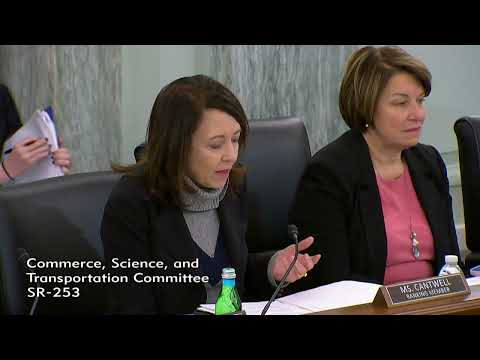
In opening remarks to the Senate Commerce, Science, and Transportation Committee, an unnamed senator called for renewed U.S. leadership in the Arctic, citing climate-driven new sea lanes, security threats from Russia and China, and economic opportunities in Greenland including critical minerals and hydropower.
An unnamed senator told the Senate Commerce, Science, and Transportation Committee in opening remarks that the United States must "renew and recommit to an Arctic strategy that solidifies America's leadership in the Arctic." The senator said climate change is opening sea routes and creating both new economic opportunities and strategic vulnerabilities.
"The United States is an Arctic nation," the senator said, noting long-standing economic ties to the region and asserting the risks posed by increased activity from Russia and China. "New shipping channels could shorten shipping times between Europe and Asia by 2 weeks or more," the senator said, and added that tourism, infrastructure development and critical mineral production could follow as ice retreats.
The senator warned that Russia and China are expanding their military presence in the Arctic and cited concerns including control of sea lanes, interference with undersea cables, and stealth submarine and missile activity. "Russia is also engaging in illegal fishing in Alaskan waters and operating a shadow dark fleet to evade oil sanctions," the senator said, and added that cooperation within the Arctic Council has become more difficult following Russia's invasion of Ukraine.
On capabilities, the senator said the United States is behind competitor nations on icebreakers. "Russia has already more than 40 icebreakers," the senator said, and contrasted that with the U.S. Coast Guard's two operational heavy icebreakers and the Navy's lack of icebreakers. The senator noted Congress has authorized six more icebreakers and that, thanks to bipartisan support on the committee, the Coast Guard "will soon operate a third icebreaker," but said additional investment is required to make that ship operational.
The senator listed other military and logistical needs, calling for shoreside infrastructure, icebreaker home ports and additional aircraft — "MH-60 helicopters, more C-130s, and P-8s in the region, and other navy and air assets." The senator said "we also need the brains to win the High North," criticizing proposed National Science Foundation budget cuts and citing a University of Washington study of Greenland glacier breakups that received roughly $400,000.
The senator recommended stronger cooperation with allies, proposing expanded NATO engagement in the High North and continued partnership with Canada, Greenland and Nordic countries. "With Finland and Sweden joining the alliance, 7 of the 8 Arctic nations are now NATO members," the senator said, and pointed to NATO operations that monitor threats and protect subsea infrastructure as models for collective action.
On Greenland specifically, the senator said historical and recent U.S.-Greenland agreements (including arrangements dating to 1951 and a more recent 2018 agreement) permit dual-use investments such as ports, fiber optic cable, radar and power plants. The senator suggested Greenland could supply critical minerals and hydropower potential and said he plans to introduce legislation authorizing the Department of Energy to study Greenland's hydropower feasibility. He also suggested the Export-Import Bank and other agencies could support U.S. infrastructure investment in Arctic nations.
The senator concluded by saying he looks forward to the committee—s witnesses, including a representative from the Wilson Center identified in the transcript as Dr. Pincus, and reiterated the need for U.S. strategic investment and allied cooperation in the Arctic.
Ending: The remarks served as opening testimony for a committee hearing on Arctic policy, with the senator framing national security, economic development and scientific research as linked priorities. Witness testimony was expected to follow.