Get Full Government Meeting Transcripts, Videos, & Alerts Forever!
Get email alerts on the Traffic Impact Studies topic
No spam. Unsubscribe anytime.
Commission hears staff concerns about traffic impact studies, access points and neutral review process
Summary
Planning staff and Public Works described how traffic impact studies (TIS) are used to evaluate proposed developments, the role of level‑of‑service thresholds in access planning, and recommended using a neutral, county‑selected traffic consultant to evaluate developer studies.
Planning staff and county public‑works officials told the Planning & Zoning Commission that traffic impact studies are a central tool to evaluate how proposed development will affect intersections, safety and roadway capacity, and that access‑point rules in the UDO have produced inconsistent outcomes.
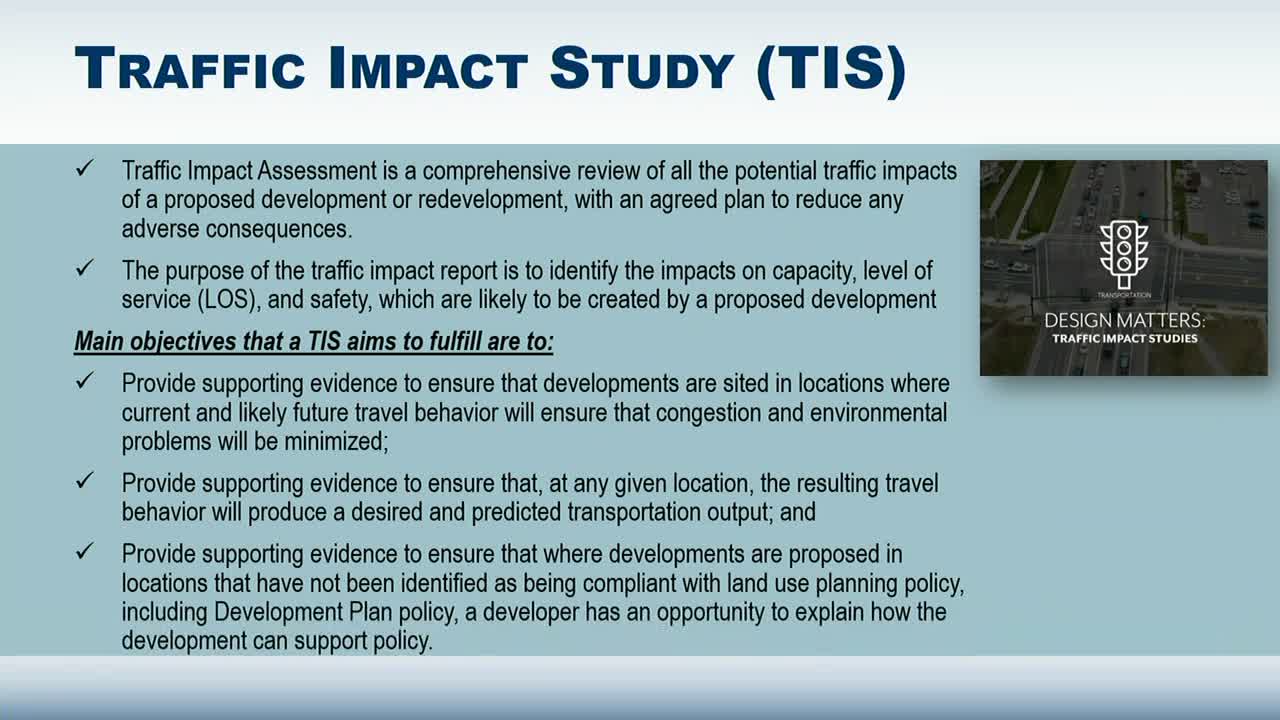
Mitch, Planning Director, and Jonas, Public Works Director, described a multi‑step role for a traffic impact study: identify site‑generated trips; evaluate impacts on nearby intersections and residential streets; propose mitigation (turn lanes, signals, added access points) and ensure pedestrian, transit and bicycle facilities are considered. “The purpose of that impact report…is to identify the impacts on the capacity, the level of service, and the safety which are likely to be created by a proposed development,” Mitch said.
Why it matters: staff said many Jefferson County roadways have spare capacity, but intersection operations and safety depend on context. Staff urged use of a neutral, county‑selected traffic engineering consultant to evaluate applicant‑funded studies so analysis is consistent and not subject to varying methodologies. Mitch described one local approach used elsewhere: the jurisdiction contracts every two years with a neutral traffic firm; applicants pay for studies but the county’s consultant performs or reviews the work to set a consistent scope and standard.
Access points and code concerns: staff criticized an existing arbitrary threshold tied to lot counts and said it can lead to inefficient subdivision layout. “This is the most arbitrary. These access points are based in no fact, are based in no data, have no rational connection to any regulatory thing,” Mitch said, calling the current standard a source of poor design in some subdivisions.
Practical example: staff referenced past developments where required off‑site improvements — such as a traffic signal — were used to mitigate impacts and noted that subsequent projects can benefit from those improvements when in place.
Ending: Staff said they and Public Works will continue coordinating standards and recommended commissioners expect more consistent traffic‑study guidance as part of the master plan and UDO revision.