Get Full Government Meeting Transcripts, Videos, & Alerts Forever!
Get email alerts on the Land Use Legal topic
No spam. Unsubscribe anytime.
County attorney warns commissioners about land‑use litigation risks and standards of review
Summary
County legal counsel briefed the Planning & Zoning Commission on the legal standards that courts apply to zoning, conditional uses and platting challenges, potential remedies including writs of certiorari and inverse condemnation, and how evidentiary records created at commission hearings are used in court review.
Jefferson County’s legal advisor reviewed the legal framework for land‑use decisions and the potential remedies available to property owners who challenge county actions, stressing the importance of a clear administrative record at commission hearings.
Dennis Cortes, County Counselor, told commissioners that zoning authority derives from the state and that courts reviewing local land‑use decisions rely on the record produced before the Planning & Zoning Commission. “Decisions of this county are challenged via a special writ called a writ of certiorari,” Cortes said, adding that courts commonly review the administrative record and may appoint a special master or take limited additional evidence.
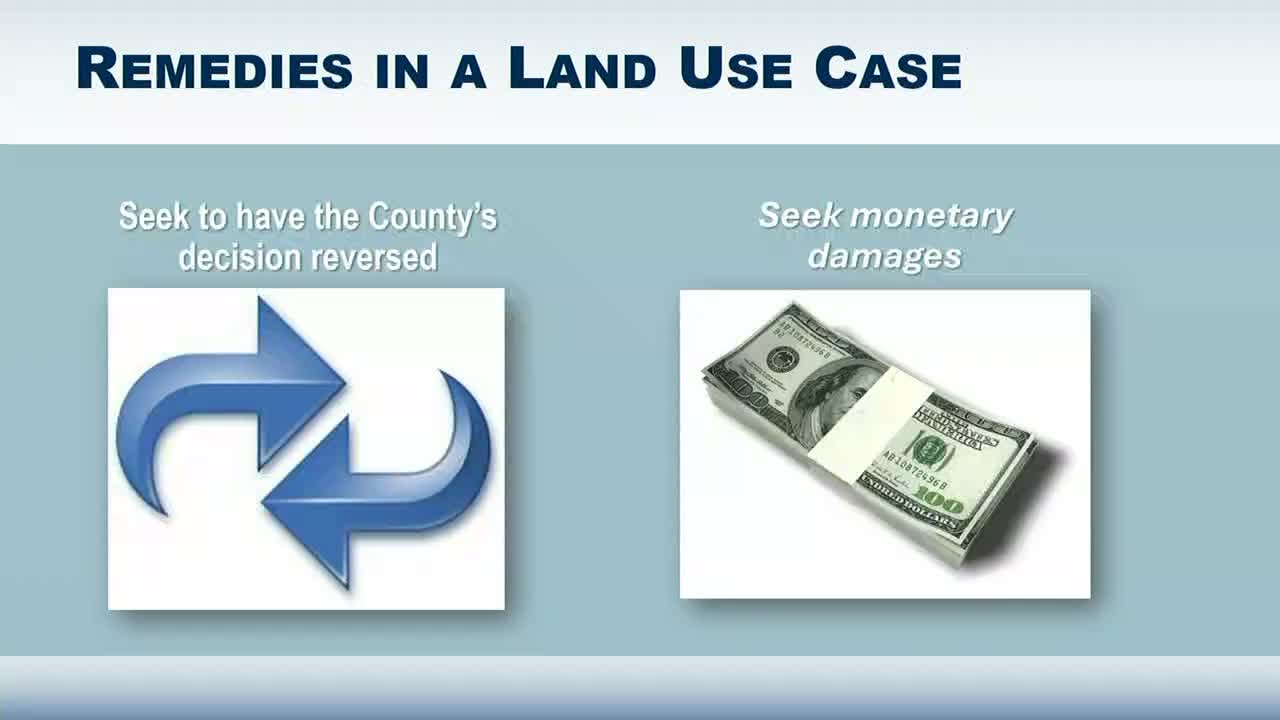
Why it matters: Cortes emphasized two primary remedies plaintiffs seek — reversal of a county decision and monetary damages — and warned commissioners that mistakes in process or arbitrary actions can expose the county to substantial liability. “There are a couple of remedies that [a plaintiff] may seek…either seeking to have the county’s decision reversed and seeking monetary damages,” he said.
Illustrative cases and rules discussed: - Gash v. Lafayette County (2008) and related Missouri caselaw that shape review of county zoning decisions via writ of certiorari. - Examples of monetary awards in local land‑use litigation, including a case the presenter described as involving a $500,000 award of attorney’s fees and other cases in which counties faced six‑figure judgments after courts found arbitrary or unreasonable action. - Schafer (platting case) and guidance that plat approvals are generally ministerial if they comply with subdivision regulations; denial of a compliant plat can be overturned.
Court standards: Cortes explained that courts assessing legislative zoning decisions will look at reasonableness factors such as surrounding zoning, the parcel’s adaptability to current zoning and impacts to neighboring properties. Administrative actions (for example, conditional uses or platting when deviations are requested) are assessed under a “competent and substantial evidence” standard and for arbitrary, capricious or unlawful action.
Staff cautions and operational guidance: legal counsel and planning staff urged commissioners to base questions and decisions on the UDO criteria and to seek staff or counsel guidance when unfamiliar legal issues arise. Counsel also recommended commissioners avoid posting case‑related commentary on social media during active hearings so as not to create an appearance of bias.
Ending: Legal counsel closed by urging careful attention to procedure and the administrative record because those written records are what courts examine in subsequent challenges.