Get Full Government Meeting Transcripts, Videos, & Alerts Forever!
Get email alerts on the Master Plan Emergency Services Maps Parks topic
No spam. Unsubscribe anytime.
Jefferson County councilors ask planners to clarify master plan language on emergency services, update maps and park listings
Summary
At a working session on the draft master plan, Jefferson County councilors pressed consultants to remove wording that implies the county owns or will finance fire and ambulance equipment, asked the emergency manager to review emergency-services text, and requested corrections to sewer and parks maps in the public-review draft.
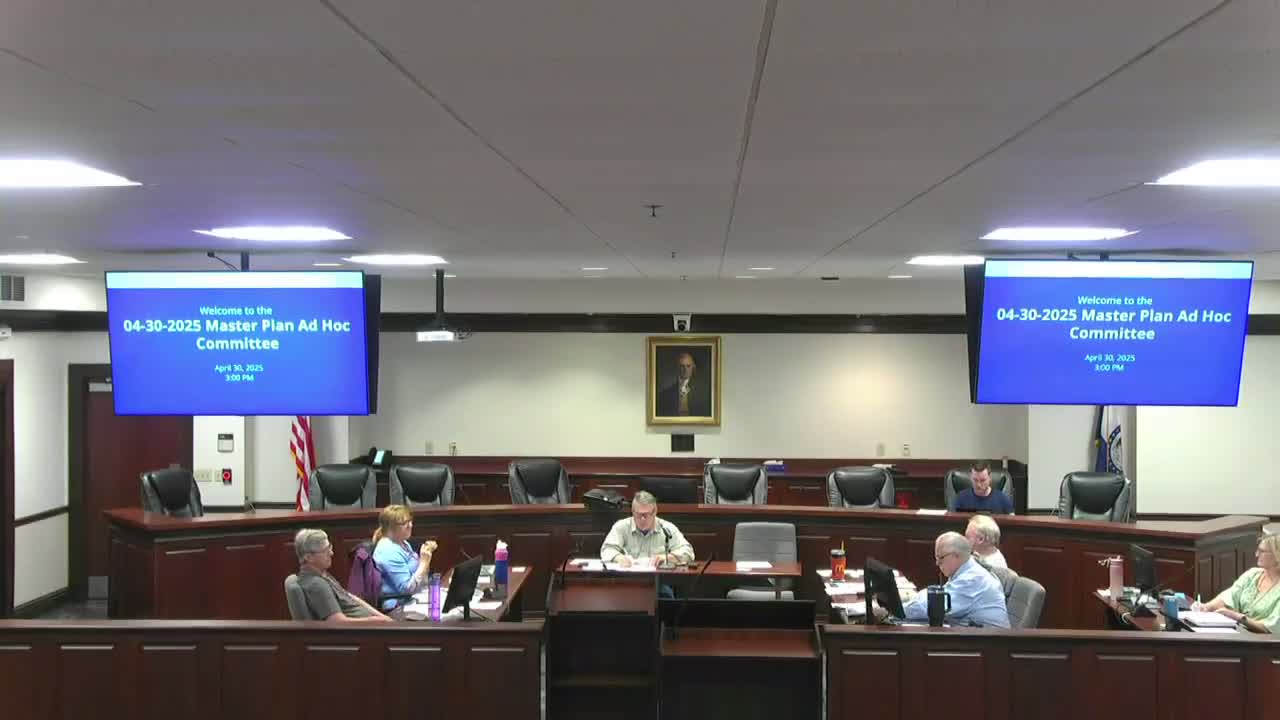
Jefferson County councilors, staff and local emergency officials spent much of a working-session review of the county's public-review master plan debating language about emergency services and asking the planning consultant to correct several maps and clarify recommendations.
The discussion centered on text that reads the county "should continue to invest in up-to-date emergency vehicles and certified EMS personnel." Council members said that wording suggests the county owns or will fund ambulances and fire apparatus, which are operated by separate fire and ambulance districts.
The debate matter-of-factly focused on the limits of county authority: several council members said the plan should encourage or collaborate with fire and ambulance districts rather than state the county will "invest" in their vehicles and equipment. They also asked that references to training and drills make clear which organizations lead or participate and remove duplicate recommendations.
Warren Robinson, Jefferson County emergency manager, told the group that some regional assets are purchased with federal dollars and maintained locally. "That truck in particular is owned by what's called STARS... it's a regional asset," Robinson said, referring to the Area Safety Response Team administered through East-West Gateway. He also described county support roles such as housing regional equipment and rotating an on-call county response vehicle for the public-safety group.
Why it matters: council members said the draft must not imply the county will command or directly fund fire and ambulance districts. They recommended rewording to reflect the county's actual role (coordination, technical support, letters of support for grants) and to add a brief description of the county's own emergency-management services so the public can see what the county does provide.
Key decisions and directions
- Council members asked staff to request a formal review of the emergency-services section by Warren Robinson, the county's emergency manager; they also asked consultants to revise wording that implies county ownership or direct funding for fire and ambulance apparatus.
- Members agreed to replace an earlier draft phrase "conduct an internal assessment" with language that encourages assessments and collaboration with fire and ambulance districts (the group suggested wording such as "encourage assessment to determine...").
- The group requested the planning consultant verify and correct sewer-district map boundaries (several speakers pointed out apparent mismatches and a missing legend color for one area) and to restore or add privately owned but publicly accessible recreational sites and county-owned parks to the parks/open-space map.
- Councilors agreed to remove a specific bullet that asked the county to "partner" with Ameren to develop incentive programs for utility-scale renewables (several members said that is Ameren's program and not one the county can meaningfully implement). They also agreed to delete one redundant training bullet that duplicated an earlier recommendation about specialized training for higher-density response.
Supporting details and context
Council members noted that many first-response functions are provided by separate political subdivisions: independent fire districts, ambulance districts and municipal fire departments. While the county's Office of Emergency Management houses some equipment and coordinates regional responses and drills, it does not own ambulances or fire trucks and cannot direct those districts.
Robinson and other speakers described services the county provides: specialized training facilitation, hosting or maintaining regional response trailers and some equipment, coordination during major incidents and rotating an on-call emergency response vehicle for the public-safety committee. The group also discussed STARS, a regional hazmat/response asset purchased with federal funds and made available across jurisdictions.
Maps and data concerns
Councilors pressed the consultant to fix several mapping issues before the plan goes to broader public review: inconsistent coloring and missing legend entries on the sewer-district map, apparent boundary differences between the earlier draft and the public-review draft, and omission of many privately owned recreational facilities and some county parks from the parks/open-space map. Tim (planning staff) was asked to record these specifics and ask the consultant to return corrected maps that clearly identify state, county, municipal and privately owned sites (where public access exists).
Procedural items
During the meeting the council approved the April 23, 2025 journal and later moved to adjourn after setting the next review meeting for the same weekday/time the following week. The group agreed to resume the master-plan review on page 76 of the public-review draft at the next meeting.
Ending
Councilors left the meeting with a list of word changes, map corrections and a clear request for input from the county's emergency manager. Staff will pass the notes to the planning consultant and return with revised language and corrected maps at the next scheduled review meeting.