Get Full Government Meeting Transcripts, Videos, & Alerts Forever!
Get email alerts on the Education Curriculum Financial Literacy topic
No spam. Unsubscribe anytime.
Colonial showcases K-12 economics and personal finance instruction, highlights longstanding high school course
Summary
District curriculum leaders demonstrated Colonial School DistrictK-12 economic and financial literacy instruction, described materials from the University of Delaware and Federal Reserve, and noted a longstanding full-year high school economics course that embeds personal finance for tenth graders.
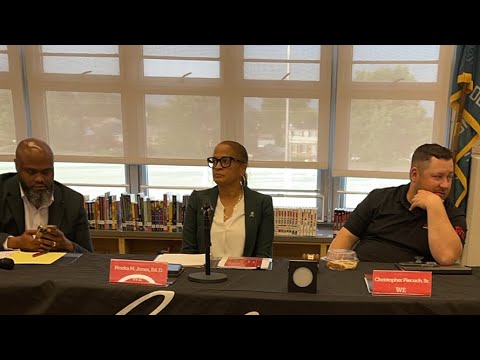
Dr. Nicholas Baker, supervisor of curriculum, assessment and instruction for the Colonial School District, presented the districtapproach to economics education and financial literacy on May 6, demonstrating how lessons are introduced in elementary grades and built through middle and high school.
The presentation matters because state lawmakers have recently considered a bill requiring a half-year financial literacy credit; the district described how its existing K-12 sequence already addresses the topic and how a tenth-grade, full-year economics course embeds personal finance standards.
Baker said the district begins economics instruction in kindergarten with a program called Economics for Kids, "designed by the Center for Economic Education at the University of Delaware," and that teachers use picture books and interactive lessons to introduce economic choices, trade and saving. Kelly Shusko, the districtsocial studies instructional coach, told the board those materials are culturally responsive and some were piloted in Colonial classrooms.
Seventh-grade social studies teacher Rachel Narcho described middle-school content that gives students an overview of economic systems and introduces macroeconomic indicators such as GDP and inflation. Jessica Sawyer, William Penn High School economics teacher, said the district has offered standalone economics and personal finance courses for more than 20 years and described a classroom activity from the taxes unit in which students compute paychecks and follow an answer chain to the next problem.
Sawyer said the curriculum includes community partnerships, noting presentations from John Bell of the Better Business Bureau of Delaware on scams and risks tied to payment apps such as Venmo and Cash App. Baker said the district uses materials and professional development from the Center for Economic Education and Federal Reserve resources.
Board members asked about pending legislation that would mandate a half-year financial literacy credit. A board member said the district already provides the content; Baker responded that the legislature has commissioned a study of how districts address financial literacy and that the report was recently released to lawmakers.
No board action was taken; the presentation was informational. Board members and students participated in the classroom activity and asked questions about topics including insurance, life insurance coverage and digital currencies. Sawyer said the district covers car insurance and addresses life insurance "in the access unit as a deduction, and then we go more in-depth when we're talking about insurance." On digital currencies, Sawyer said the district aims to add more content as the topic becomes more relevant and relies on partnerships with the University of DelawareCenter for Economic Education to update teachers.