Get Full Government Meeting Transcripts, Videos, & Alerts Forever!
Get email alerts on the School Budget topic
No spam. Unsubscribe anytime.
Lancaster Central outlines early 2025–26 budget: buildings, buses, benefits and state aid
Summary
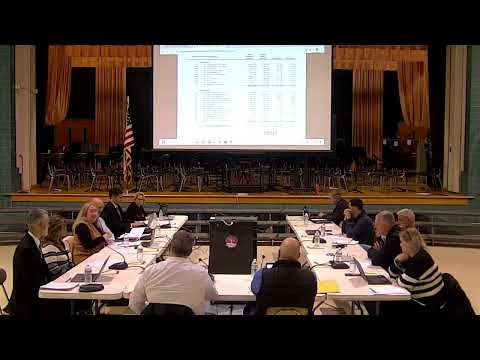
The Lancaster Central School District held a budget work session to review early proposals for the 2025–26 fiscal year, with administrators presenting projections for buildings and grounds, transportation, employee benefits, debt service and preliminary estimates tied to the governor’s state‑aid proposal.
The Lancaster Central School District held a budget work session to review early proposals for the 2025–26 fiscal year, with administrators presenting projections for buildings and grounds, transportation, employee benefits, debt service and preliminary estimates tied to the governor’s state-aid proposal.
Ms. Phillips, a district staff member who led the presentation, said the figures shown were “not the final budget for any of these things. We're still very early on in the process.” She said departments have submitted requests and the administration is making adjustments as additional information about revenues, staffing and programs becomes available.
Why it matters: The items discussed—facility upkeep, bus replacement and rising benefit and utility costs—together represent large portions of the district’s spending and will influence the tax-cap calculation and the district’s formal budget proposals later in the season.
Buildings and grounds: operations and equipment needs
District facilities staff noted heavier winter snow removal and rising utility costs. Mike Grunyarski, director of facilities, described the buildings-and-grounds operation as a workforce of 97 employees maintaining more than 1,000,000 square feet of building space and 332 acres of land. He said the department handles routine maintenance, custodial services, groundskeeping, vehicle and equipment upkeep, and emergency response.
The administration proposed a 5.45% increase in the operations and maintenance budget (about $468,000) at this stage, driven in part by contractual salary increases for support staff and rising utility rates. Ms. Phillips explained the district participates in a gas-and-electric consortium to moderate costs but said winter weather and increased tariffs approved by the New York State Public Service Commission have pushed costs higher.
For maintenance equipment, Grunyarski outlined proposed purchases for 2025–26, including a Kubota compact tractor (about $80,000), two Kubota subcompact tractors with blowers (about $30,000 each) intended for Court Street and Central Avenue schools, and a replacement Ford F-250 with plow (about $65,000). Grunyarski said replaced equipment would typically be sold at public auction or traded in to offset some acquisition costs.
Transportation: routes, driver shortages, contract routing and bus purchases
Judy Feldmeier, the district’s director of transportation, said the district currently runs 343 routes on 68 buses and transports about 5,575 students daily (446 to private or parochial schools), covering 52 different locations. She said Lancaster buses traveled more than 975,229 miles last year and transport 68 students through a contract with Western New York Bus.
Feldmeier described ongoing driver shortages compared with pre‑COVID staffing levels and explained the district will propose contracting routing assistance with FirstService (a routing vendor). The administration plans to present a one‑year contract for routing assistance on an upcoming board agenda; Feldmeier said the vendor typically offers three‑year contracts but agreed to a one‑year term for Lancaster.
The transportation capital plan includes replacing aging vehicles: five 28‑passenger buses (about $161,000 each) and one 65‑passenger bus (about $179,000), a package the presentation put at $991,484 in total. The district has a voter‑approved bus purchase reserve that the administration said is fully funded and available to cover this purchase with no immediate tax impact. Administrators noted supply‑chain delays for bus parts and semiconductor shortages affecting delivery timelines.
Electrification and state mandate questions
Staff described work under way to plan for the state’s electric‑school‑bus transition. The district submitted a fleet survey last August and has contracted a vendor to produce an electric vehicle transition study; that firm will present infrastructure recommendations, including charging and garage upgrades. Ms. Phillips said the study’s initial assessment found that “75% of the fleet we would need doesn’t exist yet” in electric models that meet the district’s route and power requirements.
Administrators and board members discussed the statutory timeline referenced in state guidance—districts will face requirements to purchase electric buses beginning in 2027 and to operate only electric buses by 2035—and flagged uncertainty about infrastructure grants, grant match requirements, and whether voters could reject capital propositions for electric buses. Ms. Phillips noted electric buses cost substantially more in current pricing: staff estimated a diesel/gas bus at the district’s typical price while an equivalent electric vehicle could cost more than twice that amount.
Employee benefits and debt service
The presentation included early estimates for employee benefits. Ms. Phillips said the district’s estimate for contributions to the New York State and Local Retirement System for support staff rose from 15.2% to an estimated 16.5% of salaries; the presentation used 10% as the estimate for the teachers’ retirement contribution for planning purposes. Medical insurance was estimated to increase by 10% in initial figures. Overall, the administration proposed an $2.4 million increase for employee benefits (about 8.11%) in this draft.
On debt service, staff said the district will move current project costs from bond anticipation notes to permanent serial bond financing as projects finish. The presentation showed a roughly $600,000 increase in debt-service costs attributable to that shift, offset in part by state building aid and a district debt-service reserve. Administrators said some recently filed final cost reports for completed projects had not yet been reflected in the state aid estimates but were expected to post in the near term.
State aid and other policy proposals
Administrators reviewed the governor’s executive proposal for the 2025–26 state budget, which included a proposed statewide increase in school aid of roughly $1.7 billion (about 5% overall). Under the governor’s proposal, the district’s initial estimate of state aid would rise from the current‑year basis to about $54.3 million—approximately $1.7 million more than this year—though staff cautioned that final aid will depend on the legislature’s one‑house budget proposals and the final state budget later in the spring.
The administration raised practical concerns about the governor’s proposals for universal school meals (which could reduce free‑and‑reduced‑price meal applications used as eligibility factors for other programs) and the state’s device‑free or “bell‑to‑bell” policy ideas for student cell‑phone restrictions. Dr. Kufel, a district administrator, and other staff said building‑level and district planning teams are exploring storage and management solutions (pouch systems, locker policies, etc.) and that funding for these potential mandates was uncertain.
Next steps and meeting close
Ms. Phillips said the district will continue budget work in two more sessions, with the next work session covering the instructional portion of the budget and the board receiving a tax‑cap calculation at a subsequent meeting. The administration will bring proposed contracts (including the routing contract with FirstService) and capital purchase proposals to upcoming board agendas for formal action.
The work session ended with a motion to adjourn that passed by voice vote.