Get Full Government Meeting Transcripts, Videos, & Alerts Forever!
Get email alerts on the Housing And Community Development topic
No spam. Unsubscribe anytime.
Dakota County approves 2025–29 consolidated plan and 2025 HUD action plan
Summary
After a public hearing with no public comments, Dakota County commissioners voted unanimously to approve the county’s 2025–2029 consolidated plan and the fiscal year 2025 one‑year action plan for HUD entitlement grants including CDBG, HOME and ESG.
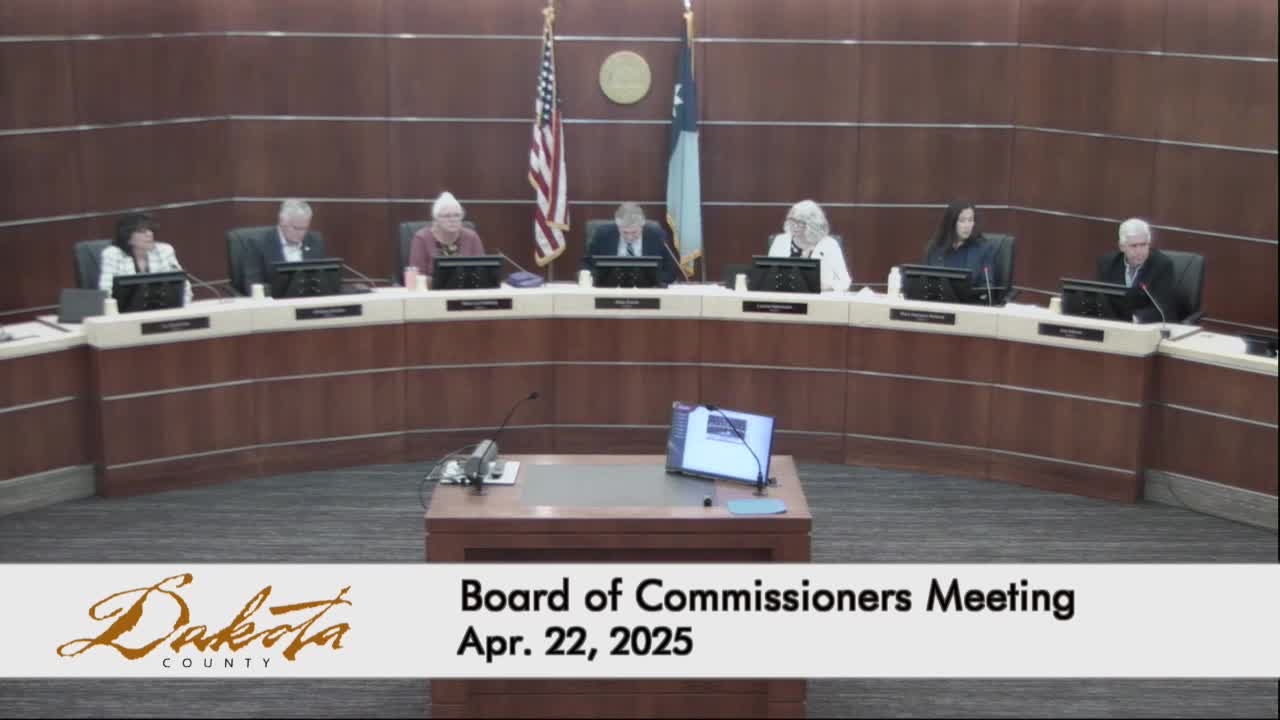
Dakota County commissioners approved the county’s draft 2025–2029 consolidated plan and the fiscal year 2025 one‑year action plan for federal entitlement grants on April 22, 2025, following a required public hearing at which no members of the public spoke.
The plans, presented by the county’s Assistant Director of Community and Economic Development, serve as the county’s application to the U.S. Department of Housing and Urban Development for Community Development Block Grant (CDBG), HOME Investment Partnerships (HOME) and Emergency Solutions Grant (ESG) funds. The presenter said the county is planning conservatively because final HUD allocations were not yet known.
The consolidated plan sets broad objectives for housing, non‑housing community development and public services for low‑ and moderate‑income residents and guides how entitlement funds will be awarded across the county and to member jurisdictions in the HOME consortium. The presenter said the county expects approximately $3 million in entitlement grants for 2025, using HUD’s required placeholder numbers until final allocations arrive.
Under the draft distribution for CDBG, the county proposed reserving 73% of estimated CDBG funds for cities and townships and 27% for countywide activities. Proposed uses listed in the presentation included housing rehabilitation (64% of city/township allocations), grant administration (13%), planning (4%), public services for low‑income youth or seniors (12%), neighborhood revitalization such as well and septic repair programs (5%) and down‑payment assistance (2%). The presenter noted CDBG activity funding will be adjusted proportionally if the final HUD allocation differs from the estimate.
For the HOME consortium, the presenter said the consortium’s placeholder estimate was about $2,000,100 for 2025 (the consortium received $2,127,170 in 2024 and, including program income, had last year’s program total above $2.4 million). The draft program sets approximately 74% for affordable housing projects listed in the executive summary, 15% reserved for Community Housing Development Organization (CHDO) set‑asides required by federal statute, and about 11% for grant administration. Dakota County’s anticipated HOME share was presented as roughly $864,000 (including program income), with about 36% reserved for future affordable homeownership, 37% for affordable rental housing, 13% for CHDO activities and 14% for administration.
The presenter estimated ESG funding to be a little over $170,000 for Dakota County, with 60% directed to emergency shelter operations (the statutory maximum), about 31% to rapid rehousing and homelessness prevention, 2% for data collection, and roughly 7.5% for administration.
The public comment period on the consolidated plan and action plan ran through April 18; the county reported it had received no written or online comments. The board opened the public hearing at the meeting and, after no in‑person comments, closed the hearing and moved to approval. Commissioner Adkins moved approval and Commissioner Hayman Rowland seconded; a roll call vote recorded all members present voting yes and the motion carried.
The board’s final approval at this meeting authorizes staff to return with the final consolidated plan and action plan for formal adoption once HUD issues final funding allocations. The presenter said staff will adjust allocations proportionally to match HUD’s final 2025 numbers when those figures are released.
Funding decisions in the consolidated plan will be implemented through activity statements and subrecipient agreements that will include program‑level details, and the county will report annual performance through HUD’s CAPER process at the end of each program year.