Get Full Government Meeting Transcripts, Videos, & Alerts Forever!
Get email alerts on the Public Safety 9 1 1 Funding topic
No spam. Unsubscribe anytime.
Jackson County committee lays out framework to manage 9-1-1 grant funds, asks staff to draft ordinance language
Summary
Members of the Jackson County 9-1-1 Oversight Committee discussed a five-part framework for distributing local 9-1-1 grant funds, debated whether the legislature or the executive should control prioritization, and asked staff to draft code language and materials for further review.
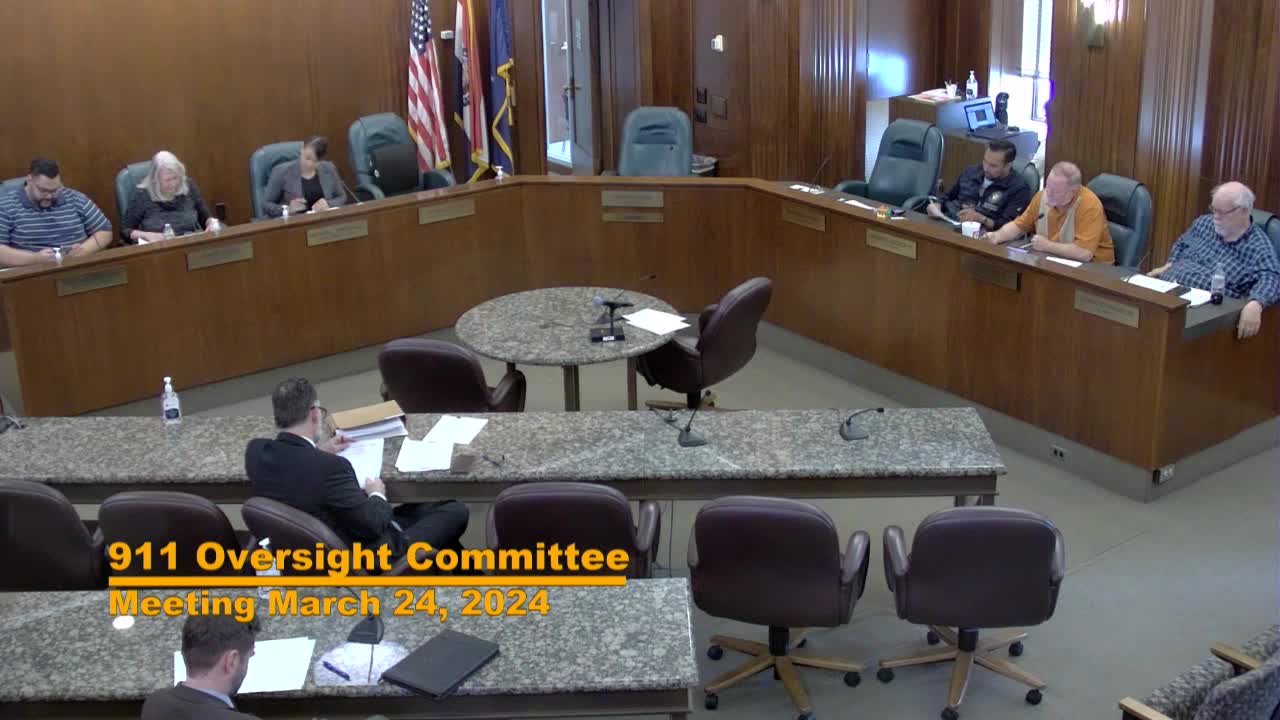
The Jackson County 9-1-1 Oversight Committee on Oct. 12 discussed a proposed framework for handling 9-1-1 grant applications and asked county staff to draft ordinance language so the legislature can consider formalizing the process.
“We're going to begin the 9 1 1 oversight committee. I'm Jeanne Lauer,” said Jeanne Lauer, chair of the 9-1-1 Oversight Committee, opening the meeting and outlining five areas the committee will use to evaluate future grant awards.
The nut graf: Committee members said they want a transparent, repeatable process for evaluating 9-1-1 grant requests—one that aligns with the state grant-application process, sets clear county code provisions for the fund, defines who reviews and prioritizes requests, establishes application timing windows, and publicizes priorities and application opportunities.
Committee discussion summarized the five elements Lauer listed: (1) the framework proposed last year by Legislator Sean Smith and related edits; (2) the state 9-1-1 grant application process and survey results already prepared; (3) establishing a county-level code or accounting code to identify 9-1-1 funds; (4) whether review should be handled by an ad hoc panel modeled on the county’s COMBAT commission or retained within the legislature; and (5) a public outreach and publication plan to notify municipalities, fire districts and police departments about priorities and application windows.
County staff told the committee they will prepare draft code language for the legislature’s consideration. “Yes. Legislator Lauer, we can put it together a draft for the legislature's consideration,” said county staff member Clifford.
Discussion focused largely on who should govern prioritization and disbursement. Legislator Sean Smith said he is seeking amendments to the draft process to reduce administrative control and to preserve legislative oversight. “My disposition would be to retain control within the legislature from the application process to the approval process, including directing the disbursement of funds,” Smith said, adding he wants the legislature to hear directly from applicants when possible.
Other members said they value continuity and consistency in whatever review body is created. Lauer and others suggested using the existing COMBAT commission as a template to preserve institutional knowledge from term to term, while opponents said an executive-appointed board could shift authority away from the legislature.
Committee members also discussed practical details raised in the meeting: one member suggested an initial application window at the start of the fiscal year with a secondary window about six months later if funds remain; another noted the county budget book currently lists an accounting code labeled 031 and asked how that relates to a proposed new code or Code of Ordinances provisions to define the fund and permissible uses.
Staff said some prioritization already exists at the regional level and is reflected in a survey Mark prepared; staff offered to bring Mark and representatives from KCPD and other agencies to brief the legislature about the technical priorities that state and regional committees have identified.
No formal vote was taken. Committee members agreed, directionally, to proceed: staff will prepare a draft outline of county code provisions and related materials (including existing ballot language and the ordinance that implemented the fund) for the committee and for review by the full legislature.
The meeting closed with members asking staff to return with draft language, examples of existing code provisions (such as those for the COMBAT fund), the state application materials, and the regional prioritization survey so the committee can develop final recommendations to present to the full legislature.
Ending: The committee did not finalize any ordinance or resolution at the session and scheduled further work to develop the process and materials required for formal consideration.