Get Full Government Meeting Transcripts, Videos, & Alerts Forever!
Get email alerts on the Towing Regulation topic
No spam. Unsubscribe anytime.
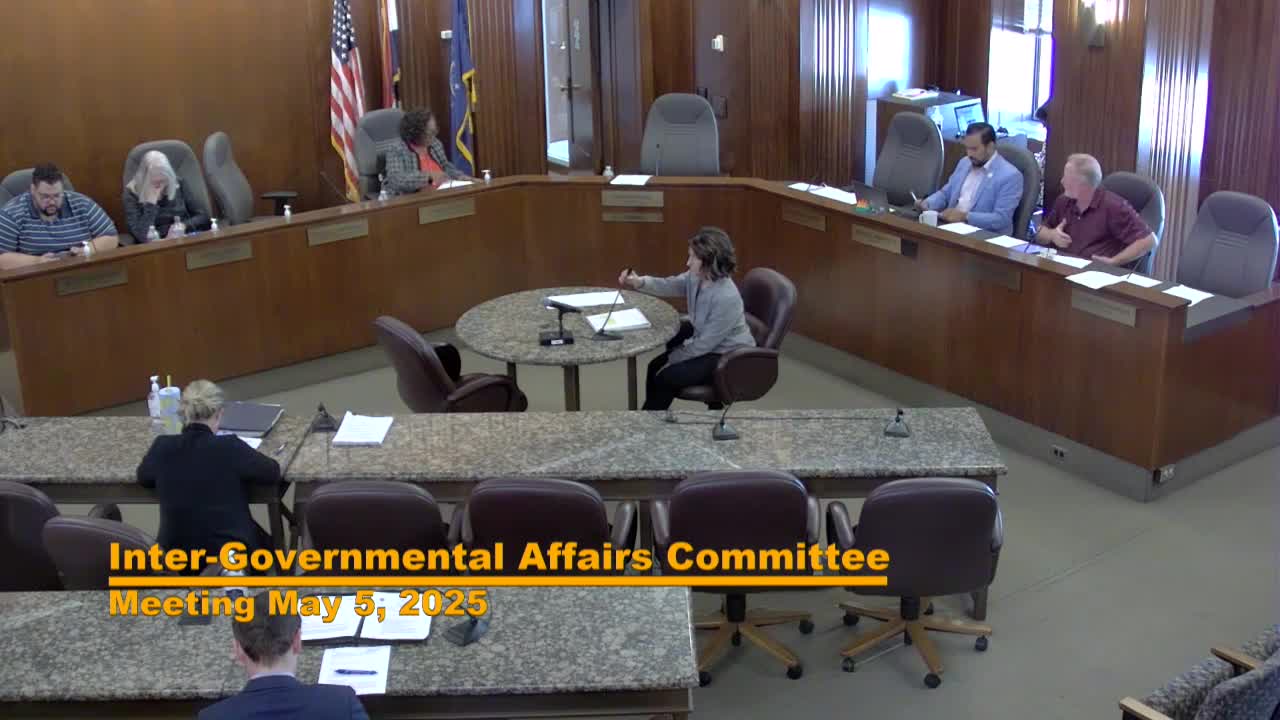
Jackson County committee holds proposed tow-company licensing ordinance after industry, police raise concerns
Summary
Jackson County’s Intergovernmental Affairs Committee paused action on a proposed ordinance to license and regulate tow companies after industry representatives, Kansas City police and a state trooper raised concerns about high fees, broad suspension language and implementation problems.
Jackson County’s Intergovernmental Affairs Committee paused action on a proposed ordinance to license and regulate tow companies after multiple witnesses — including tow-industry representatives, Kansas City police and a state trooper — raised concerns about high fees, broad suspension and revocation language and practical problems implementing state paperwork requirements.
Councilman Daryl Kearls, Fifth District at large, told the committee the ordinance “brings the county within adherence to state law,” citing state tow statutes and work he had done at the city level. Kearls said he had discussed the measure with county legislators to coordinate city and county approaches and asked the committee for support.
The committee’s public hearing drew extended testimony from law enforcement and towing-industry representatives. Missouri State Trooper Nate Bradley said state tow law and a Department of Revenue form (Form 4,669) are intended to create checks on mischaracterized tows and stolen-vehicle entries, but he said the process can break down when the form is not completed or when law-enforcement agencies do not return the paperwork. “That form…provides a check and balance when it’s working properly,” Bradley said.
Kansas City Police Major Chris Young and Sergeant Larry Corey said the department supports legitimate tow operators and described a small number of predatory operators whose actions create enforcement problems. Young said private-property tow forms are sometimes “rubber stamped” by people who are not property managers and described cases where enforcement tools are limited by record-keeping and staffing: "We respond on dozens of calls…we are absolutely in support of the tow truck companies that 99% of them…do the right thing," Major Young said.
Tow-industry attorneys and business owners voiced objections to specific ordinance provisions. Attorney Nick Porto and Jared Innes of All Star Tow/ Missouri Tow Truck Association told the committee the originally drafted license fees were out of step with neighboring counties and the suspension language could strip businesses of costly licenses without sufficient due process. Porto said an initial draft set the fee at $1,000 per business plus $250 per vehicle and that even an amended draft at $500 per business and $100 per vehicle remains far higher than nearby counties that charge roughly $75–$100 per business and about $25 per vehicle. Porto warned, “If my business was totally located here in Jackson County, my fee would be right at $10,000 a year.”
Industry speakers also criticized the ordinance’s suspension and revocation section (proposed section 52-97). Tim Marshall, who identified himself with Recovery Tow, said subsection language that would allow license revocation for employee misconduct or for holders of active bench warrants could make businesses responsible for employees’ personal legal issues. Jared Innes recommended separating licensing for consensual towing (motorist-requested service) and nonconsensual private-property towing.
Attorney Mark Meyer, representing tow clients, told the committee the county ordinance could conflict with a new city ordinance that requires tow operators to release vehicles on presentation of an insurance card, rental agreement or similar documentation. Meyer said state law and Form 4,669 limit lawful release to vehicle owners or lienholders and that inconsistent local rules could create legal exposure for tow operators who follow a city rule but then run afoul of state law.
Committee members heard that the Department of Revenue process and Kansas City’s records unit currently rely on faxed forms and can face significant volume: Trooper Bradley said the city processes roughly 100,000 Form 4,669 submissions in a year, creating a substantial administrative burden. Several witnesses said an electronic system would reduce delays and improve accuracy.
After public testimony and committee discussion, Legislator Lauer moved to hold consideration for further work; Legislator Abarca seconded the motion, and the committee voted to hold. Later in the meeting the committee voted to move the ordinance out of committee without a recommendation and instructed staff and counsel to draft amendments and continue work with stakeholders. Committee members said they would continue negotiations and accept written testimony.
The committee set no final timeline for adoption during the hearing; members said they expected further amendments to be drafted and circulated for review before the legislature considers the ordinance. The committee also announced it would work on amendments through the afternoon before a planned closed session with the legislative auditor.
Ending The ordinance as drafted was not adopted; the committee will seek amendments to address fee levels, suspension and revocation procedures, and implementation mechanics before the full legislature considers the measure. The committee invited additional written testimony and said staff would prepare revised language for review.