
Cabot Hope Squad students tell board they reached hundreds in schools and thousands in community
Get AI-powered insights, summaries, and transcripts
Subscribe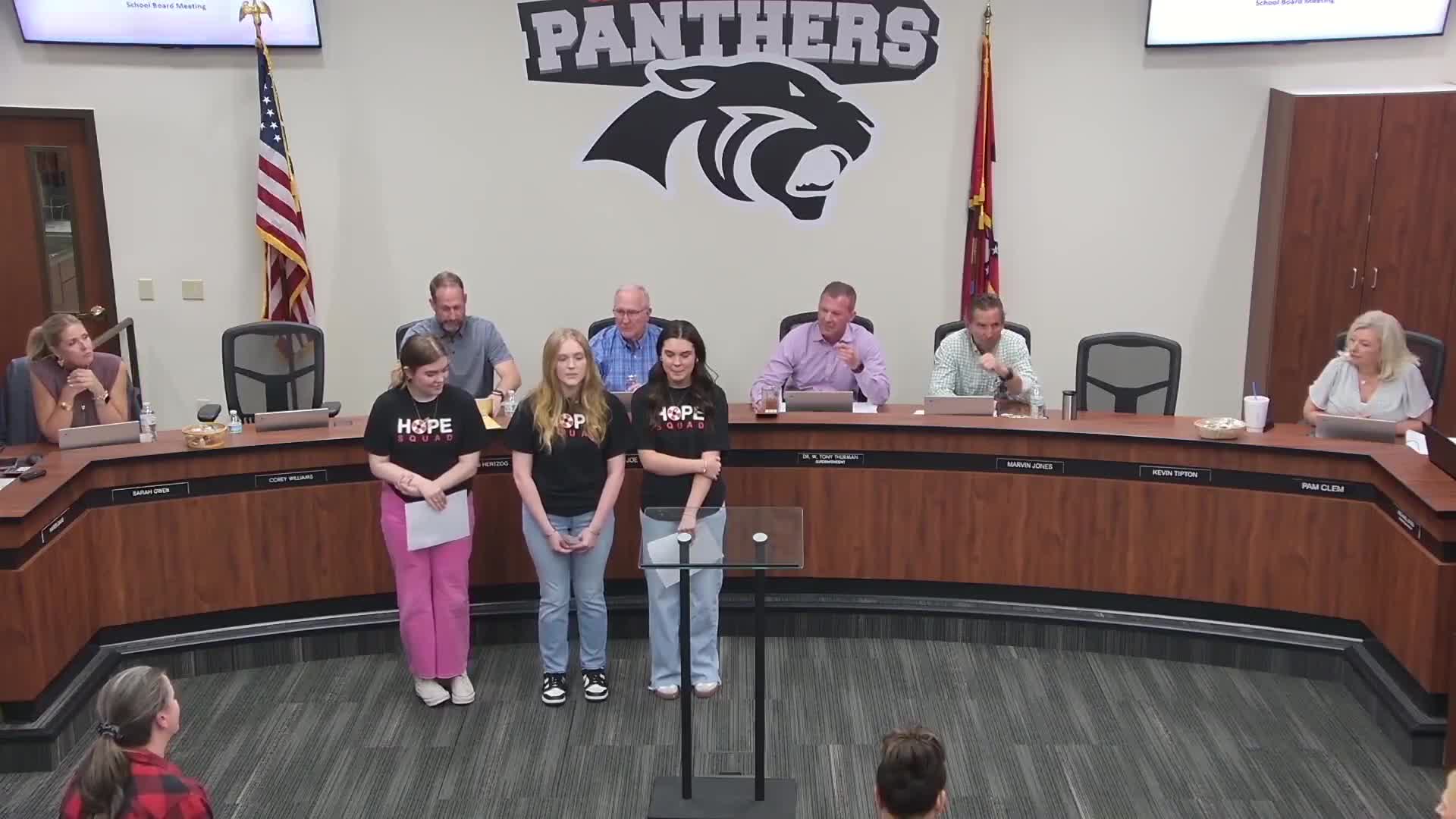
Summary
Hope Squad student leaders and advisers told the Cabot School Board the student peer‑support program has trained and reached thousands across school and community events since 2022.
Student members of the Cabot High School Hope Squad and district advisers briefed the Cabot School Board on April 15, describing peer‑to‑peer outreach, training and community events they say have expanded since the program began in the district.
Lana Slisher, a senior and Hope Squad member, told the board she spoke about her personal loss at the state capitol and said the program changed how she connects with peers: “Through this program, I have become a more empathetic person,” Slisher said. She said she will attend the University of Central Arkansas in the fall to study developmental psychology.
Rebecca Jordan, another Hope Squad senior, described the group’s training: she said peer members receive roughly 25 hours of initial training and 7–9 hours per year of follow‑up, drawn from curricula that include Talk Saves Lives and Hope’s Law. Jordan told the board that from 2022 through 2024 the high school team reached “over 700 students” in school programming and that a 2024 panel discussion reached more than 300 students.
District presenters described broader outreach beyond the high school. A district speaker said Hope Squad activities at middle schools and fifth‑ and sixth‑grade events reached about 2,500 students; community booths at Cabot Fest and partner events reached “about 3,500 or so people,” according to the presentation. The board also heard that Hope Squad organized an Out of Darkness walk in partnership with the American Foundation for Suicide Prevention and has added community resources and local referrals at public events.
Counselor advisers and administrators credited the program with training student “trainers” who then teach peers how to identify signs of crisis and refer them to counselors. Board members and attendees said the program has already connected students in at‑risk situations to immediate help; a trustee reported a recent incident in which a student reached out to a Hope Squad member and was helped that night.
The presentation emphasized that Hope Squad is not intended to make students “superheroes” but to equip peers to recognize signs and guide classmates to professional help. Program advisers told the board they have not requested stipend funding and run the program as a volunteer commitment.
Board members thanked students and staff for the presentation and accepted a small set of suicide awareness pins the students offered to the board.