Get Full Government Meeting Transcripts, Videos, & Alerts Forever!
Get email alerts on the Land Use Historic Preservation topic
No spam. Unsubscribe anytime.
Hundreds weigh in as Huntington board leaves Rosewood Farm historic-overlay hearing open until May
Summary
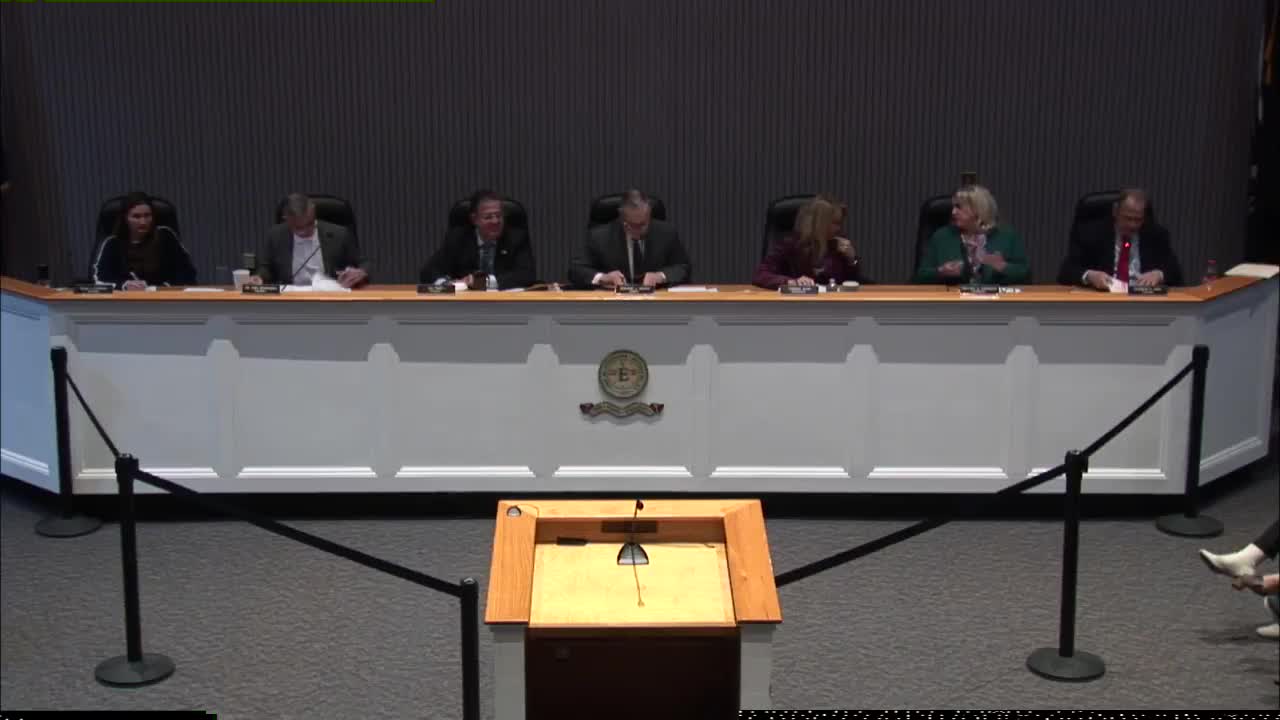
The Town of Huntington left a lengthy public hearing open until May 13 after residents, preservationists and the property's owners debated whether to apply the town's Historic Building Overlay District to the 24-acre Rosewood Farm estate at 473 Woodbury Road.
The Town of Huntington left a lengthy public hearing open until May 13 after residents, preservationists and the property's owners debated whether to apply the town's Historic Building Overlay District to the 24-acre Rosewood Farm estate at 473 Woodbury Road.
The hearing drew about 71 people who signed up to speak and ran into a second session before Supervisor Edmund Smith moved to keep the record open. "We're gonna leave this hearing open until the May meeting," the supervisor said, and the board voted to adjourn public comment on the item until May 13 at 2 p.m.
The applicants, Jan and Jude Rosenfeld, and their counsel and design team described a plan to preserve the estate's historic buildings while operating a 23-room boutique hotel and wellness retreat with a spa and farm-to-table dining for registered guests. Michael McCarthy, attorney for the applicants, told the board the owners would preserve the manor and outbuildings, limit disruptive uses and accept conditions. "No events. No events. No tents. No no no disco balls," McCarthy said, adding the owners submitted a list of proposed conditions they said would prevent large outdoor gatherings.
Historic-preservation advocates and several speakers for the project said adaptive reuse would save the estate from subdivision or demolition. Lawrence Leake of the Huntington Historic Preservation Commission, which inspected the property, said the grounds include the 19th-century Bumstead House and a 1930s Colonial-Revival mansion and recommended landmark designation. "The property is intact" and "one of the last remaining large intact parcels with historic buildings in the town," Leake said.
Opponents, mostly nearby residents on North Run, East Woods and surrounding streets, urged the board to reject the overlay or to attach strict covenants. Their primary concerns were traffic, noise, loss of privacy and the possibility that the hotel or future owners would host events and catering operations that would change the neighborhood from residential to commercial. Eric Schuster, who lives adjacent to the property, said the application initially omitted events and that his home overlooks the fields proposed for parking and activity. "If approved soon, no year will be replaced by delivery trucks, employees, parking lots, valets using golf carts to transport guests, garbage trucks and strangers walking the property," Schuster said.
Several speakers pressed the applicants for clear limits on events and for enforceable, written covenants. Attorney Andrew Levitt, representing nearby property owners, told the board he believed the application did not meet the overlay's requirements and asked the board to require restrictive covenants and a periodic review of conditions if the overlay is granted. Appraiser Robert Marks said the proposed commercial use would depress neighboring residential values and that event-related noise and lighting could be permanent.
Project team members said the site is historically sensitive and not suited to dense subdivision. Traffic consultant Wayne Mueller presented a traffic analysis that compared the proposed 23-room hotel to a hypothetical 10-lot subdivision, concluding the hotel's peak-hour traffic generation would be comparable or lower than several as-of-right uses that could go on the property without board approval. "The traffic generated by the proposal will not have a significant impact to traffic conditions on Woodbury Road," Mueller said.
The planning board completed parts 2 and 3 of the environmental assessment and on March 19 issued a negative declaration, according to the applicant's team, a step the applicants' representatives said allowed the project to proceed under state environmental law.
The board did not vote on the overlay; instead members left the public hearing open until the May meeting to allow additional comment and to consider new proposals discussed at the hearing, including the applicants' statements about limiting events.
The hearing drew a mix of preservation groups, local land-trust representatives and neighbors. Andrew Geisel of the North Shore Land Alliance said the property appears on the town's Open Space Index and protects steep slopes and watershed areas. Opponents cited the town's Horizons 2020 comprehensive plan, arguing the property should remain low-density residential. Several speakers suggested the town consider acquiring the land as open space if preservation is the goal.
The record will remain open until May 13; speakers and written comments submitted to the town clerk before the reopening will be added to the file.
Votes at a glance: no final vote taken on the Rosewood Farm historic-overlay request; the public hearing was adjourned and the record kept open through May 13 at 2 p.m.
What happens next: the board will continue to accept written comments and will again hear public testimony May 13; the board may also set conditions or seek mediation between neighbors and the applicants before considering any zoning change.