Get Full Government Meeting Transcripts, Videos, & Alerts Forever!
Get email alerts on the Public Safety Surveillance topic
No spam. Unsubscribe anytime.
Council backs county sheriff's plan to place license‑plate readers on New York State rights‑of‑way
Summary
By a 4‑1 vote the council adopted a resolution supporting the Niagara County Sheriff's deployment of license‑plate readers on state‑controlled roads within the city's borders; the resolution does not fund equipment and the DOT retains placement authority.
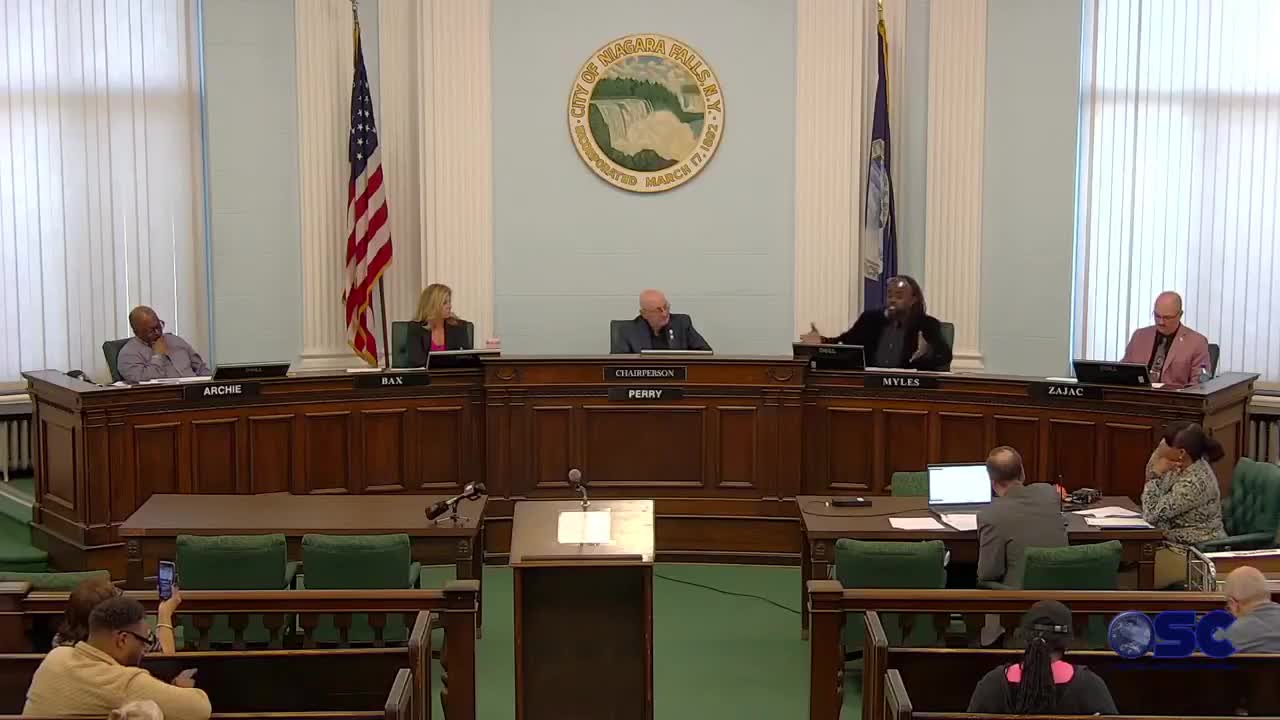
The Niagara City Council voted 4‑1 on May 1 to approve a resolution supporting the Niagara County Sheriff's Department's placement of license‑plate readers on New York State rights‑of‑way that run through the city.
Council members and residents raised questions about privacy, data sharing and whether the devices would be used for fines or traffic enforcement. Council member Miles asked directly whether the council was “setting our city up to be a, totalitarian state,” reflecting privacy concern among some speakers. Council chairperson Perry and other supporters said the technology is intended for investigative use — for example, to assist with Amber Alerts or homicide investigations — and emphasized the item would not impose fines or ticketing similar to a school‑zone camera program.
Speakers clarified that the state Department of Transportation controls what may be placed in a state right‑of‑way. The resolution is a statement of support that the DOT requested before approving sheriff deployment on state arterial highways; the council has no unilateral authority to force placement or removal on those corridors. Council members also said the initiative would not cost the city money; the devices are to be deployed by the county sheriff with DOT sign‑off.
The vote was recorded as 4 yeas and 1 nay. Supporters said the cameras can facilitate cross‑agency information sharing in investigations; critics said the city should evaluate data from the city’s own approved camera installations before permitting expanded county deployment on state roads.
The motion approved a statement of support to permit the sheriff to place readers on state right‑of‑way locations such as portions of the I‑190 corridor, certain arterials and other state highways through the city, subject to DOT approval.