Get Full Government Meeting Transcripts, Videos, & Alerts Forever!
Get email alerts on the Land Use Rezoning topic
No spam. Unsubscribe anytime.
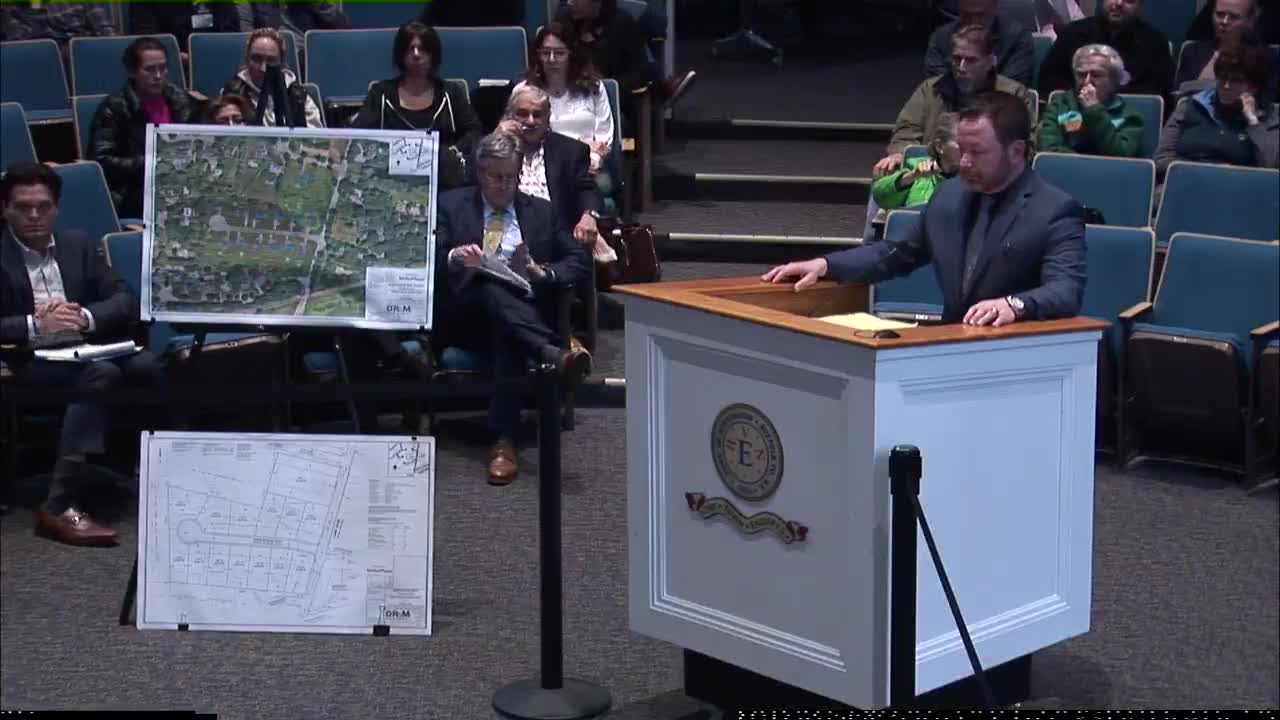
Huntington board hears hours of opposition and expert testimony at Green Meadow Estates rezoning public hearing
Summary
The Town Board held a public hearing on a proposal to rezone an 8.81-acre parcel on Lake Road from R-40 to R-20 to allow a 14-lot single-family subdivision. Developers presented traffic and market analyses; neighbors asked the board to preserve one-acre zoning, raised wildlife and stormwater concerns and pressed for an environmental impact study.
The Town of Huntington held a public hearing on a zoning change proposal for an 8.81-acre tract on the west side of Lake Road near Elks Court seeking to rezone the property from R-40 (one-acre minimum) to R-20 (half-acre minimum) to allow a 14-lot subdivision. The hearing drew developers’ representatives, traffic and real-estate consultants, and more than a dozen residents who urged the board to preserve the existing one-acre character of the neighborhood.
Why it matters: The property lies near the Long Island Rail Road crossing and within the Harborfields school district. Neighbors warned that rezoning will increase traffic and reduce open space and wildlife habitat; the applicant says the plan will add housing stock while keeping a “country” feel with an oversized 1.5-acre lot on Elks Court and half-acre lots elsewhere. The board heard competing technical analyses and personal testimony but did not vote at the meeting.
Developer presentation and technical reports: Ryan Brown, attorney for the applicant, said the proposal followed more than a year of plan development and argued the subdivision would provide low-density single-family housing consistent with nearby rezonings. Brown said the plan includes an affordable housing component and use of an existing recharge basin to avoid off-site drainage impacts.
Wayne Muller, a traffic engineer with Robinson and Muller Engineering, presented the project’s traffic analysis and told the board, “based on the detailed analysis that we performed, we do not believe that the subdivision of the property to contain 14 lots will have any significant impact on traffic conditions either on the subject property or on the surrounding roadway network.” He said sight distances at the proposed driveway meet recognized standards and that existing peak traffic at nearby Elks Court and the Lake Ridge condominium is low.
Opposition and local concerns: Residents said the proposed change would reduce neighborhood character and increase traffic, deliveries and service vehicles. Barry Specht, an Elks Court resident of three decades, told the board, “to me, low density is to maintain the 1 acre zone that is in place now.” Other speakers asked the town to require a full environmental impact statement before a rezoning, citing potential disturbance to bird nests and other wildlife and invoking New York environmental protections.
Wildlife and environmental review: Several residents and speakers raised the presence of osprey in the area and said a mature nest had been removed after the property changed hands. One speaker said removal of nests “is illegal under New York State environmental law.” The applicant’s submitted environmental assessment materials were discussed in the hearing: Planning staff indicated an Environmental Assessment Form (EAF) Part 1 had been filed and that the action was classified as unlisted with EAF Parts 2 and 3 prepared to analyze impacts and consistency with the town comprehensive plan. Town staff told the board the EAF analysis concluded that, given past disturbance and the site’s context, clearing vegetation would likely displace common suburban wildlife and that many species would relocate and potentially return after revegetation; that analysis does not by itself preclude further review if evidence of protected species or significant impacts is found.
Process and next steps: The hearing was informational; no final vote or rezoning decision occurred that night. The Town Board scheduled the item as a public hearing and reminded speakers that zoning and planning review, including any necessary planning-board approvals and environmental review under the town’s procedures, remain part of the process. Several residents requested additional studies and tighter public disclosure before any final rezoning vote.
Ending: The town board left the hearing open for public comment and will follow its established sequence — further agency review, planning-board review and any future board action — before acting on any rezoning request. Residents seeking to add material were told to submit written evidence to the town clerk for the record.