Get Full Government Meeting Transcripts, Videos, & Alerts Forever!
Get email alerts on the Public Works Potholes topic
No spam. Unsubscribe anytime.
Niagara City Council approves pothole‑killer pilot with overtime after heated debate
Summary
The council authorized a limited agreement with Patch Management Inc. to use a pothole‑filling machine alongside city crews, pledging overtime for a 21‑day pilot despite council and public concerns about effectiveness and lack of departmental data.
Niagara City Council approved a limited agreement on May 1 to contract with Patch Management Inc. for a pothole‑filling program that will run alongside city crews, with overtime paid to city workers for a 21‑day pilot period.
Supporters said the plan will allow the Department of Public Works (DPW) to compare the contractor’s “pothole killer” method with the city’s hot‑asphalt patching. Opponents and several public commenters said the administration did not provide enough detail — including which streets would be targeted and whether DPW supervisors or the DPW director would be present to evaluate results — before the council voted.
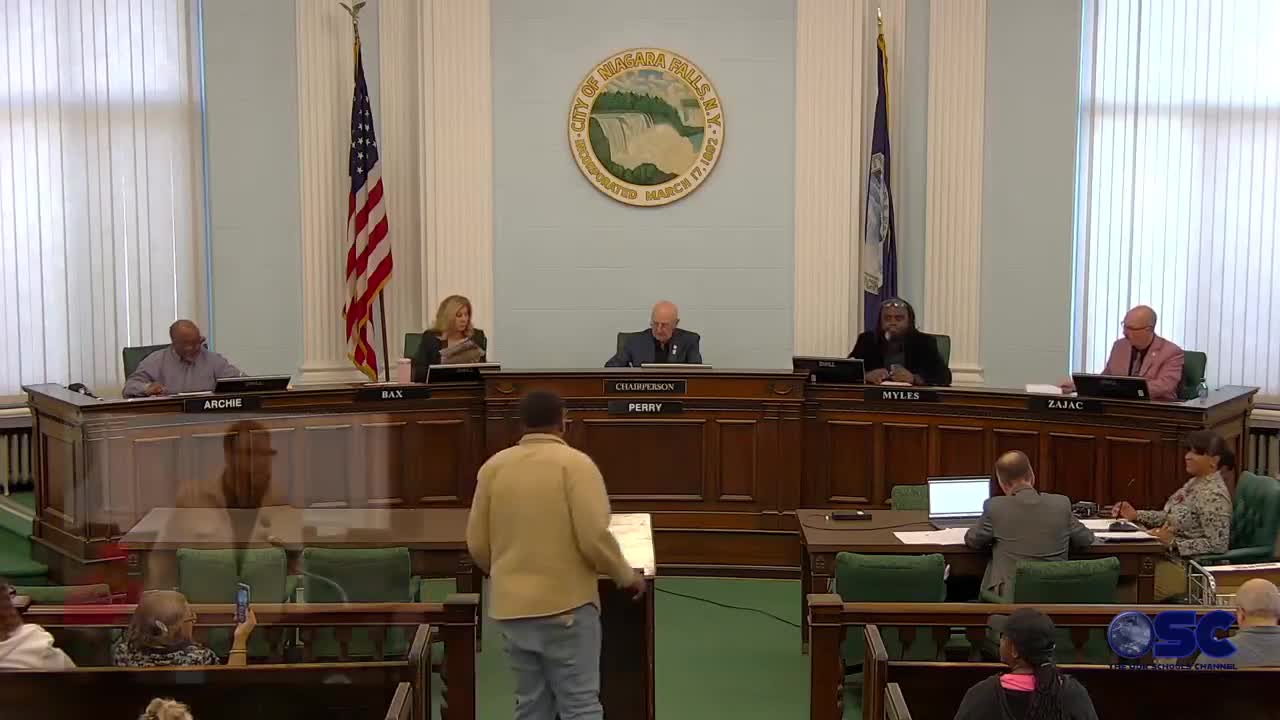
Council members who opposed the item said the city lacked the operational data needed to justify a roughly $100,870 overtime commitment that was cited in public comments. Council member Archie said he wanted streets fixed but opposed “the front loading of the overtime” and voted no. Council member Miles also voted no and urged tabling the measure until more information was provided. Council member Banks, Council member Zajac and Council chairperson Perry voted in favor, and the motion passed 3‑2.
The discussion that preceded the vote focused on process and evidence. Residents and council members repeatedly asked that DPW leadership — identified in the meeting as DPW director Kenny Tompkins — appear to explain operational details. One public commenter, Frank Hanley, said the product had “not been effective” in the past and urged a transparent plan before committing funds. Council chairperson Perry said the administration and DPW had been testing adjustments and that the pilot would let staff “see which process lasts longer on average.”
The administration told council members that if the contract is awarded, Patch Management will perform roughly half the work it performed the prior year; the DPW will continue its hot‑asphalt patching. The stated intent is to run both methods concurrently on different streets so DPW supervisors can compare durability and workmanship before recommending a long‑term course. Members said the specific street assignments would be made after the contract award.
The record shows the overtime figure cited during public comment: “4 hours of additional overtime pay for 21 days, totaling 100,870 dollars,” a resident asked the council to clarify. The council directed DPW and the administration to supervise the pilot and measure comparative outcomes; the vote approved authorizing the mayor to enter the agreement as recommended in the mayor’s memo dated 05/01/2025.
The council’s action was procedural: it authorizes the mayor to enter the agreement; operational details, including assignment of streets and the department’s comparative results, will be reported by DPW staff after the pilot.
Residents who spoke at the meeting said they wanted a durable, long‑term solution to recurring potholes and clearer accountability from contractors and DPW staff. Several council members said they expected follow‑up reporting to justify continued contractor work in subsequent seasons.