Get Full Government Meeting Transcripts, Videos, & Alerts Forever!
Get email alerts on the Short Term Rentals topic
No spam. Unsubscribe anytime.
Council renews Granicus short-term rental service amid concerns over enforcement and accuracy
Summary
The council voted 3-2 to extend a contract with Granicus for another year to help monitor and manage short-term rentals; public commenters and some council members criticized the vendor's accuracy and the city's enforcement capacity.
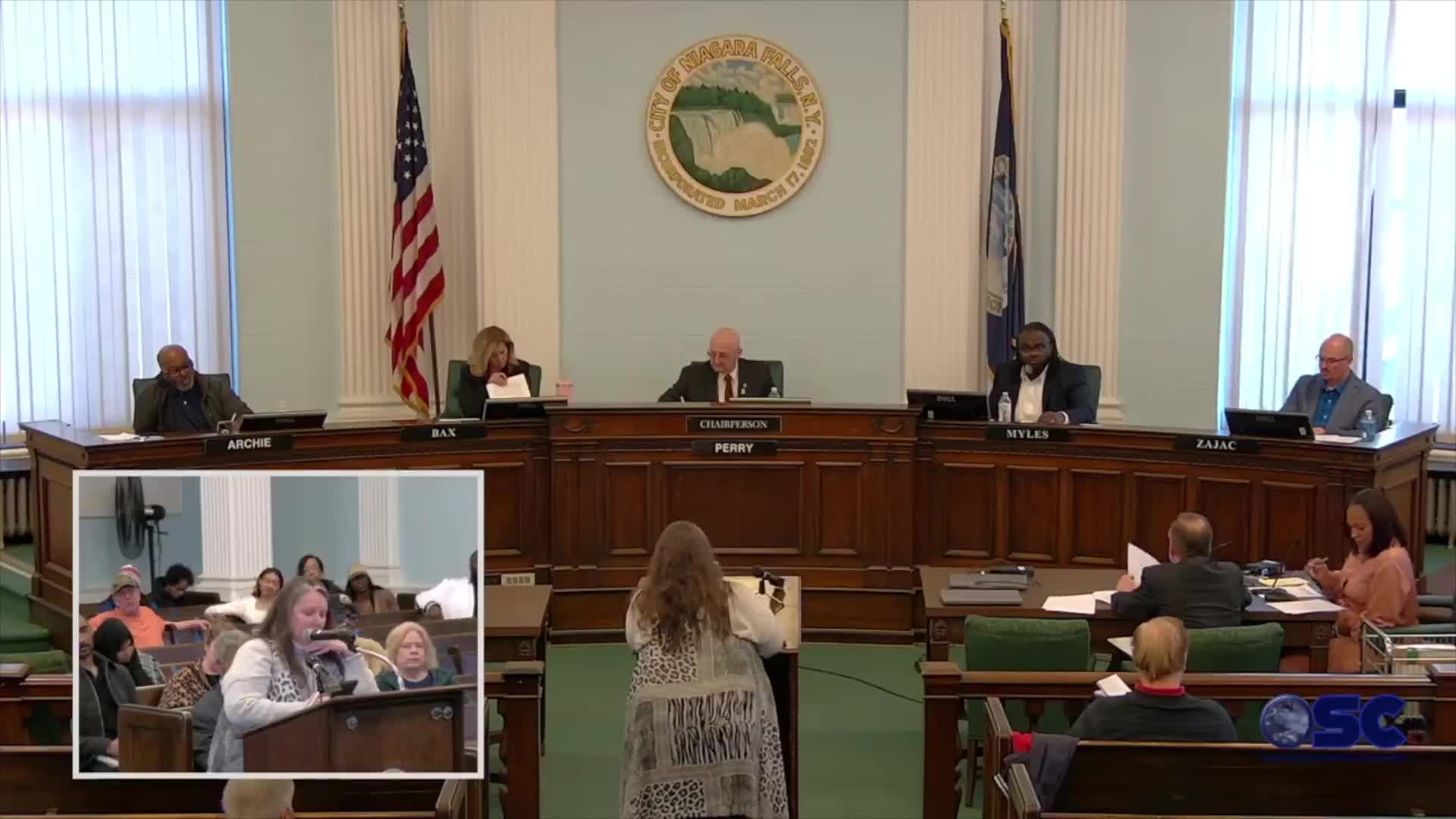
The Niagara Falls City Council voted 3-2 on March 26 to extend the city's contract with Granicus for another year to provide services related to short-term rental (STR) monitoring and enforcement.
Public commenters and some council members said the vendor’s reports have produced inaccurate property identifications, created unnecessary enforcement actions and raised litigation risk. Cherish Bills, who has attended multiple local government meetings, said Granicus “has misidentified properties as short term rentals, which triggers letters being sent to those properties that include a threat of up to 15 days in jail.” Several speakers asked the council to reconsider the ordinance regulating STRs and the city’s reliance on third-party software.
Acting corporation counsel (speaking during the item) said he reviewed service records and complaints and “found no evidence” to support claims that Granicus’ site had been inoperable for eight to twelve months or that Granicus had generated litigation against the city. The counsel also reported Granicus’ recorded outputs for the city: the vendor had identified 171 non‑compliant STR operators and compiled data from 322 applications and 861 monitored properties; over the contract period Granicus had helped facilitate tax collection activity and licensing activity that the city estimated at just under $300,000 in combined receipts.
Opponents argued the city lacks the enforcement capacity to act on the data. One council critic compared the software to “a radio with its light on but not playing music,” saying the city receives identification data but has insufficient enforcement follow‑through. Supporters said the platform provides the intelligence needed for code enforcement officers but acknowledged training and staffing gaps during 2024 contributed to slower enforcement.
Because of the divided council and ongoing concerns about implementation, council members said staff should prioritize training for code enforcement and ensure clearer processes for converting Granicus data into enforcement letter runs and inspections. The motion to extend the service was adopted with yes votes from Council members Banks, Zajac and Chairperson Perry; dissenting votes came from Council members Archie and Miles.