Get Full Government Meeting Transcripts, Videos, & Alerts Forever!
Get email alerts on the Public Safety Technology topic
No spam. Unsubscribe anytime.
Niagara City Council delays decision on license-plate reader project after privacy questions
Summary
Council members postponed awarding contracts for a license-plate reader program for the Niagara Falls Police Department, requesting more details on locations, data handling and pole ownership after residents raised privacy and surveillance concerns.
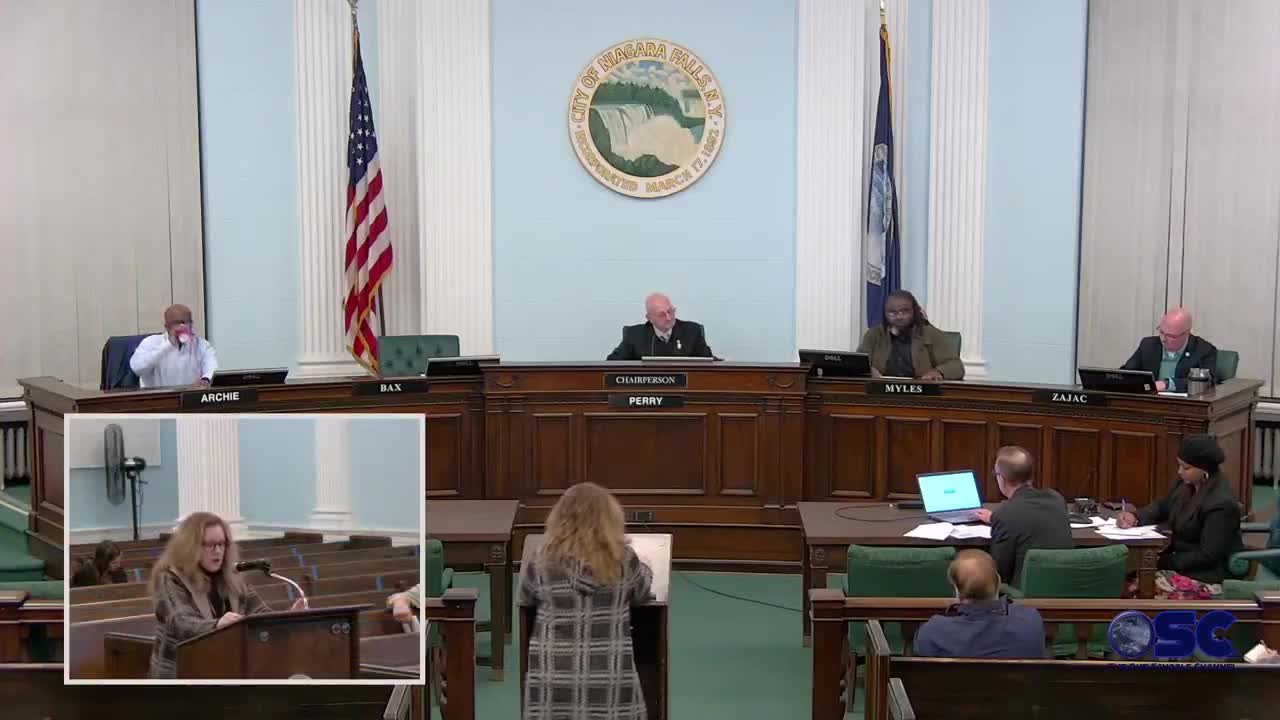
The Niagara City Council on Feb. 5, 2025, voted to postpone awarding contracts for a license-plate reader project intended to assist the Niagara Falls Police Department, citing requests for more information about camera locations, pole ownership and privacy protections.
Council members moved to postpone the award until the next council meeting after an extended information and public-comment period that included questions from residents and technical clarification from city staff. A motion to postpone was made, seconded and passed by a 4-0 roll call.
The project was introduced to the council as an award of contracts to supply and operate automated license-plate readers (ALPRs). During the discussion a staff member described the system as plate-reading software and said it is not facial-recognition software, saying, "the software is designed to read plates." The staff member added that the system can help investigations by identifying whether a suspect-associated plate left the city and in what direction it travelled.
Residents at the meeting raised privacy and equity concerns. Tanya (last name not specified), a resident who spoke during the public-comment period, asked where readers would be placed and whether the devices would "be surveilling people now" and whether certain neighborhoods or individuals could be targeted. Other speakers asked whether recording plates on public roads amounts to surveillance and urged the council to require firm location and usage information before approving purchases.
Council and staff clarified several implementation details during the discussion: specific installation addresses have not been established; the council must approve any new pole installations in the city right-of-way; many of the city's light poles are property of National Grid, and attachments to those poles would require the utility's permission; and final location approvals for right-of-way installations would return to council in the coming months. A staff member estimated specific location approvals would likely be "a couple months off."
The council did not vote on awarding contracts at the Feb. 5 meeting. Instead, members agreed to postpone action to the next meeting to allow staff to provide more detailed information about locations, attachments to existing utility poles and other technical and privacy protections.
The postponement means the council will receive further documentation before deciding whether to authorize installations in city right-of-way or accept attachments to utility-owned poles. The item remains scheduled for a future council meeting pending those details.