Get Full Government Meeting Transcripts, Videos, & Alerts Forever!
Get email alerts on the Clean Neighborhoods topic
No spam. Unsubscribe anytime.
Council narrows notice requirement in Clean Neighborhoods ordinance for public-health hazards, 3-2
Summary
The council amended the Clean Neighborhoods ordinance to permit immediate cleanup of situations posing an emergency to public health or the right-of-way without the existing 10-day posted notice; the measure passed 3-2 after debate over equity and enforcement.
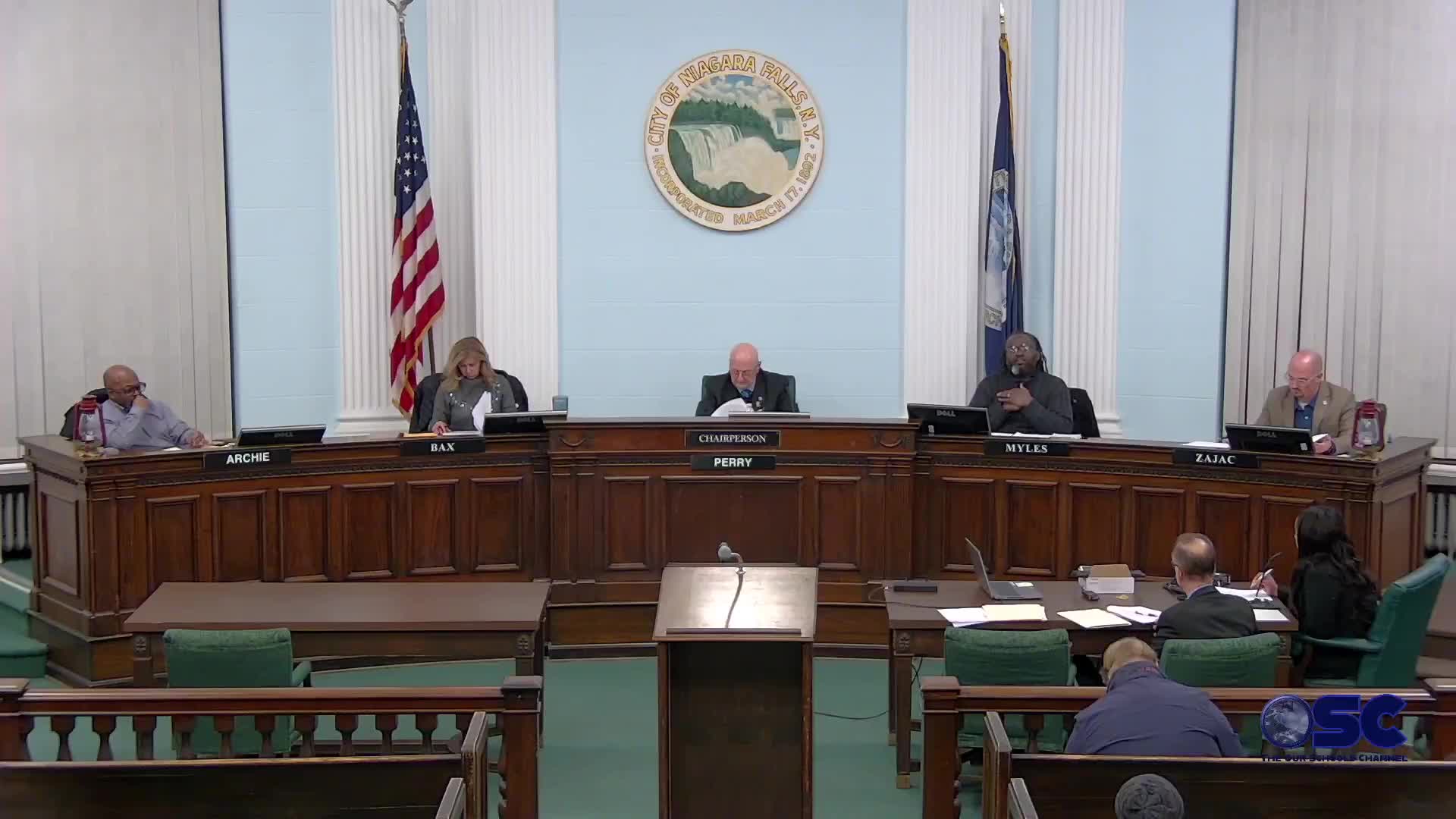
Niagara Falls City Council approved an amendment, 3-2, to Charter section 7-3-8 (the Clean Neighborhoods ordinances) on Jan. 22 to allow the director of Public Works or the code enforcement officer to order immediate cleanup without the standard 10-day notice when a condition poses an emergency to public health, safety or the public right-of-way.
The administration said the amendment is targeted to high-risk, time-sensitive situations—examples cited during the meeting included garbage bags torn open with diapers or exposed hypodermic needles that, if not removed immediately, present a public-health risk. “If this amendment is approved tonight, it will only pertain to situations that pose an emergency relating to health, public safety, or the public right of way,” a city attorney explained during the council discussion.
Under the existing ordinance, code enforcement or the director of DPW could post a 10-day notice and send letters to occupants and owners to compel cleanup. Supporters of the amendment said that rule can leave hazardous materials in place while rats or other animals tear open bags, creating ongoing health hazards; the change authorizes immediate city cleanup in qualifying cases and charges the property owner for the cost.
Opponents warned the authority could be applied unevenly and disproportionately affect disadvantaged neighborhoods where dumping and repeated nuisance conditions are more common. Council member Archie, who lives in the Fourth District and described frequent local dumping, said he feared the change would impose cleanup costs on property owners who did not create the mess. “I would have to be the one that's responsible for that dollar amount for their cleaning,” Archie said, describing how some alley dumping and repeated backyard messes have fallen to neighbors to manage.
The administration said the amended procedure requires the DPW director or code official to consult the city administrator before ordering immediate cleanup and that field teams will photograph and document conditions so the city can defend charges if contested in court. The administration also told council members the bill will be sent to property tax if unpaid after standard collection periods.
Council members discussed safeguards and judicial oversight. The city attorney said that if the ordinance is tested in court or community feedback shows problems, the council can amend the language later. “If the council hears from community members that there's a consistent problem with the wording, then we can address it at that time as well,” the attorney said.
The final vote was 3 in favor and 2 opposed. Supporters said the change gives staff a tool to remove immediate health hazards faster; opponents said the amendment risks disproportionate impacts on neighborhoods already experiencing repeated neglect and asked for clearer written qualifying criteria before expanding enforcement authority.