Get Full Government Meeting Transcripts, Videos, & Alerts Forever!
Get email alerts on the Coastal Restoration topic
No spam. Unsubscribe anytime.
Brookhaven officials hear plan to restore Sheaton Peninsula salt marsh and add boardwalks, seek state grants
Summary
Town of Brookhaven heard a presentation on two grant opportunities to restore a portion of the Sheaton Peninsula salt marsh and build raised boardwalks to preserve public access; estimated costs are roughly $2 million for the peninsula restoration and $4 million for the boardwalks, with a 10% cash match required by the grants.
Town of Brookhaven officials heard a presentation from Dr. Duckworth on two potential grant-funded projects to restore a portion of the town’s salt marsh and to build boardwalks that would preserve public access.
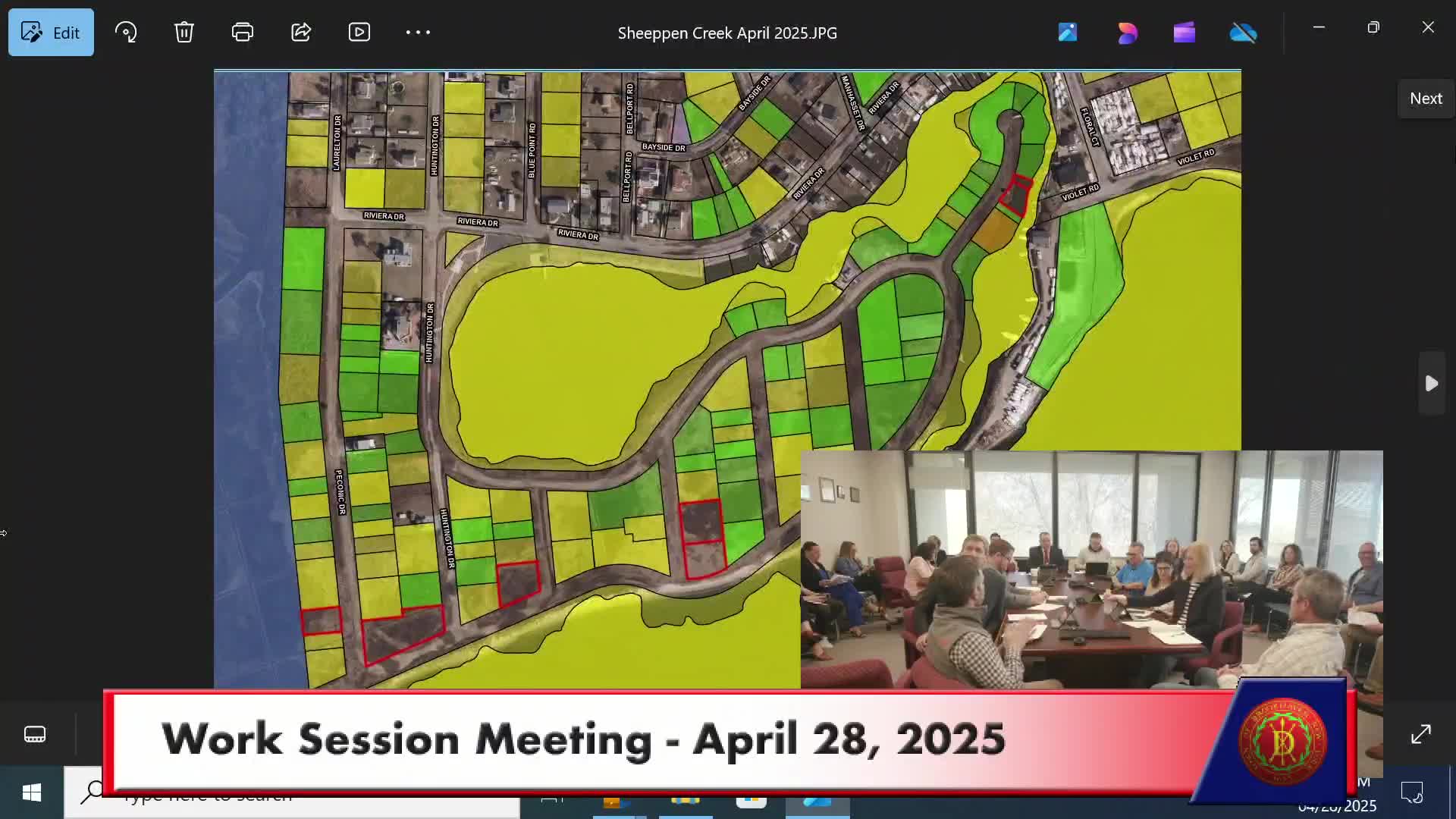
Dr. Duckworth told the board that the town previously received National Fish and Wildlife Foundation funding for planning and permitting for a larger restoration but that the full marsh restoration was estimated by the contractor at about $20,000,000. He said the consultant (Bramble) recommended carving off a smaller project area, the Sheaton Peninsula, with an estimated construction cost of about $2,000,000, focused on removing invasive plants, converting mosquito ditches to tidal creeks, grading, and removing an elevated dirt road that currently traps water and contributes to marsh dieback. “If you remove the raised dirt road which is currently there… it traps the water behind it and floods the salt marsh essentially,” Duckworth said.
The presentation explained there are two separate funding streams being pursued: (1) coastal rehabilitation and restoration funding administered by the New York State Department of State, and (2) inland flooding/local waterfront revitalization funding that could be used for boardwalk construction. Dr. Duckworth said the boardwalks—proposed as raised, light-penetrating plastic/fiberglass systems used locally at Wertheim—would preserve beach access for residents while allowing tidal flow and sunlight through the decking. He estimated the boardwalk construction alone would cost about $4,000,000.
Dr. Duckworth told the board the two projects are most effective when done together because restoring the marsh and removing the raised road first would make later boardwalk construction more difficult; conversely, installing boardwalks without restoration would not address the hydrology issues. He said the Department of State’s program coordinator for the South Shore Estuary Reserve (Jeremy Campbell) is supportive. Duckworth also reported he submitted two grant proposals to the town grants committee and that the awards require a 10% cash match; he said acquisition costs do not count toward that match.
Members of the board asked clarifying questions during the presentation about boardwalk materials and maintenance; a council member noted the plastic/fiberglass systems allow light penetration and withstand local conditions. Duckworth said the town’s Local Waterfront Revitalization Program (LWRP) could be used to justify and support the applications, and that separate state funding has been provided to start a related North Shore LWRP project.
Why it matters: the work aims to restore tidal flow and habitat on a peninsula threatened by altered drainage and to maintain public beach access. The town is weighing capital needs, the grant match requirement, and community requests for continued access as it pursues the competitive funding.
Dr. Duckworth concluded that the grants committee is reviewing the proposals and further capital-project planning would follow if funding is awarded.