Get Full Government Meeting Transcripts, Videos, & Alerts Forever!
Get email alerts on the Main Street Plan topic
No spam. Unsubscribe anytime.
Planning commission hears public feedback on Main Street master plan; commissioners raise questions about scope, cost and housing
Summary
Commissioners and staff discussed results of a Main Street open house and a consultant-led draft master plan, with attendees and commissioners raising questions about consultant recommendations, project costs and how any changes would be funded or implemented.
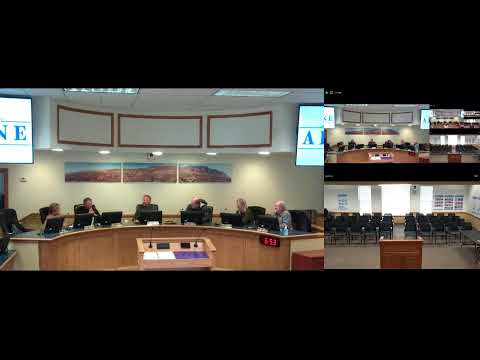
Commissioners and staff spent the communications portion of the March 18 Alpine City Planning Commission meeting discussing the Main Street master-plan work and an open house held the previous week.
Staff and commissioners said turnout at the open house was high; one staff member described about 115 attendees and notable engagement with posters and comment dots. Commissioners and several members of the public told the commission that attendees left confused about the consultant’s recommendations and about which concepts were advisory visioning versus immediate city projects. One commissioner summarized public feedback as asking, "Why are we doing this again?" and said many residents felt the consultant presented options with unfamiliar assumptions about traffic and redevelopment.
Commissioners and staff discussed several recurring topics raised at the open house: a consultant suggestion to widen the roundabout to two lanes (the consultant estimated a multi-million-dollar cost), removal or pruning of trees in the roundabout, and concern about how increased roadway capacity might affect pedestrian safety. Commissioners also discussed the city's ability to attract and support small, walkable commercial businesses given Alpine’s population and limited through-traffic, and whether a mixed-use "missing middle" approach could be feasible in Alpine without rezoning large areas.
Staff said the planning effort is a visioning document similar to a future transportation or master plan and stressed it would not automatically rezone property or impose immediate construction. The project team had used a "leakage" study staff described as showing roughly $95 million in retail spending by Alpine residents leaving the city; staff said the plan is intended to identify small-scale opportunities to recapture some demand without assuming major big-box retailers would move in.
Commissioners and staff also discussed possible funding approaches for future projects raised in the plan. Staff noted grants and development agreements as common tools and explained impact fees are legally limited to specific capital categories and must be spent within statutory timeframes; commissioners asked whether a Main Street or historic-preservation-specific impact fee would be allowable and were told that question would require further legal and finance review.
Several commissioners urged the planning team to expand community engagement beyond a single crowded open house — suggesting additional small-group meetings, mailed outreach or more targeted workshops — so the plan better reflects the broader community rather than primarily the most vocal attendees. Staff said the open-house materials would remain on display at City Hall for additional public review and that a broader survey was planned.
Why it matters: the Main Street planning effort frames long-term transportation, design and land-use options for Alpine’s downtown corridor. Commissioners' questions about cost, community buy-in, and how to sequence projects reflect trade-offs the city will face if it pursues pedestrian-oriented commercial development or roadway changes.