Get Full Government Meeting Transcripts, Videos, & Alerts Forever!
Get email alerts on the Community Wellbeing topic
No spam. Unsubscribe anytime.
State university report: Alpine residents report high personal well‑being; water, growth and trails are top concerns
Summary
A Utah State University survey of Alpine residents found very high personal well‑being scores but identified water supply, open space and traffic as top community concerns; the city collected 399 usable responses and staff said repeating the survey depends on funding.
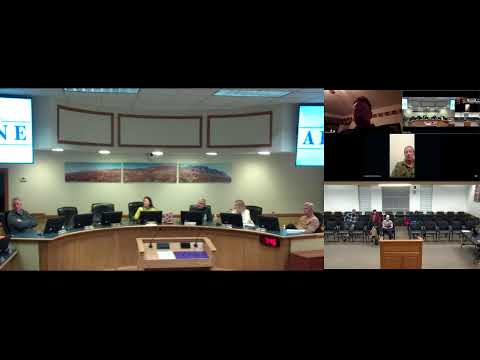
Courtney Flint, director of the Utah Well‑being Project at Utah State University, presented results of a fall 2024 online survey to the Alpine City Council on Feb. 11, 2025. The survey received 399 usable responses from adults who live in Alpine and was administered on Qualtrics with local recruitment through the city’s channels.
Flint said Alpine scored near the top among comparable Utah cities on personal well‑being, with an average of 4.32 on a five‑point scale and 87% of respondents rating their well‑being a 4 or 5. “Alpine is just top of the heap,” Flint told the council, summarizing the city’s comparative ranking.
The report breaks well‑being into 12 domains. Respondents rated safety and security, family life and physical/mental health among the most important domains; safety and family life were also the highest‑rated domains for Alpine. Flint said community connection was strong: 52% of respondents gave a 4 or 5 on a five‑point connectedness scale. The presentation showed a correlation between higher community connection and higher personal well‑being and mental health.
Flint and council members discussed demographic coverage and limitations. The survey underrepresented ages 18–29 and people without a college degree, she said, but otherwise matched American Community Survey estimates on most measures. Average length of residence among respondents was roughly 17 years and 24% had lived in Alpine five years or less. Flint described the project as a community‑scale, nonprobability online survey and said the team is transparent about sample coverage.
On growth and development, 64% of respondents said population growth was too fast, a perception Flint flagged as significant even though Alpine’s slide indicated a 7.3% population growth rate for the period shown. When asked why they rated growth too fast, respondents cited housing construction, traffic (particularly near a city school) and loss of town character. Economic development responses were split: 31% said the pace was “just right,” while others wanted more locally owned businesses and a library.
Top concerns that more than half of respondents rated as moderate or major included water supply, protection of open space, and traffic; other issues above 50% were public safety, water quality, youth opportunities, recreation and air quality. In open‑ended comments residents emphasized nature, the town’s small‑town character and interest in more local amenities such as a library, recreation center and senior/youth programs. Flint said the full set of open comments was provided to city staff.
Flint said the Utah Well‑being Project has worked with more than 60 Utah communities and that Alpine’s fall 2024 survey was part of a statewide effort. She told the council the project hopes to repeat the survey in early 2026 but that continuing the work is funding dependent: “We hope to do it again in early 2026, but it is funding dependent,” she said.
Council members asked clarifying questions about interpreting the survey visuals, sample size and how to use the results in planning. Several council members said the report will inform parks and recreation priorities and the council’s new hire for recreation, and one suggested lobbying legislators who fund the survey program if the council wants ongoing participation.