Get Full Government Meeting Transcripts, Videos, & Alerts Forever!
Get email alerts on the Annexation Box Elder South topic
No spam. Unsubscribe anytime.
Alpine Council reopens Box Elder South annexation study; asks staff for fuller cost estimates
Summary
City staff presented a multi‑page report on the proposed Box Elder South annexation and council members spent more than two hours questioning infrastructure, impact fees and legal constraints. No action was taken; staff was directed to provide more detailed cost and infrastructure information before a future vote.
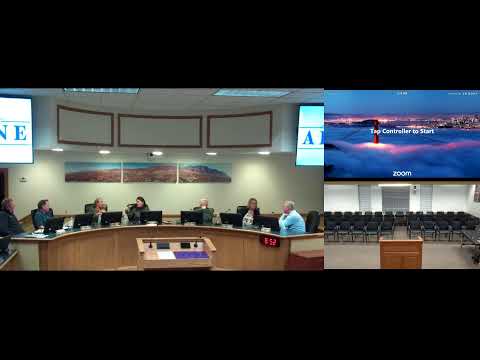
Alpine City Council members spent the bulk of their Jan. 28 meeting revisiting a multi‑year annexation petition for the Box Elder South subdivision, pressing staff for clearer infrastructure cost estimates and the legal effect of an existing settlement agreement that affects water and impact fees.
City staff presented a report and memo summarizing prior reviews of lot sizes, road improvements, water supply and tax revenues tied to the annexation request. The report, prepared for the council by city staff, lays out several outstanding questions—chief among them whether the city would face additional costs if it annexes the subdivision now and how any annexation fee should be structured.
The matter attracted prolonged discussion because the subdivision is largely built: staff and council repeatedly noted that about 59 lots exist in the area under discussion and that many homes already receive municipal services. That fact shapes the key issues raised in the meeting: which improvements remain incomplete, whether the city can or should charge an annexation fee, and which costs the city might inherit if the area is brought inside city limits.
Why it matters: Council members said the question affects city finances and future control over development. Several council members said annexing built homes would change who pays for and maintains stormwater facilities, streets and future repairs. Others warned that annexing piecemeal could create a precedent for other county‑built subdivisions to expect the city to accept nonconforming development.
Key points from the discussion - Staff summary and prior work: Ryan (city staff) summarized a 60‑page memo that updates analyses previously requested by the council and planning commission; the packet included projected sales‑tax and property‑tax examples and a hard copy of prior cost estimates for specific off‑site improvements. - Water and impact fees: Shane (city staff) and others told the council that the developer had built additional water storage—a 400,000‑gallon tank on top of an existing 250,000‑gallon tank—which resolved a previously reported storage deficiency after state drinking‑water rule changes. Council questions focused on which impact fees remain payable, and to whom, under a settlement tied to the original development. - Settlement effects: Staff said a settlement tied to the subdivision prevents the city from charging certain water and sewer impact fees for some lots; the council heard that sewer impact fees (TSSD) and city sewer connection charges still apply at permit time, and that a TSSD connection fee was referenced in the meeting as “almost $6,000.” - Annexation fee options: Staff recalled prior work that proposed an annexation fee in the neighborhood of $5,000 per lot; council members said that number was not definitive and asked staff to update estimates with actual costs where projects have already been completed. - Stormwater and infrastructure risk: Public works staff (Landon Wallace) showed photographs of silted sumps and low‑point catch basins in the subdivision and explained the subdivision uses sump systems rather than a conventional piped storm drain. Council members asked what liability, if any, the city would assume for that infrastructure after annexation. City Attorney Steve Doxey said he believes flood‑control and storm systems are generally covered by the Utah Governmental Immunity Act but noted claims still arise and that the city’s insurer (Local Government Trust/IRMAA) sometimes pays claims. - Planning commission role and precedent: Council members discussed whether to send the file back to the planning commission for zoning recommendation only. Staff and the city attorney noted state law limits the planning commission to zoning recommendations and that council holds the final legislative decision on annexations and related financial policy.
Public input and neighborhood concerns Residents and neighborhood representatives attended and asked for a public conversation about trail alignments, private fencing that crosses old trail corridors, and stormwater collection that currently flows across private lots. Several residents asked the council to engage neighbors directly and to show parcel maps at follow‑up meetings.
Council split, but no final vote No formal annexation motion was made. Council members expressed a range of views: some said the city should annex sooner to capture tax revenue and to require city standards for remaining undeveloped lots; others said the council should not approve annexation until staff delivers more complete cost data showing cumulative impacts if nearby parcels are annexed in the future.
Direction to staff Councilors asked staff to return with more specific, documented cost and scope information before any annexation vote. In particular the council asked for: - Verification of which improvement projects listed in the 2022 estimates were actually completed and the final costs for those projects (e.g., culverts, realignment work); - A clear accounting of which impact fees were already paid to the developer or county as part of settlement terms and which fees would still apply upon annexation or building permits; - An updated estimate tying annexation fee options to identified costs (not a single arbitrary number) and a draft annexation agreement the council could review if it decides to move forward.
Next steps: Staff agreed to recheck records for completed work and actual invoices, to verify impact‑fee payments tied to the settlement, and to return with updated cost estimates and a proposed annexation agreement if warranted. Council members discussed whether to have a separate, broader annexation policy update (the city’s annexation plan was last updated in 2017) and requested that staff lay out how other pending annexations in the same watershed might affect water infrastructure planning and costs.
Ending note: Council members stressed the discussion was not a final decision. As one councilor put it during the meeting, annexation could be approved or denied at a later meeting once the staff replies to the specific financial and infrastructure questions the council raised.