Get Full Government Meeting Transcripts, Videos, & Alerts Forever!
Get email alerts on the Infrastructure Growth Planning topic
No spam. Unsubscribe anytime.
Council workshop highlights transport, transit and energy needs if Vineyard—s population doubles
Summary
Council members and staff spent a session imagining Vineyard with roughly double today's population and discussed widening roads, additional ingress/egress, public transit partnerships, energy (base-load) planning, and airport/airspace concerns tied to nearby Provo Airport expansion.
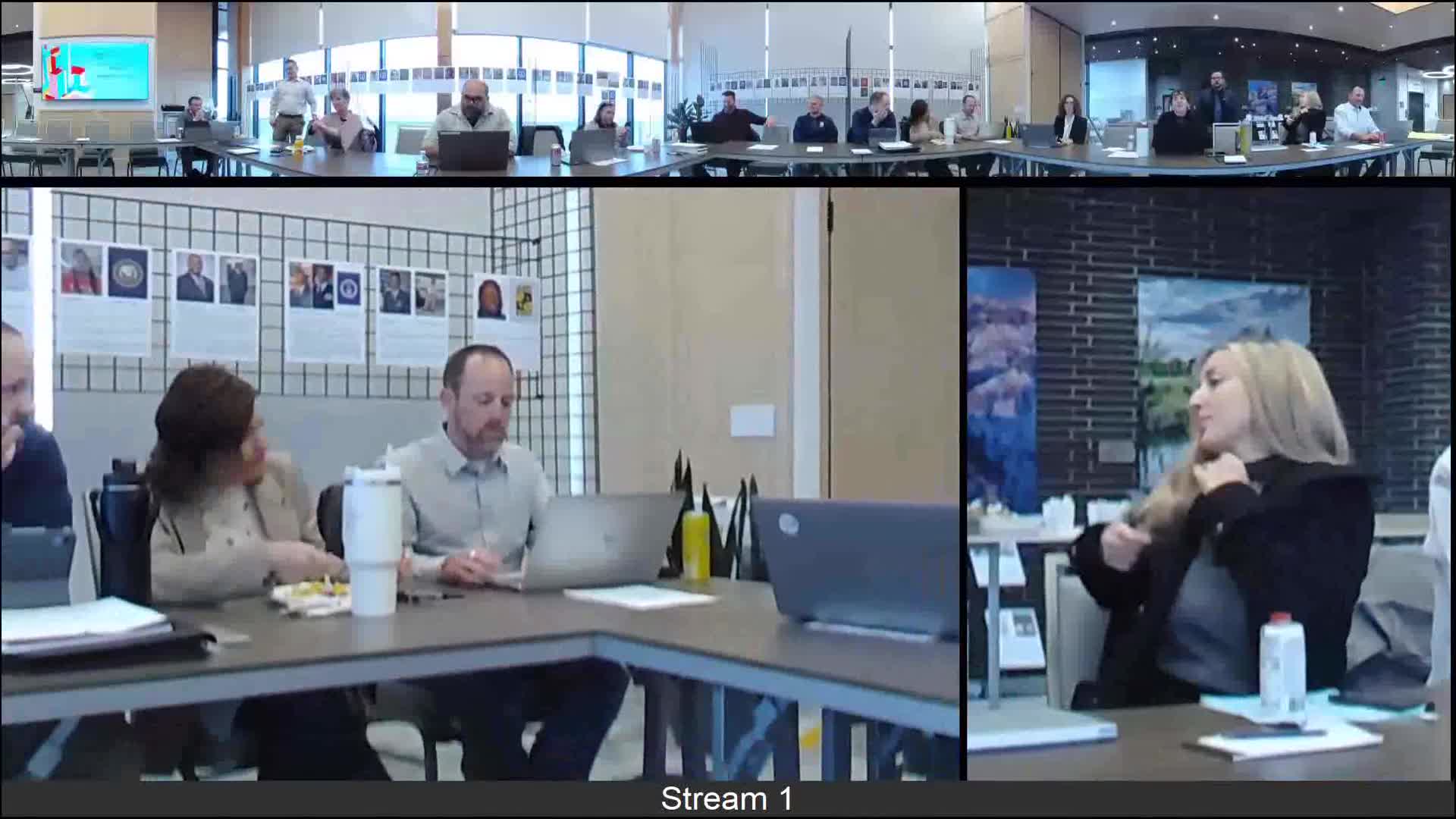
At a city workshop, Vineyard City Council members and staff discussed the infrastructure challenges the city must anticipate if its population doubles from current levels.
Participants emphasized transportation needs first: widening some roads, adding more points of ingress and egress, and strengthening partnerships with regional transit providers so the Utah Transit Authority (UTA) can scale service to meet future demand. Staff said many key streets are state-owned, so adjusting capacity will require coordination with state agencies and neighboring jurisdictions.
Council members and staff also discussed energy and base-load power as a growth constraint. A presenter noted that state-level planning and Western Interconnection studies are highlighting Utah—s need to plan for expanded base-load capacity as data centers, health-care facilities and advanced manufacturing locate in the region.
Airspace and the nearby Provo Airport were raised repeatedly: residents and council members asked for early involvement in flight-path and noise discussions to reduce impacts on homes, and staff said the city has been engaging on airspace corridors and will continue to do so as the airport expands.
Staff framed these infrastructure conversations as forward-looking: many of the changes would require multi-jurisdiction partnerships, federal or state approvals, and capital investments the city could phase into future long-range plans rather than decisions the council would finalize during the meeting.