Get Full Government Meeting Transcripts, Videos, & Alerts Forever!
Get email alerts on the Zoning Film Campus topic
No spam. Unsubscribe anytime.
Yonkers council approves path for film-and-education campus after heated public comment
Summary
The Yonkers City Council on March 11 adopted an ordinance creating a special-use pathway for a planned film-and-educational development in the MG district, voting 4-2 after hours of public comment; the council amended the ordinance to replace “movie theaters” with “screening rooms.”
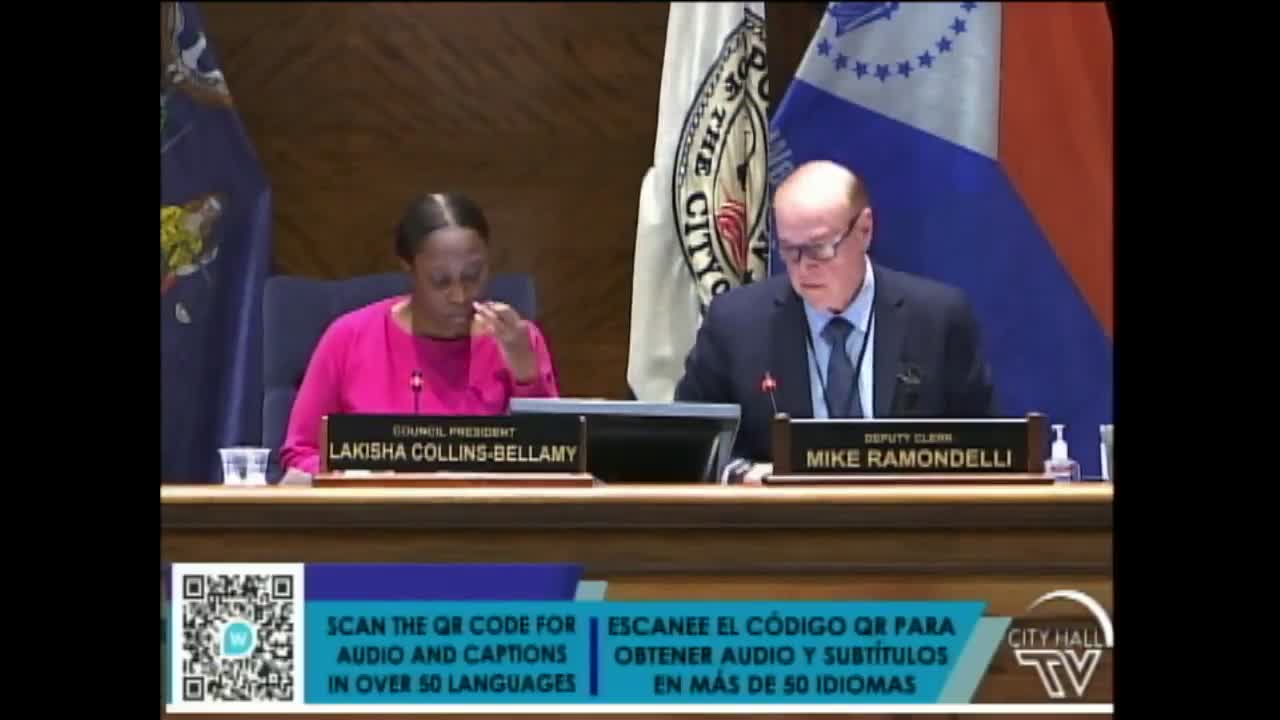
The Yonkers City Council on March 11 adopted, as amended, an ordinance creating a special-use permit for a planned film-and-educational development in the MG zoning district, voting 4-2 after more than three hours of public comment and debate. The council amended the ordinance to replace the term “movie theaters” with “screening rooms.”
The amendment establishes a procedure under which projects meeting the new use definition — the ordinance language refers to sites with 25 contiguous acres — may seek a special-use permit from the city. Supporters said the project would create education and job opportunities through a film campus tied to the Robert Halmi school; opponents said the change was broadly written, would allow taller, denser buildings, and that environmental review had been inadequate.
Residents and local physicians recounted concerns about air quality, tree removal, traffic and neighborhood character. “This ordinance allows for a movie theater to be built on this property in a residential neighborhood,” said Eileen O’Connor, who gave her address as 71 Valentine Lane. “We do not want monstrous concrete buildings mar the landscape.”
Several speakers detailed specific concerns about the draft language and its citywide reach. “This ordinance is not site specific. It does not just apply to 501 Hawthorne Avenue. It applies to any place in Yonkers that has 25 acres,” Thomas Mattioli said. Kim Kinsey urged a fuller environmental review and questioned the planning board’s negative declaration under the state environmental-review process, saying the draft review relied largely on the applicant’s materials.
Public-health testimony included remarks from Dr. Robert Morrow, who said Southwest Yonkers has worse health outcomes than most census tracts in New York State and warned that removing tree buffers and adding truck traffic could worsen particulate exposure. “Taking away our open area that filters this a little bit will make the matters much worse,” Morrow said.
School and industry supporters described potential benefits tied to film education and local hiring. PJ Goldfeder, president of the Yonkers Public School Foundation for Education, said Great Point Studios had helped the foundation raise funds for schools. Mark Amitrano, principal of the Robert Halmi Senior Academy, said a campus adjacent to the school would give students “direct access to the world of film and television” and create career pathways.
Lynn Ward, who identified herself as representing National Resources, said the project was not an industrial use and described revisions the developer had made in response to community concerns, including a smaller footprint, greater setbacks from Valentine Lane and Hawthorne Avenue, a reduced parking garage and added landscaping. “We are not seeking an industrial use. We’re seeking a use for studios,” Ward said.
Council members framed the vote as an initial step in a multi-stage process. Majority Leader Rubo described the ordinance as the start of a pathway; he said a successful special-use permit would still require planning-board site-plan review and that the renderings and setbacks would be addressed there. “This is just step 4… The developer still has to go back to the planning board and apply,” Rubo said. He also cited tax payments from the property’s new owner, saying the parcel had returned to the tax rolls after being off them for many years.
Council member Moranti said he would vote no, citing insufficient community comfort with the current draft and concern about releasing the council’s authority. Council member Penida Isaac also said she would vote no, saying residents’ concerns must take precedence. Majority Whip Robinson and Council President Collins Bellamy voted yes; Minority Leader Breen voted yes. The final roll call recorded four votes in favor and two opposed; Council member Diaz was absent.
The council’s approval does not authorize construction. If the ordinance remains in effect, the developer must proceed through a planning-board special-use and site-plan review process; any approved site plan would return to the council for final acceptance. Several speakers and attorney Raya Mallett asked the council to require stricter environmental review and to avoid language that would permit uses beyond the project currently proposed.
Votes and next steps: The council adopted the ordinance as amended to change “movie theaters” to “screening rooms.” The amendment to the ordinance was adopted by the assembly earlier in the meeting by voice (noted by the deputy clerk as adopted 6-0 for the procedural amendment), and the final ordinance passed 4-2 as amended. The planning board will review any special-use permit application and site plan; community members were urged to continue to attend planning-board hearings and remain engaged.
Community members and the developer repeatedly were told the planning-board stage will be where building design, setbacks, landscaping and traffic mitigation are finalized. Several public speakers demanded either a fuller environmental review under the state process mentioned in comments or that the council return the matter to the planning board for additional review before adopting the amendment.
With the ordinance approved as amended, the council and the developer will continue negotiations and site-level reviews before any construction permits can be issued.