Get Full Government Meeting Transcripts, Videos, & Alerts Forever!
Get email alerts on the Farrell Estates Development topic
No spam. Unsubscribe anytime.
Residents press Farrell Estates developer on stormwater, traffic and wetlands during DEIS hearing
Summary
Dozens of residents raised concerns about stormwater, high groundwater, traffic and wetlands during a public hearing on the Farrell Estates DEIS on April 15; the applicant will prepare a final EIS and the written comment period remains open through April 28.
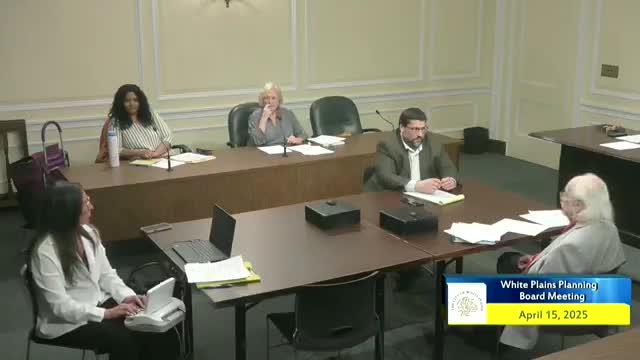
Dozens of residents raised concerns about stormwater, high groundwater, traffic and wetlands during a public hearing on the Farrell Estates Draft Environmental Impact Statement (DEIS) before the White Plains Planning Board on April 15. The applicant team said it will prepare a final environmental impact statement addressing public and staff comments; the written comment period remains open through April 28.
Brian Sinsbaugh, attorney for the applicant (identified in materials as Farrell Companies), introduced the project team and asked project engineer Diego Villareal of JMC Engineering to give an overview of the proposal. Villareal described a roughly 130‑acre property proposed for a 105‑lot subdivision (the team described the count as 99 residential lots, one clubhouse lot and five open‑space lots) divided into four parcels (Parcel A ~27 acres; Parcel B ~14 acres; Parcel C ~15 acres; Parcel D ~72 acres). He said the design preserves wetlands and pond areas in open space, proposes stormwater management practices (infiltration basins, basins, diversion swales and rain gardens) and that “a number of the homes, no basements are proposed” because of high groundwater conditions on much of the site.
Residents who spoke during the three‑minute comment period pressed the applicant and the board on multiple technical and planning concerns:
- Stormwater and groundwater: Multiple neighbors said test pits and monitoring show shallow groundwater and ponding; speakers asked whether the DEIS used the most recent New York State stormwater guidance and whether the stormwater pollution prevention plan properly models post‑development runoff. Andrew Cohen said frequent backups and seepage into basements have occurred in the area; Lisette (Lizette) Dorfman noted the DEIS estimates Parcel A will require about 18,000 cubic yards of fill (roughly 900 truckloads) and asked whether that fill and a planned retaining wall will affect seasonal high groundwater and drainage for adjacent properties.
- Wetlands and jurisdiction: Commenters noted disturbed areas on Parcel D and questioned whether areas should be treated as critical habitat or as jurisdictional wetlands under recent state changes. The transcript shows public concern that some wetland delineations in the DEIS were characterized as non‑jurisdictional and residents urged careful review.
- Traffic and safety: Several speakers said the traffic study understates impacts and does not convey pedestrian safety risks on narrow roads such as Ridgeway, which neighbors described as heavily used, curved and without room to widen. Howard Hawkins and others said additional vehicle trips (residents estimated at least 150–200 new cars) will strain local streets used by school traffic, nursery trucks and other community destinations.
- Construction management, trees and neighborhood character: Neighbors asked the board to require a detailed, month‑by‑month construction management plan, protection of landmark sycamore trees near Gedney Esplanade, and consideration of cluster development to reduce road length and increase usable open space around the pond. Mary Caballero urged the board to consider clustering for at least Parcel D to better align with the city’s comprehensive plan objectives.
The applicant team reiterated components of the DEIS: preservation of the pond and mapped wetlands in open‑space lots, proposed stormwater controls, and limited use of basements where groundwater allows. Diego Villareal summarized stormwater work and said the project’s plans include measures intended to address existing ponding. Brian Sinsbaugh and the applicant’s design team said they will review and respond to written and oral comments in the final environmental impact statement.
Why it matters: the proposal would add nearly 100 homes on a large former golf course site with known high groundwater and several wetlands. Residents and the board are focused on whether the DEIS modeling, proposed mitigation, traffic analyses and construction controls adequately protect adjacent homes, trees and public safety.
Next steps: the public hearing was closed at the meeting; the written comment period remains open until April 28. The applicant will prepare the final environmental impact statement and submit responses to public and staff comments for the board’s review.