Get Full Government Meeting Transcripts, Videos, & Alerts Forever!
Get email alerts on the Public Safety topic
No spam. Unsubscribe anytime.
Public safety officials cite staffing shortfalls, technology investments and rising overtime in proposed budget
Summary
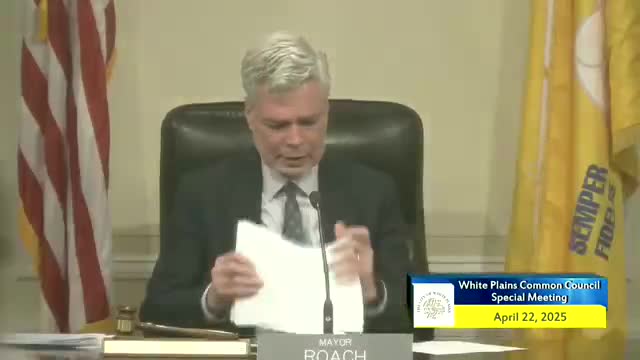
Public safety leaders delivered a joint presentation April 22 on the police and fire components of the proposed FY2025–26 budget, highlighting staffing pressures, technology investments and increased overtime.
Public safety leaders delivered a joint presentation April 22 on the police and fire components of the proposed FY2025–26 budget, highlighting staffing pressures, technology investments and increased overtime.
Commissioner of Public Safety introduced the presentation and thanked the council for support of two additional firefighter positions and three police positions included in the proposed budget. He described a department focused on community policing, outreach to the Hispanic community, homeless outreach and youth programs.
Police overview Chief Castelli told the council the police budget is roughly 56.7% of the public safety total and translates to just over $51 million; he said the proposed budget reflects “just under $4,000,000 increase, which is about a point 44%.” Castelli said most increases are for salaries, wages and benefits and for technology and equipment — notably body‑worn camera storage costs and an expanded less‑lethal (TASER) program. He said the department also expects higher overtime driven by staffing gaps, special events and accrued payouts related to retirements and transfers. Castelli said the department is currently interviewing to fill about 11 vacancies and that recruitment and retention remain a national challenge.
Grants and task forces Castelli said the department obtained approximately $807,000 in state grant funding this year for items including additional radios, license‑plate readers and software. He also described three officers assigned to federal task forces that generate asset‑forfeiture revenue the city uses to supplement certain expenses (roughly $80,000–$100,000 annually, per the presentation). He said the department did not receive a $251,000 violence‑against‑women grant this cycle but will reapply.
Fire overview Chief Pecci Choney summarized the fire budget and said the department projects 14 retirements within the next fiscal year (eight police, six firefighters was the figure cited across discussion for retirement‑eligible personnel); the department has five recruits in the fire academy but experienced interim attrition. He characterized the overtime increase (noted in budget materials) as cumulative of staffing, suppression needs, training, overtime and special‑event coverage; the operating budget also moved some maintenance and apparatus repair costs from the city garage into the fire budget, increasing materials and supplies lines.
Performance and community programs Chiefs and the commissioner emphasized community outreach programs (Youth Police Academy, coffee with a cop, mentoring), bilingual staffing to serve the Hispanic community and partnerships with White Plains Hospital. The fire chief highlighted the department’s ISO Class 1 rating — a benchmarking metric for fire protection and insurance ratings — and said the department maintains robust training to support that rating.
Council questions Council members asked about the pool of applicants for police positions, the impacts of vacancies on bike and foot patrols downtown, and the departmental plans to manage retirements and overtime. Chiefs said academy timing (two classes per year for each academy) and training time mean hires are not instantly deployable; the departments said they will continue to recruit and use overtime where necessary.
Ending: Public safety leaders asked for continued council support for staffing and technology investments while noting recruitment and retirements will shape operational capacity through the coming year.