Get Full Government Meeting Transcripts, Videos, & Alerts Forever!
Get email alerts on the Good Cause Eviction topic
No spam. Unsubscribe anytime.
White Plains council amends proposed ‘good cause’ eviction law, sets small-landlord exemption at four units
Summary
After a public hearing with more than a dozen speakers, the White Plains Common Council voted to amend local law 2 of 2025 to define a "small landlord" as owning four or fewer units; final adoption must wait at least eight days under state municipal home rule procedures.
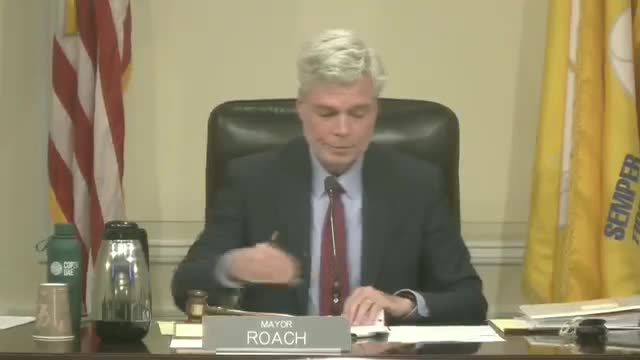
The White Plains Common Council voted on May 5 to amend proposed local law 2 of 2025, known as the city's "good cause" eviction law, changing the small-landlord exemption to four units.
The amendment, offered by Councilman John Martin, revises the draft definition so that a landlord of up to four units anywhere in New York State would be treated as a small landlord for purposes of the ordinance. The amendment passed on a 5-2 roll call: Rash, Martin, Payne, Presser and Mayor Roach voted yes; Frye Pearson and Puja voted no.
The measure would add chapter 9-8 to the White Plains Municipal Code to prohibit eviction without good cause; the council opened and then closed a public hearing on the draft ordinance before debating the amendment. Under the municipal home rule law, city counsel advised the council that because the text was amended, they must wait at least eight days before taking a final vote on the amended local law.
Why it matters: advocates said a strong good-cause law would reduce evictions and housing instability, while landlords and property managers warned about limited tools to remove disruptive tenants. The amendment reflects a compromise among council members who said they wanted tenant protections while also addressing small-owner concerns.
Public comment and council debate: More than a dozen residents, legal-service attorneys and community organizers spoke during the hearing. Christopher Schweitzer, director of Housing and Legal Services of the Hudson Valley, told the council that research shows housing instability carries severe health risks and urged the city to exempt only single-unit landlords so the law covers the most rental units. "By setting the landlord exemption at one unit as other localities in the Hudson Valley have done, White Plains can guarantee the maximum benefit for tenants," Schweitzer said.
Rachel Halperin, chief executive officer of Legal Services of the Hudson Valley, said her organization handled 12,000 cases a year and that 558 eviction cases were filed in White Plains last year. "Passing a strong good-cause eviction law that can be enforced by pro se tenants is essential to stemming the tide of evictions in our city," Halperin said.
Landlord speakers urged caution. In written remarks read by a colleague, Lisa DeRosa, president of DeRosa Builders, argued good-cause eviction "ties the hands" of property owners and could leave landlords unable to remove truly disruptive tenants. Property manager Brigitte Rocha described instances of harassment and property damage and said automatic lease renewal provisions would harm owners who must meet mortgage and tax obligations.
Council discussion reflected those competing concerns. Councilman Brasch, who said he works in landlord-tenant law and has represented both tenants and small owners, argued for the four-unit exemption because he cited examples of small natural-person landlords who could be financially harmed by protracted eviction processes. Councilman Frye Pearson urged the council to preserve the broadest coverage for tenants and voted against the amendment. Council President Presser said she preferred the one-unit exemption but supported the four-unit compromise to secure a unanimous eventual passage and the ability to revise the law later if necessary.
Next steps: Because the council amended the text, city staff said the body must wait at least eight days under state law before voting to adopt the amended local law. The council is expected to consider final adoption at a future meeting after that waiting period.
What the ordinance would do: The draft local law would prohibit eviction without "good cause" and create categories of permissible reasons for eviction such as nonpayment, lease violations, illegal activity or owner-required occupancy; the exact final text and enforcement provisions will reflect the amended language and any further council action. The ordinance as amended and the municipal home-rule timing were discussed in the council meeting; no final adoption occurred on May 5.
Who spoke and when: The public hearing took place during the meeting's discussion agenda on May 5; the council debated and voted to amend the draft the same night but deferred final adoption under home-rule timing requirements.