Get Full Government Meeting Transcripts, Videos, & Alerts Forever!
Get email alerts on the Zoning Variance topic
No spam. Unsubscribe anytime.
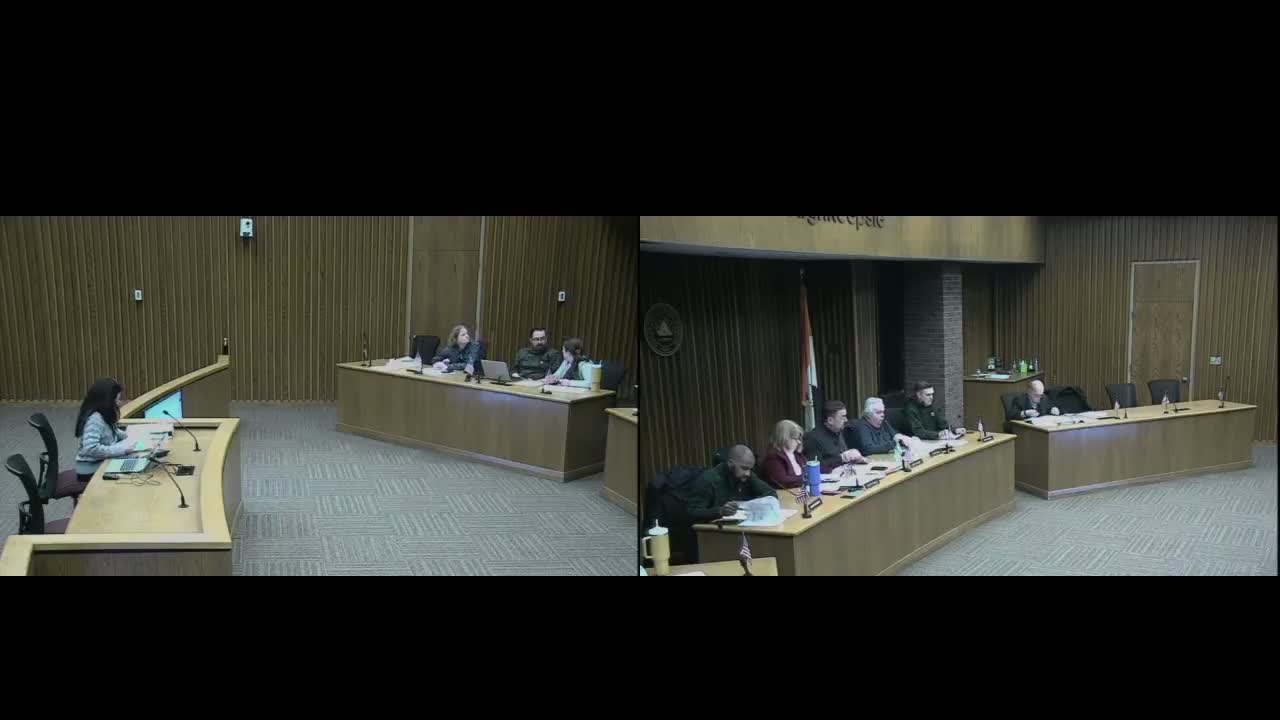
Poughkeepsie ZBA hears debate over sixth floor at 306–316 Main Street; applicant agrees to 10% workforce units
Summary
Developers seeking a sixth story at 306–316 Main Street told the Poughkeepsie Zoning Board of Appeals they need the extra floor for financial feasibility; the board adjourned final action to March 11 after the applicant agreed to a condition of at least 10% workforce units at 80% AMI and the board requested financial justification.
The Poughkeepsie Zoning Board of Appeals on Feb. 11 heard extended public deliberation on a request to add a sixth story at 306–316 Main Street and adjourned formal action to the board's March 11 meeting after the applicant offered a commitment to a minimum of 10% workforce housing at 80% of area median income.
The project team said the application seeks an area variance to allow one story above the five-story limit in the PIDHC district. Kelly Leiboltz of KARC Planning Consultants told the board the building would measure about 74 feet in height, under a 76-foot measurement discussed in the city's zoning provision cited as “1937,” and that the additional story had previously been granted by the ZBA in 2021 for a smaller version of this project.
Board members and the applicant debated whether the extra floor causes additional neighborhood impacts and whether the developer had shown why 120 units — the number proposed in the filing — were essential to the project's financial feasibility. ZBA member Jessica Bridal expressed strong opposition on aesthetic and neighborhood-impact grounds, saying the building appeared to be a “big ugly box,” raised concerns about ceiling heights and unit sizes, and said the application did not show how the proposed density would affect the neighborhood. Board member Sam Thurman and others argued that the height and massing at issue are effectively similar to what is allowed for a five-story building and that more downtown housing can be beneficial.
An applicant representative speaking for 3 68 LLC said the owner is committed to providing a minimum of 10% of units as workforce housing at 80% AMI (which equals 12 units if the project contains 120 units) and said the sixth floor is “absolutely crucial to the financial feasibility” of the project. The representative said exact unit counts and income targets were still subject to ongoing negotiations with state funding sources, including a “momentum fund” referenced in discussion.
Board members requested more documentation on the project's financial pro forma and a clearer demonstration of why the developer cannot meet feasibility goals without the extra story. Multiple members asked for numerical evidence supporting the applicant's claim that 120 units are necessary to make the project work, including construction cost and acquisition numbers and an explanation of why the proposed unit mix could not fit in fewer residential floors.
After further discussion the applicant indicated it would accept a variance conditioned on the 10% workforce-housing requirement at 80% AMI. The board then directed staff to draft a resolution for the board's next meeting. No final vote on the variance was taken; the board adjourned the application to the March 11 meeting to allow the applicant to submit the requested financial justification and for the board to review the draft resolution.
The record shows this application has been subject to prior review: a previous ZBA approval for an extra story in 2021 and a coordinated environmental review process with the planning board. The applicant and the board discussed both the old zoning code (under which the application was reviewed) and the city's new zoning provisions, the latter of which also has an incentive allowing additional floors when a specified share of units are affordable.
The hearing remained open while the board asked for the financial documentation and for staff to prepare a draft resolution that would reflect the applicant's 10% workforce-housing commitment.
Outlook: The ZBA expects a draft resolution and supplemental financial materials before or at the March 11 meeting; the board indicated it will vote on the variance only after reviewing those materials.