Get Full Government Meeting Transcripts, Videos, & Alerts Forever!
Get email alerts on the Business Regulation topic
No spam. Unsubscribe anytime.
Schenectady staff outline certificate-of-use process, fees and enforcement plans
Summary
City staff briefed council on the certificate-of-use program, explaining application steps, inspection timing, fee amounts and a renewed outreach effort to bring businesses and rental properties into compliance.
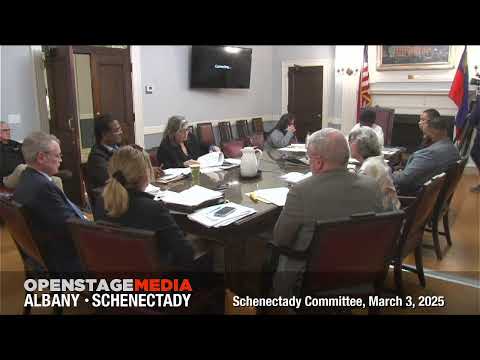
Schenectady city staff gave elected officials a progress briefing Monday on the city’s long-standing certificate-of-use program and plans to increase inspections and public outreach.
The presentation traced the program’s steps from application to law-department review and a final building-inspection before a certificate is reissued. Staff said the initial certificate fee is $200 and annual renewal is $50; the certificate itself is reissued upon payment and completion of required documents and inspections.
The briefing said the certificate-of-use program has been on the books since the mid-1990s and functions as a local verification that businesses meet state and city licensing, fire and building-code requirements. Staff described a multi-department inspection that typically includes police, fire and building-inspection personnel and emphasized the program’s public-facing purpose: certificates are displayed so customers can confirm that a business complied with city inspection requirements.
Council members asked detailed questions about the mechanics: how long the review and inspection process takes, whether the certificate was valid for one or two years, which businesses are required to apply, where denials are recorded, and how staff will handle outstanding cases. Staff said the current practice is an annual renewal, clarified the initial fee and renewal amounts, and explained that denials normally reflect missing or outdated documents (insurance, sales-tax or health-department permits) and are often resolved after applicants supply updated materials.
On coverage, staff listed typical categories that require certificates, including banquet facilities, bars and businesses that need state or county licenses; they said some businesses (for example, barbershops or laundromats) historically have not been included but could be considered for future coverage. Staff also said inspections are scheduled after law-department approval and that, depending on a site’s size, an inspection can take roughly a half hour.
Councilors pushed for clearer public notification and follow-up: several members asked for courtesy renewal notices mailed or posted before certificates expire, an aggressive public-relations effort to make tenants and business owners aware, and monthly or quarterly reporting to the council on outstanding cases. Staff said a new outreach packet and a courtesy-letter process are already being used, and an online application exists though officials acknowledged online uploads and applicant communications still need improvement.
Council members also raised staffing and enforcement questions. Several cited concerns about open cases and whether inspections and certificate closures were being processed promptly. Staff said code-enforcement is keeping up with the current caseload but acknowledged turnover in the department and said they would provide more information about the closure process and any outstanding cases.
Councilors asked how denied applications are stored; staff said those records are held either by the law department or the mayor’s office depending on the case and that denials are usually short-term while applicants supply updated documents. The council requested a follow-up with clearer timelines and a written clarification of whether certificates are reissued for one year or two.
The briefing concluded with councilors urging continued outreach to landlords and tenants, stronger messaging about enforcement timelines and the request that staff return with the requested clarifications and any proposed ordinance edits to reflect how long certificates remain valid.