Get Full Government Meeting Transcripts, Videos, & Alerts Forever!
Get email alerts on the Railbanking And Rail Abandonment topic
No spam. Unsubscribe anytime.
Montana Rail Link seeks abandonment of Drummond–Phillipsburg line; public split over railbanking for trail
Summary
Montana Rail Link said it plans to pursue formal abandonment of its nonoperational rail corridor between Drummond and Phillipsburg and invited local governments or nonprofits to explore ‘‘railbanking’’ under the federal Trails Act as a possible alternative, company representative Joe Roscoe said at a Granite County public meeting on Dec. 5, 2024.
Montana Rail Link said it plans to pursue formal abandonment of its nonoperational rail corridor between Drummond and Phillipsburg and invited local governments or nonprofits to explore ‘‘railbanking’’ under the federal Trails Act as a possible alternative, company representative Joe Roscoe said at a Granite County public meeting on Dec. 5, 2024.
Roscoe, who identified himself as working for the Washington Companies and formerly with MRL, said the company "filed publicly with the Surface Transportation Board out in D.C., kind of our initial notice of of abandonment" and described the railbanking option as a way to preserve the corridor for possible future rail use while allowing a trail to be built in the meantime.
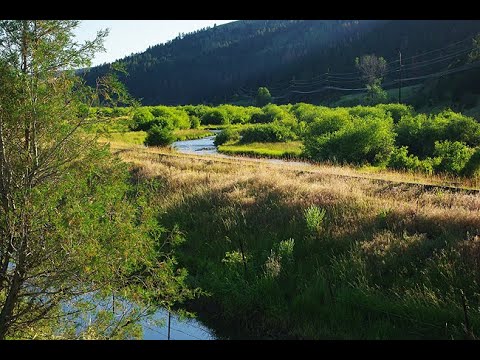
The debate matters because the corridor crosses productive agricultural land, private properties and riparian areas. Supporters said a trail could boost recreation and local businesses and improve safety for cyclists and pedestrians; opponents said a trail would fragment ranchlands, increase trespass and liability exposure, and leave landowners with fence, irrigation and bridge costs if ownership or maintenance falls to local entities.
MRL and process details
Roscoe explained that the corridor at issue is part of MRL’s branch lines and that the company’s formal next steps would include filing for abandonment with the Surface Transportation Board (STB). He described the federal railbanking mechanism created in 1983 as allowing a corridor to be placed in a ‘‘banked’’ status so a county, city or nonprofit can negotiate to acquire it for conversion to a trail, while the corridor remains intact in case future rail service becomes feasible. "If you come to an agreement, take it out of bank status, then ultimately construct a trail," Roscoe said. He added that the initial statutory negotiation period is one year and can be extended.
The MRL documents referenced in the meeting describe the segment as a 25.96‑mile branch that has not had customers since before MRL acquired it in 1987, and note that the line’s last regular use was decades ago. The company told the meeting it retained an in‑house engineer who conducted a walking survey identifying washed‑out sections and the condition of structures; Roscoe said those survey notes were included in the environmental/historical report filed with the STB.
Landowners’ concerns
Many property owners said the corridor runs through prime agricultural ground and raised a set of recurring concerns: irrigation crossings and culverts, fencing costs, livestock safety, property access, subdivision of pastures and potential devaluation of surrounding land.
"If you're gonna take it, then you need to fence that out," said landowner Ed Short, who explained his livestock and irrigation arrangements and asked whether adjacent owners would have an opportunity to buy the corridor. Several ranchers warned a trail would bisect pastures and create isolated wedges of unusable land.
County planning and environmental questions
A county planner who spoke during public comment said the MRL environmental/historical document’s statement that the corridor "does not contain or go through any prime Ag land" conflicted with local knowledge. The planner also said portions of the rail bed dip into the flood plain and that soil testing had not been done; they recommended testing and noted that if a county acquired a corridor that is capped for contamination, the county would become responsible for maintaining that cap.
"I don't know that land wise, it makes sense" to assume a trail is the only feasible next step, the planner said.
Bridge and infrastructure questions
The MRL report identified 10 bridges on or adjacent to the line within Granite County, most constructed between roughly 1950 and 1964, with one structure cited as dating to 1920. Several speakers asked who would pay to repair or replace aging bridges and culverts if a trail were built, and whether local governments or nonprofits would be liable for long‑term maintenance. Roscoe said salvage of rails and ties is MRL’s intended action following abandonment and that the trail option is raised only if a counterparty comes forward.
Liability, safety and wildlife
Residents voiced concerns about trespass, vandalism, trash, and personal safety near private homes. Several landowners said they feared increased encounters with trail users, unleashed dogs, or visitors crossing private land to access the corridor. Others raised wildlife and fisheries concerns for riparian stretches along Flint Creek; a speaker noted prior restoration work in the creek and said more environmental review would be needed to assess impacts on fish and habitat.
Supporters’ arguments
Members of the Flint Creek Trails Association and other proponents urged a feasibility study and public outreach, saying trails can bring economic stimulus and recreational access while preserving the corridor. "A trail that offers many advantages including providing economic stimulus for local communities … providing healthy and safe opportunities to exercise," said Ed Brunswald of the Flint Creek Trails Association. Powell County’s planning director, Amanda Cooley, said a separate federal planning grant is funding a feasibility study for a nearby railbanking corridor and that some study components—floodplain, environmental review, public outreach—could inform the Drummond–Phillipsburg proposal.
Process and next steps
No formal decision or vote occurred at the meeting. Roscoe said MRL does not advocate for either outcome and that the purpose of the meeting was to gauge community interest. He said if a viable counterparty (county, nonprofit or other) signals interest, the statutory railbanking negotiation period would begin; if that process fails, the company would pursue the conventional abandonment route and title work to determine whether land reverts to adjacent owners or is sold.
Speakers asked that MRL make its title and survey work, the engineer’s site survey and the environmental/historical report publicly available; Roscoe said the survey results and the environmental/historical report are part of the STB filing and public record. Several commenters asked the county to record and preserve input from the meeting for MRL’s consideration.
Ending
Granite County residents and officials left the meeting divided: some urged further study and public outreach before any decision; others urged returning the corridor to adjacent landowners and voiced strong objections to a public trail crossing private ranchland. MRL said it will collect the feedback and proceed according to STB procedures; no transfer, sale or trail agreement has been executed.
Votes at a glance: none — no formal motions or votes occurred at this public meeting.