Get Full Government Meeting Transcripts, Videos, & Alerts Forever!
Lake Wales staff update commission on proposed changes to fire protection assessment
Summary
Consultant Sandy Newbarth presented an updated fire protection assessment, explaining methodology changes, recommended rate scenarios and schedule for an initial rate resolution on June 3. Commissioners asked for more detail on exemptions for government, churches and nonprofits and on anticipated revenue realization.
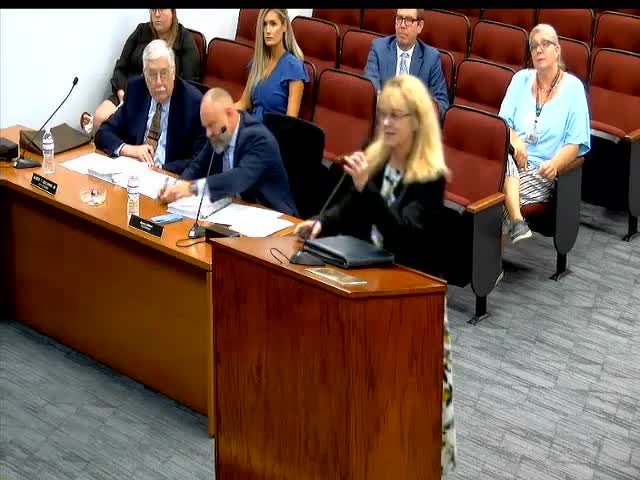
Sandy Newbarth, a consultant with Accenture, told the City of Lake Wales City Commission that an updated fire protection assessment changes how the city splits fire and emergency medical service costs and increases the square-foot cap used to calculate nonresidential charges.
The presentation, given at a work session, explained the legal and technical basis for the fee and walked commissioners through multiple rate scenarios and a timeline for adopting preliminary and final rates. “A fire assessment is a charge imposed against property to pay for fire protection services. It's a Home Rule revenue source,” Newbarth said. She added, “The courts have said fire protection services up to the level of first responder do provide a benefit to property, but EMS does not.”
The update uses a five‑year average assessable budget and a court‑tested “historical demand” methodology that allocates cost by past calls and time spent on incidents. Newbarth said the study separated EMS costs from fire protection and determined about 66.53% of the fire department budget could be funded by assessment revenue, with roughly 33.28% attributable to EMS and therefore funded from the general fund. The five‑year assessable budget used for the scenarios was $5,159,823.
Newbarth identified two main technical changes that affect large properties: the city’s standard for fire flow (7,900 gallons per minute per NFPA guidance) supports a square‑foot cap of about 191,400 square…
Already have an account? Log in
Subscribe to keep reading
Unlock the rest of this article — and every article on Citizen Portal.
- Unlimited articles
- AI-powered breakdowns of topics, speakers, decisions, and budgets
- Instant alerts when your location has a new meeting
- Follow topics and more locations
- 1,000 AI Insights / month, plus AI Chat