
Henrico’s FACE team highlights Oak Avenue community hub, partnerships and growing programs
Get AI-powered insights, summaries, and transcripts
Sign Up Free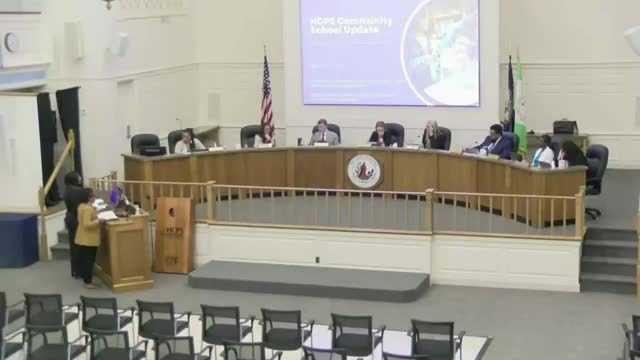
Summary
Henrico County’s Family and Community Engagement (FACE) division updated the board on the countywide community-school model, the Oak Avenue hub, expanded ACE/CLC partnerships, the Henrico Heroes mentorship program and a new micro-credential for school-based staff.
Henrico County’s Family and Community Engagement (FACE) division on March 13 showcased its community-school model, detailing work at the Oak Avenue Complex, growing partnerships and programs aimed at connecting families to services and students to enrichment.
FACE leaders Adrienne Cole Johnson and Nicole Boone described the district’s community-school framework, which the presentation said aligns with national community-school principles and now emphasizes six guiding principles for school hubs. The division highlighted collaborative leadership initiatives—biannual faith-leader luncheons, expanded PTA activities and newly created school impact committees that include students, parents, community partners and school staff to solve school-specific goals.
The Oak Avenue Complex was presented as the district’s flagship community hub. FACE staff and partners described services hosted at the Oak including a food pantry, clothes closet, workshops on financial literacy and mental health, and the district’s mobile resource center. Partners mentioned in the presentation included Henrico Prevention Services, the Henrico Education Foundation, Rise Up Wilder, the Henrico Community Food Bank and the Police Athletic League; staff credited partners for enabling programs such as on-site after-school academic supports, enrichment and college-and-career activities.
FACE said it is expanding Henrico Heroes, a mentorship program, and has launched a micro-credential professional learning pathway for school-based staff to strengthen family and community engagement practices. The division said Community Learning Centers and ACE partnerships are growing, noting high demand for career‑and‑technical programs (one presenter said nurse-aid programs had roughly 300 applications for 80 seats) and that new ACE Hermitage capacity will add seats in coming years.
Board members praised FACE’s ‘boots-on-the-ground’ approach. Member Irving asked whether federal funding supports the programs; FACE and Dr. Cashwell said much programming is locally funded but teams leverage VDOE grants and other partner funding for Community Learning Centers and some positions. Members asked staff to keep the board informed on grant cycles and sustainability plans for community‑hub programs as grants end and to share findings from the Oak pilot as new hubs are planned for Virginia Randolph and Queicassin Middle School rebuilds.