Get Full Government Meeting Transcripts, Videos, & Alerts Forever!
Get email alerts on the School Budget topic
No spam. Unsubscribe anytime.
Pulaski County schools approve 2025-26 operating budget with 3% staff raise; insurance costs drive planning
Summary
The Pulaski County Public Schools board approved the proposed fiscal year 2025-26 operating budget, including a 3% employee pay increase, no added local tax levy, and a substantial insurance cost adjustment. The board also discussed a potential $1,000 bonus subject to end-of-year funds.
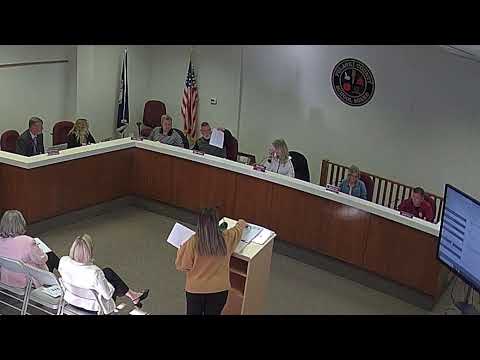
The Pulaski County Public Schools board on March 25 approved the proposed fiscal year 2025-26 operating budget, endorsing a 3% pay raise for employees and budgeting for higher health-insurance costs without adding new local taxes.
Board members voted to approve the budget option shown on the meeting screen — the plan that includes a 3% raise — after board members moved and seconded the motion and approved it by roll call. Miss Porter, Mr. Taylor, Mr. Williams, Miss Payne, Miss Cox and Mr. Price voted “yes.” The motion carried unanimously.
Morgan, a district staff member who presented budget highlights, told the board: “I definitely like that. We get to keep a 3% raise for employees and all of our wants ... also, while not passing any additional tax cost to our citizens.”
During discussion, administrators told the board they expect a notable increase in insurance costs and showed a graph of claims, premiums and reserves. A presenter said the overall average insurance increase being considered for planning was 39 percent; presenters also noted that the district had not raised employee premiums for several years and that reserve balances had declined as claims rose.
Administrators described mitigation options the district is exploring, including joining a consortium of self-funded plans with neighboring localities to spread risk, and not counting potential future cost savings (for example, employer insurance exclusions) into this year’s revenue calculations. Presenters cited recent labor-market uncertainty tied to local employers and said they had intentionally “overbudgeted” in some areas because Volvo has announced possible layoffs; presenters referred to a figure of roughly 500 planned layoffs in the next two months as part of risk planning.
The board also discussed employee supplemental pay. Administrators described an existing per-pay bonus structure and said the district would seek to use year-end funds to provide a one-time bonus near $1,000 for full-time employees; staff estimated the gross cost after payroll taxes would be roughly $1,100–$1,200 per full-time employee. Presenters said their goal was to ensure no employee would take home less pay overall because of the insurance changes and the raise.
Board members asked for a year-to-date budget analysis presented in the same format as the budget packet, and staff agreed to prepare a comparative report showing percentages of change for the line items discussed.
The board’s approval sets the district’s budget direction for the next fiscal year; the administration will finalize implementation details and report back as required.