Get Full Government Meeting Transcripts, Videos, & Alerts Forever!
Get email alerts on the School Budget topic
No spam. Unsubscribe anytime.
Wythe County budget outlook: state funding changes could free hundreds of thousands, but capital needs and health insurance remain concerns
Summary
Superintendent-level staff told the Wythe County School Board on Feb. 13 that the probable state repeal of a support cap and SOQ funding increases could deliver more state aid; at the same time the division faces unbudgeted capital repairs, rising vehicle and energy costs and uncertainty around health-insurance increases.
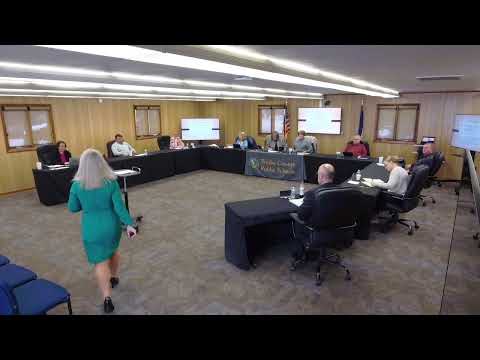
At the Feb. 13 Wythe County School Board meeting, school administrative staff reported preliminary budget signals from the General Assembly and identified several immediate local cost pressures, including HVAC failures and higher vehicle costs.
The presentation said both the governor’s and the Senate budgets include a roughly 3% pay increase for SOQ-funded positions; the House proposal was reported as 3.375%. Superintendent-level staff said the General Assembly is moving to eliminate a previously imposed "support cap," which could return several hundred thousand dollars in state funding to the division. The local composite index was stated as 0.3247 (approximately 68% state, 32% local funding split).
Nut graf: The potential return of state support for certain positions and modest SOQ salary increases would reduce locally borne personnel costs if enacted, but the division also faces immediate capital and operations costs — a $168,000 chiller replacement, about $112,000 in equipment at Ritter (middle/high) and a planned $256,000 LED project plus ongoing roof, HVAC and vehicle replacement needs — that could require local funding or targeted grants.
Budget staff noted a $450 million statewide construction pool discussed in the legislature but cautioned that such funds are competitive and limited once divided among 131 school divisions. They also described timing complications in a proposed $1,000 bonus for SOQ-funded positions: House language would apply the bonus Sept. 1, 2025, while Senate language would apply it June 1, 2025, which could require using current-year funds to pay bonuses if the earlier date prevails.
Capital and operating cost items identified included recent and pending HVAC replacements (the chiller cited at Fort Chiswell was estimated at about $168,000), upcoming roof projects and a $256,000 LED-lighting project that required additional wiring. Staff said special-education funding and other smaller pots could also change in the final conference budget. Vehicle costs have risen substantially: staff said special-education buses approach $105,000 and full-size buses can exceed $150,000.
On benefits, staff said the division budgets for a 10% health-insurance increase as a planning assumption and has not yet received final carrier rates for the coming year. ESSER and other federal pandemic-era funds have largely expired, leaving general fund and state/local revenue as primary sources.
Ending: Board members indicated they will review the full proposed budget at upcoming meetings and at scheduled budget hearings before adopting a final budget.