Get Full Government Meeting Transcripts, Videos, & Alerts Forever!
Get email alerts on the Criminal Justice Treatment Court topic
No spam. Unsubscribe anytime.
Chehalis treatment court reports six participants, asks city for letter of support for grant
Summary
Presiding Judge Alan Unzelman and program coordinator Sofia Lemacher updated the Chehalis City Council on the nine-month-old treatment court, saying 6 people are active in the program and requesting a city letter of support for an external grant to sustain administration and services.
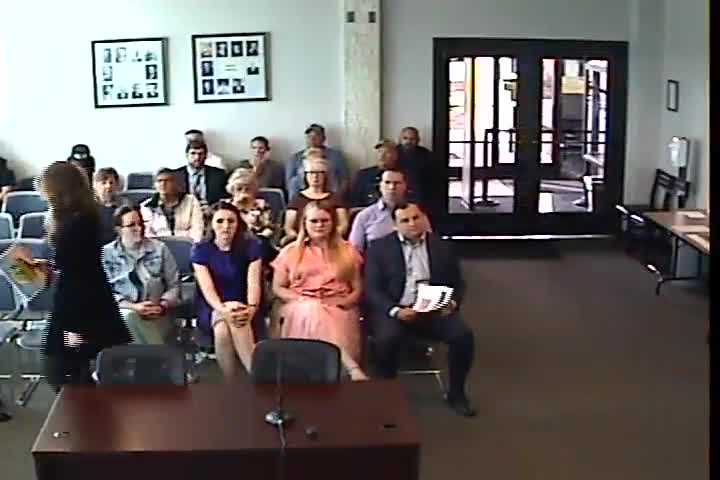
Chehalis municipal court leaders told the Chehalis City Council on May 12 that the city's newly launched treatment court has six active participants and is asking the city to provide a letter of support for a grant to help sustain the program.
The presentation, led by Presiding Judge Alan Unzelman and Sofia Lemacher, the county mental health coordinator assigned to the program, outlined referral and screening figures and described the court's model of long-term treatment and accountability. Unzelman said the program started with grant funding in July or August and that officials now seek additional outside funding to cover administrative costs.
The treatment court is designed to combine rehabilitation, supervision and services to reduce recidivism among defendants with co-occurring mental health and substance-use disorders. "It really comes down to three things, rehabilitation, accountability, and support," Presiding Judge Alan Unzelman said. Sofia Lemacher, who screens referrals and connects participants to treatment, said, "We currently have 6 active participants," and corrected earlier slides to note that "12 people have actually been screened and 6 of them have been approved to that screening process." She added that the screening process typically requires multiple meetings and that participation requires demonstrated follow-through.
Why it matters: Treatment courts aim to reduce repeated criminal justice contacts by linking defendants with treatment, medication-assisted treatment (MAT) and other supports. Chehalis' pilot is low-volume and intensive: program leaders told the council that five of the six active participants have co-occurring diagnoses and that participants are in outpatient or, in one case, inpatient substance-use treatment; three are connected to MAT services. Program staff said the first potential graduation is expected in October, and that typical program length is roughly 9 to 12 months from signing.
Program details presented to council members included referral counts and outcomes: 22 people have been referred so far; 12 completed screening; six entered the program. Unzelman and Lemacher described common disqualifying factors (lack of follow-through on initial referrals, qualifying offenses the prosecutor deems inappropriate) and said eligible referrals come from attorneys, prosecutors, self-referrals or community members. The presenters emphasized that not everyone referred is suitable and that initial engagement is a useful predictor of success.
Council questions focused on eligibility, screening timelines and whether the city needed to vote to provide the requested support. Unzelman said the grant the team is targeting must be submitted by Friday and asked the council to authorize a letter of support. City staff and the council discussed whether a full council vote was required. The city attorney and staff confirmed a city-signed letter of support can be provided without formal agenda action; the presenters asked if staff could prepare the letter and have council members sign it.
No formal vote was recorded on the grant letter during the meeting. The record shows program leaders received direction that the city can provide a letter of support and that staff would prepare one for signature in short order.
Discussion points not decided at the meeting included the program's longer-term funding strategy and how to scale the model while minimizing impact on city general funds. Unzelman said the program seeks outside funding to avoid being a drain on city resources.
The presenters requested city support for the grant application and provided program metrics; council members did not take a formal vote but staff indicated they would prepare the requested letter of support for signatures.
Ending: Program leaders asked the council to sign a letter of support to be submitted with an imminent grant application and said they will return with additional updates as the pilot proceeds.