Get Full Government Meeting Transcripts, Videos, & Alerts Forever!
Get email alerts on the School Safety topic
No spam. Unsubscribe anytime.
Board debates adding school resource officers while preserving safety coaches; principals describe distinct roles
Summary
Division staff proposed adding two school resource officers (SROs) — one each at Monticello and Western Albemarle high schools — to increase law-enforcement presence; trustees and principals debated the program’s scope and whether to cut safety coach positions to pay for SROs.
Albemarle County Public Schools presented a proposal to add two school resource officers (SROs) to place dedicated law‑enforcement personnel at Monticello High School and Western Albemarle High School. Ralph Bradley, director of safety and security, said SROs provide an on‑site law‑enforcement response capability, crisis management support, threat assessment collaboration, training and relationship building with students and families.
Bradley described SRO training requirements — roughly 40 hours of SRO‑specific instruction over a two‑year period in addition to law‑enforcement training — and said selection and ongoing training are crucial to program success. He cited internal survey data indicating students and staff who knew an SRO was present generally reported feeling safer and seeing SROs as positive contributors; trustees asked staff to provide racially disaggregated survey responses.
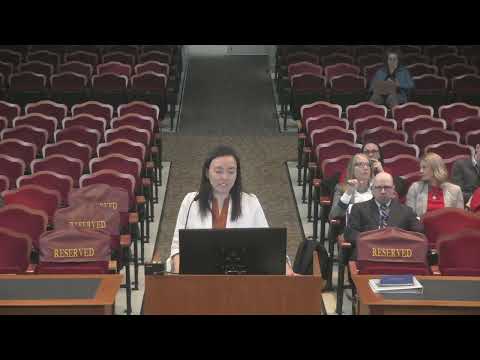
Board members, principals and school leaders described distinct roles for SROs, school safety coaches, and school security officers. Beth Costa, principal of Monticello High School, and Jennifer Subla, principal of Western Albemarle High School, said a shared officer this year has been valuable but stretched; both described the SRO as different from the safety coach and said the roles operate best as a team. Principals described cases where having an SRO on‑site enabled faster, more integrated communication with law enforcement than relying on non‑emergency calls to external agencies.
Other trustees expressed concern about replacing safety coaches with SROs and about community consent, racial disparities in survey responses (a trustee noted Black students were overrepresented among those who disagreed with SRO presence in prior survey rounds), and the lack of broad community input. Several trustees favored keeping safety coaches in place and seeking additional funding; others said they would accept both roles if funding permitted.
No final budget action was taken to eliminate safety coaches or to add SROs. Staff said the funding request currently includes a proposed reduction in student safety coach positions as a potential reduction; the board voted to defer a decision on that reduction while it considers options and requests additional disaggregated data and impact analyses before a final FY26 decision.