Get Full Government Meeting Transcripts, Videos, & Alerts Forever!
Get email alerts on the Budget Funding Gap topic
No spam. Unsubscribe anytime.
School Board narrows FY26 funding gap, approves draft reductions for further discussion
Summary
Facing a projected $5 million funding gap for fiscal 2026, the Albemarle County School Board reviewed proposed compensation, program and service changes and voted to accept an initial set of reductions while reserving discussion of cuts to student safety coach positions.
The Albemarle County School Board on March 6 reviewed a draft funding request for fiscal 2026 that leaves a projected funding gap of about $5,000,000 after updated local revenue estimates and preliminary state figures.
The board accepted, by voice vote and a later roll-call motion, a package of proposed reductions carried forward from the draft funding request and staff’s balancing scenario while setting aside one reduction — fewer student safety coach positions — for further discussion. A separate earlier motion to approve the meeting agenda passed unanimously at the start of the session.
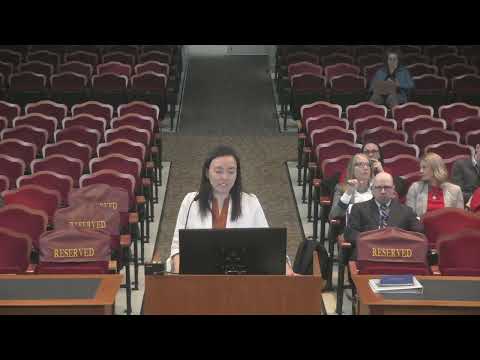
The draft funding request presented by Maya Kumazawa, director of budget and planning, shows a year-over-year expenditure increase of roughly $19.5 million. Updated local revenues increased by about $2.8 million from the draft, trimming the original gap to $5.0 million; the school division’s projected percent gap is roughly 1.7% of the operating budget. Kumazawa said the General Assembly conference budget released after the meeting’s materials did not materially change the division’s state revenue projection.
Staff presented a multi-part balancing scenario that aims first to identify non-personnel operating savings and then, if necessary, to reduce full‑time equivalent (FTE) positions. Because about 83% of the division’s budget is staffing, staff emphasized pay and FTE as the principal levers: a 1% compensation adjustment costs about $1.6 million; a single FTE averages roughly $105,000 including benefits.
The scenario offered examples of savings in operations (deferred furniture replacement, partial technology deferral, and shifts in preschool funding if Head Start reimbursement can be secured) and in personnel (reductions in instructional coaches, reengineering some school‑based staffing standards, and smaller central office reductions). Kumazawa said the list is a starting point for the board’s decisions and that a final adopted budget is scheduled for May 8.
Board discussion focused on priorities and process: several members urged presenting a needs‑based funding request to the Board of Supervisors rather than a fully balanced request, while others favored narrowing the request before asking for additional local funding. After discussion the board unanimously approved a motion to accept the reductions listed in the first column of staff’s balancing scenario except the line item for fewer student safety coach positions; trustees said that specific change would be reserved for later deliberation.
The vote on that motion was recorded by roll call with the following board members voting yes: Judy Lee; Allison Spillman; Priam Page; Rebecca Berlin; Ellen Osborne; Leslie Pryor; and Chair Kate Acuff. The board intends additional 2x2 member meetings before the next public meetings and will accept public comment on the funding request during regular comment periods before final adoption.
Staff and the superintendent, Matthew Hawes, repeatedly emphasized that the division will continue to prioritize its mission and the classroom while working through the constrained options to present a final budget to the board and the Board of Supervisors.
As the board continues deliberations, staff said they will provide detailed spreadsheets and additional demographic and programmatic analyses requested by trustees, including racially disaggregated survey data related to school safety programs and localized staffing-impact modeling.