Get Full Government Meeting Transcripts, Videos, & Alerts Forever!
Get email alerts on the Historic Preservation topic
No spam. Unsubscribe anytime.
Christiansburg Institute seeks to repurpose Friends Elementary as African‑American history center; board gives informal support to continue talks
Summary
The Christiansburg Institute presented a proposal to rehouse its museum, research center and archives in the former Friends Elementary School — a 1953 segregated school — and the school board signaled informal support to continue planning and funding conversations.
The Christiansburg Institute (CI), a local nonprofit that operates a museum and digital archives documenting African‑American history in Southwest Virginia, asked Montgomery County Public Schools to explore adaptive reuse of the former Friends Elementary School building as a cultural and education center.
Chris Sanchez, executive director of the Christiansburg Institute, described the building as a brick structure built in 1953 as a segregated primary school and noted its close physical and historical ties to the historic Christiansburg Industrial Institute. Sanchez said CI hopes to rehouse its museum, digital preservation lab, research action center, podcast studio and archival collections (now about 75 linear feet across 25+ collections, CI said) in some of the school’s classroom space to expand internships, exhibits and public programming.
Sanchez told the board CI is a 501(c)(3), currently operates at 125 Arrowhead Trail, has a staff of five full‑time and one part‑time employee, and maintains a digital archive with roughly 1,000 entries. He said CI has secured or applied for preservation grants, described a recent joint National Trust grant application for $50,000, and listed project goals including nomination to the National Register of Historic Places and the Virginia Landmarks Register, development of an interpretive plan, oral‑history collection, and installations of educational storyboards.
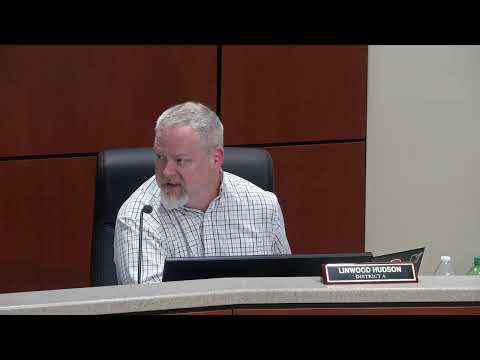
Board members asked whether CI sought stewardship (defined in the presentation as preserving the site’s long‑term architectural and interpretive integrity), whether the buildings’ limited square footage could accommodate a museum plus archival storage, and how maintenance and operating costs would be handled. Sanchez and Superintendent Dr. Bragan said they envisioned dual use of parts of the building — for example, rehousing the museum and offering classroom space for existing MCPS classes such as childcare instruction — and that the parties would work through a written agreement specifying space, responsibilities and budget implications.
Several board members urged clear, documented boundaries for any shared use, and asked that cost‑sharing, maintenance obligations and access be defined before any formal transfer of space. Dr. Bragan said the proposal was in an early planning phase and that further discussions would determine exact uses and funding; he and Sanchez both said historic designation would improve chances for preservation grant funding.
When Sanchez asked whether the board would give a thumbs‑up to continue planning discussions, board members indicated informal support for continued conversations; the presenters and board members repeatedly emphasized that specifics on funding and space allocation remain to be worked out and documented.
Proposed next steps include pursuing grant nominations and preservation funding, developing an interpretive plan, and drafting a formal agreement that spells out maintenance, stewardship and any shared instructional use.
Speakers quoted include Chris Sanchez and Superintendent Dr. Bragan; the board’s questions and “thumbs up” consensus were recorded but no formal board vote was taken.