Get Full Government Meeting Transcripts, Videos, & Alerts Forever!
Get email alerts on the School Construction Consolidation topic
No spam. Unsubscribe anytime.
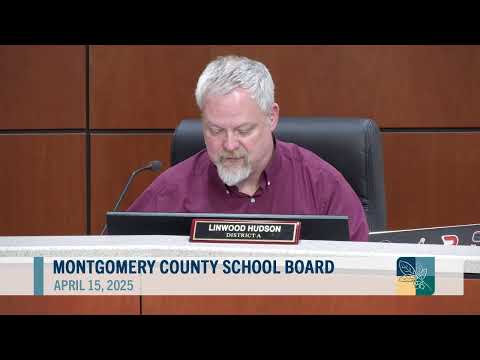
Parents, residents press board over proposed Harding-Gilbert Lincoln consolidation as renovation plan advances
Summary
At a school board meeting where administrators outlined a multi‑phase capital plan, more than a dozen neighbors and parents urged the board to preserve neighborhood schools and raised safety, traffic and community‑cohesion concerns about a proposal to combine Harding Avenue Elementary and Gilbert Lincoln Elementary.
Dozens of parents and neighborhood residents told the Montgomery County Public Schools Board of Education on Tuesday that a proposed consolidation of Harding Avenue Elementary and Gilbert Lincoln Elementary would harm walk‑to‑school routines, community ties and student safety.
The speakers’ remarks came alongside a staff presentation that outlined a three‑phase capital plan recommending comprehensive renovations at Harding, Gilbert Lincoln and Margaret Beaks elementary schools as a first priority, with a possible replacement of Charlottesville Middle School and renovations at Montgomery Central later.
Community members said they learned about consolidation plans only after preliminary designs were posted. Deborah Dickerson of Blacksburg, a Gilbert Lincoln parent, said the Gilbert Lincoln attendance zone is seeing new single‑family development and that disposing of the Harding property “would be shortsighted” because the district should preserve capacity for near‑term growth. Dickerson also flagged safety problems on Toms Creek Road where students would travel if consolidation moved forward.
Other parents described daily benefits of neighborhood schools: Tripp Shealy said his children walk and bike to Harding and that consolidating would force parents and young children to cross busier roads; Sarah Madsen said her shy fifth‑grade son gained independence riding a bike to Harding this year; Janet Flanhammer said Harding made in‑person schooling possible for her immunocompromised daughter during the pandemic and that the school’s small size helped that family integrate safely.
Opponents also emphasized intangible community value. Ginny Williams and Sofia Yonker told the board that neighborhood schools create “pockets of community” and contribute to Blacksburg’s small‑town character. Several speakers asked the board to quantify nonfinancial costs — including transportation time, loss of walking‑to‑school exercise and potential increases in disciplinary incidents — before deciding on consolidation.
At the same meeting, school administration and the district’s project manager, Joshua Bauer of Crabtree, Robock and Associates, presented a comprehensive capital plan divided into three phases. Phase 1 recommends comprehensive renovations at Harding Avenue, Gilbert Lincoln and Margaret Beaks; Phase 2 considers a replacement for Charlottesville Middle School; Phase 3 targets a full renovation of Montgomery Central. Bauer said design would take roughly 12 months per project and construction about 18–24 months, depending on scope and whether additions allow phased work or require full shutdowns.
Bauer and district staff presented cost‑per‑pupil trends from 2017–2024 and noted rising construction costs, with new elementary school averages increasing from about $30,000 to $55,000 per pupil. The administration told the board the draft plan is intended to show options and timelines for a joint meeting with the Board of Supervisors about borrowing and funding.
Several board members and commenters urged the administration to provide clearer timelines tied to the Board of Supervisors’ borrowing capacity; Dr. Bragan and project staff said the June joint meeting with the Board of Supervisors was the next step for funding direction. Board members also asked staff to incorporate foreseeable local housing development into enrollment projections; Bauer said common planning assumptions use roughly 0.8 students per new housing unit when estimating future demand.
The board did not vote on consolidation at the meeting, but the discussion prompted multiple requests from members for more community engagement, clearer cost and enrollment projections, and options that preserve neighborhood value. Several board members encouraged residents to attend the joint budget and capital meeting with the Board of Supervisors when that session is scheduled.